


Learn what’s required for accessible bathrooms in modular housing projects. Understand NCC standards, building classes, and smart design for compliance.


HUGE SALE NOW ON MODULAR HOUSING! MASSIVE SAVINGS UP TO $30,000
When you’re responsible for delivering accommodation that works—for workers, tenants, or guests—getting accessibility right isn’t just about ticking a box. It’s about reducing risk, increasing asset performance, and ensuring the facility is future-proofed from the outset.
In this article, we break down what’s actually required to include compliant disabled/accessible bathrooms in your accommodation projects—particularly for those managing commercial or government-related modular housing in New South Wales and Queensland. Whether you’re overseeing workforce housing, faith-based community builds, or regional deployments for essential services, you’ll walk away understanding what’s needed, what’s smart, and what’s durable.
Because in this game, smart project leaders know: if you do it once and do it right, it pays you back long-term.
Let’s start with the basics.
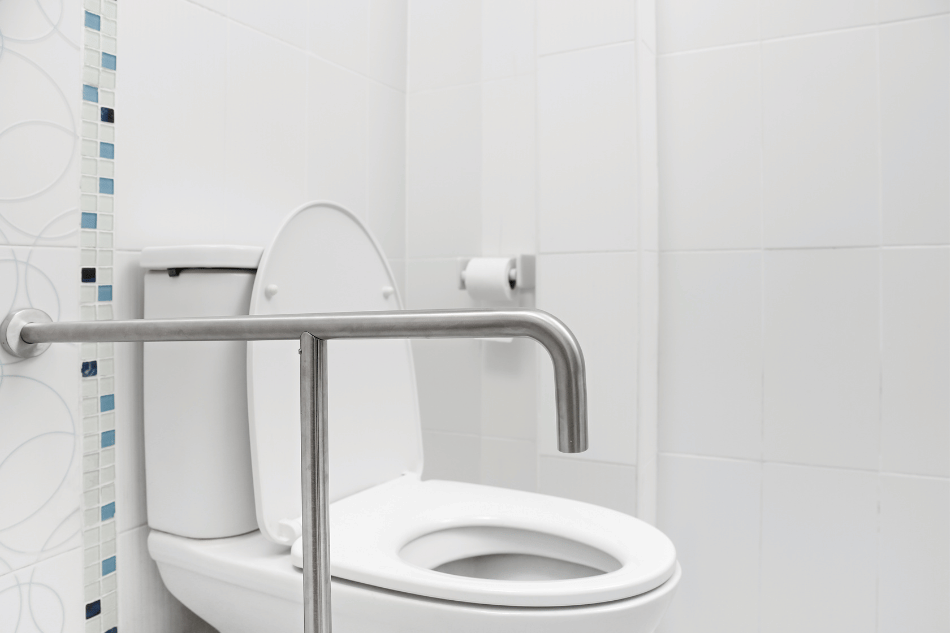
An accessible bathroom, in Australian standards, refers to a facility that complies with AS 1428.1:2021 – Design for access and mobility, and relevant sections of the National Construction Code (NCC). These define the features and clearances needed for use by individuals with mobility impairments, including full-time wheelchair users.
These bathrooms typically include:
There are also different design requirements for ambulant facilities, intended for people with reduced mobility who do not use wheelchairs, which involve narrower cubicles but include grab rails and accessible fittings.
This is where many projects get tripped up: accessible bathrooms are not always mandatory, but when they are—it’s non-negotiable.
Under the NCC, accessibility is mandated based on the building classification and intended use. Here’s the key point for Aruva clients:
Most Aruva modular houses are Class 1—typical standalone or grouped dwellings where accessibility isn’t a legal requirement unless specifically called for.
However, we also support clients with Class 3 and Class 9 options, where the NCC does require accessible facilities. These classes typically apply to:
Whether you need an accessible bathroom depends not just on the building itself, but on how it’s used and what council, certifiers, or planners specify. If your project falls under these classifications—or might in future—it’s critical to plan for accessibility from day one.
Even where accessible bathrooms aren’t technically required, many asset owners choose to include them. Why? Because accessibility delivers practical advantages:
Best-practice accessible bathrooms go beyond compliance to deliver long-term value:
Strong, simple, and built to last—so your investment keeps delivering.
Designing for accessibility is simpler and more cost-effective when it’s built into the structure from the start. That’s especially true for modular houses, where planning and fabrication happen concurrently.
At Aruva, our focus is on the rapid fulfilment of superior modular buildings, driven by efficient processes & approved partnerships. Whether you’re working on a Class 1 project or require accessible Class 3 or 9 modules, our team ensures:
Our approach helps clients deliver consistent, compliant results at scale—especially valuable for asset owners with multiple units or remote locations.
Our process keeps it simple, so you’re sorted from start to finish.
When accessibility is required and not delivered, the cost is more than financial. Risks include:
That’s why experienced developers, government buyers, and organisational leaders are investing in future-ready infrastructure now. They’re not just ticking the box—they’re protecting their bottom line.
However, not all products on the market meet the standard they claim. There’s a growing influx of offshore-manufactured modular units—particularly from parts of Asia—that appear compliant at first glance but fail when inspected against the detail of Australian standards.
There are cases where critical measurements are out by millimetres, grab rails aren’t structurally supported, or fixtures don’t meet the required performance specs. For buyers, that means costly rework, certification failure, and liability exposure.
It’s why working with a trusted Australian supplier who builds specifically for our codes and conditions is more important than ever. It’s what smart organisations do when they’re serious about performance from their people and assets.
Before you approve any modular housing package, ask:
At Aruva, we answer “yes” to all of the above—because we’ve already factored it in.
We’re a down-to-earth team you can rely on.
Accessible bathrooms aren’t just a requirement—they’re a strategic decision. When planned properly, they reduce liability, increase your asset’s longevity, and help ensure you’re covered—whether you’re operating under current codes or adapting to future changes.
Most importantly, the choice to plan ahead means you won’t be caught out by classification shifts, tenant needs, or council conditions later.
It’s why we say Real Living. Delivered.

Download your copy of our Accommodation Guide.
Aruva’s experienced team will collaborate with you about our modular accommodation solutions.

Talk to us about your property, timeline and requirements.

We’ll supply a proposal based on your design preference.

Place your order! We’ll build and install your new modular accommodation.
There’s no place like home, right? Your staff can spend their evenings in comfort and style, relaxing and connecting with friends and family, and then recharge their batteries with some quality zzzzs.


Our Resources
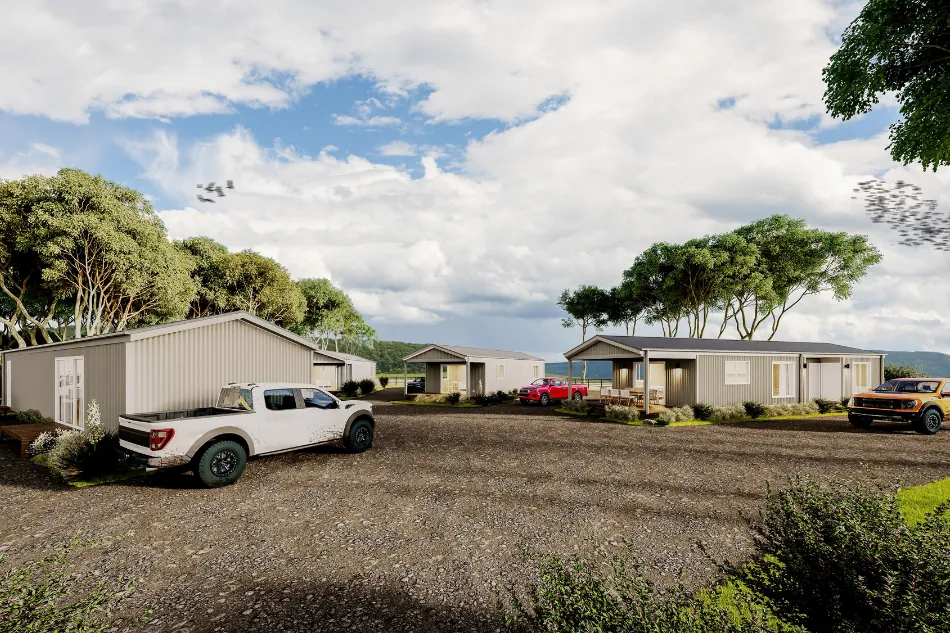
Learn how scalable worker housing helps farm operators meet current demand, plan for growth and avoid committing to excess capacity too early.

Planning multiple modular housing units? Learn what to check for power, water and wastewater before you lock in site layouts or unit numbers.
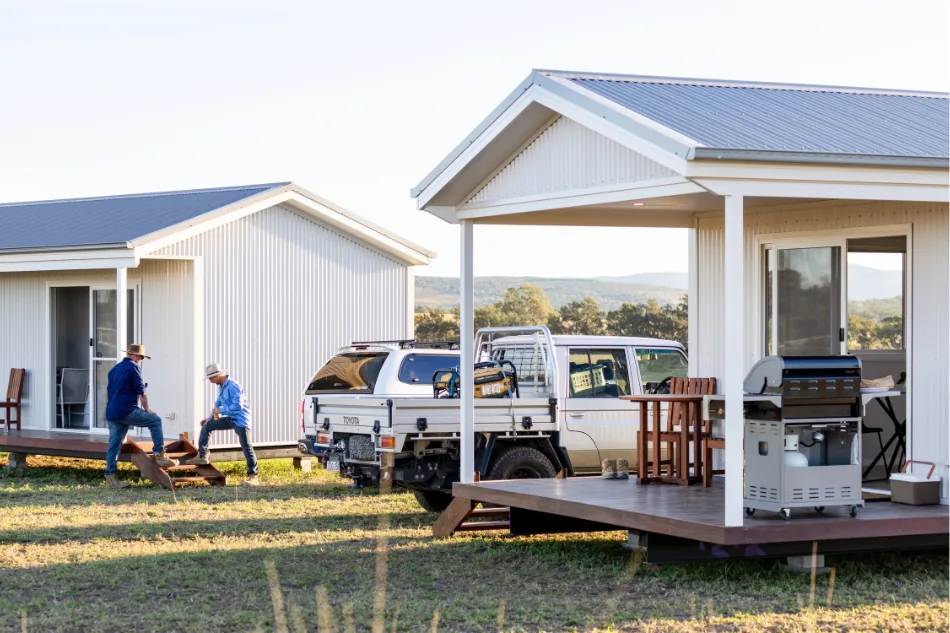
Modular housing cost Australia explained: see the seven budget areas beyond the unit price, from freight and footings to approvals and services.