



Choosing modular worker accommodation units? Here are five things to think about before deciding on 1-, 2-, 3- or 4-bedroom layouts.


HUGE SALE NOW ON MODULAR HOUSING! MASSIVE SAVINGS UP TO $30,000
If you’re looking at modular worker accommodation units, there’s a fair chance the need is already urgent.
You need somewhere decent for workers to stay.
You might be trying to attract staff, keep good people, support seasonal workers, or get away from old accommodation that’s no longer good enough.
So you start looking at options.
One-bedroom units. Two-bedroom units. Three-bedroom units. Four-bedroom units. Bedroom modules. Kitchen hubs. Amenities blocks. Larger shared houses.
It can get confusing fast.
Here’s the main thing we wish more people understood upfront:
Choosing worker accommodation isn’t really a building decision.
The right setup depends on who’s living there, how long they’re staying, how much privacy they need, and how the accommodation may be used in the future.
That’s also where modular can work so well.
Done properly, modular accommodation isn’t just a quick fix. It can be a long-term asset. Depending on the unit, site, approvals and transport requirements, it may be able to be added to, moved, changed, repurposed or on-sold.
That’s why smart farm managers think beyond, ‘How many beds do we need?’
They think about the people, the site and the long game.
There’s no single best modular worker accommodation unit.
A one-bedroom unit is usually best when privacy matters.
A two-bedroom unit can be a flexible middle ground.
A three-bedroom unit may suit a small crew.
A four-bedroom unit can work well when people are suited to shared living.
Separate bedroom modules with a shared kitchen or amenities hub can suit larger workforces.
The best choice depends on the workers, the length of stay, the site, and how the accommodation may need to change later.
This is the first mistake.
People often start by looking at layouts and prices.
That’s understandable, but it’s not the best place to start.
A four-bedroom modular unit might look like good value because it gives you more beds in one building. But if the wrong people are sharing it, it can quickly become a problem.
Imagine four unrelated workers living together.
One starts early. One finishes late. One cooks at night. One wants quiet. One’s only there for six weeks. Another is staying long-term.
The building might be fine.
The fit might not be.
Now compare that with someone who starts with better questions.
Who’s living there?
Are they full-time, seasonal or casual?
Do they know each other?
Are they managers, couples, contractors or labourers?
Will the accommodation be used for guests or family later?
That’s a much better way to start.
The floorplan should come after the people are understood.
Privacy is one of the biggest issues in worker accommodation.
Some workers are fine sharing a kitchen, bathroom and living area.
Others aren’t.
And some roles need more privacy by nature.
A farm manager, caretaker, senior worker or site supervisor may need their own space. If they have a partner or family, the need changes again.
At that point, you’re not really planning basic worker accommodation. You’re planning a proper living setup.
That’s where one-bedroom or two-bedroom modular units may make more sense than a larger shared unit.
For short-term seasonal workers, shared accommodation may be fine.
For long-term staff, privacy usually matters more.
That doesn’t mean every worker needs their own unit. It means the level of privacy should be planned on purpose.
Workers aren’t machines.
They need rest, space and a bit of dignity.
If the accommodation feels cramped or poorly planned, it can wear people down. And if you’re trying to keep good workers, that matters.
The length of stay changes the whole brief.
A worker staying for six weeks has different needs to someone staying for two years.
Short-term seasonal workers may need clean, safe, practical accommodation that’s easy to manage.
Long-term workers usually need more comfort, more storage, better living space and more privacy.
Managers or senior staff may need a higher standard again.
This is why one-size-fits-all thinking can cause problems.
A basic shared setup might be fine for harvest. But it may not suit a long-term employee you’re trying hard to keep.
On the other hand, building everything to a high private standard may cost more than needed if the accommodation is only for short seasonal stays.
The point is balance.
Good planning is about matching the accommodation to the worker type and length of stay.
That’s also where modular gives you options.
You may start with a small number of units, then add more later. You may use one unit for seasonal workers now and repurpose it later for contractors or guests.
In many cases, modular gives you more room to adapt as your workforce changes.
Counting bedrooms is easy.
Planning daily life is harder.
A four-bedroom unit with one poor kitchen, one tight bathroom, limited storage and nowhere decent to sit can feel crowded quickly.
The issue isn’t the number of beds.
It’s how the building works when people are actually living there.
Think about the real daily rhythm.
Workers wake up early.
They shower.
They make coffee.
They pack lunch.
They come back tired.
They cook, wash clothes, call family, eat, clean up and try to sleep.
That’s where shared spaces matter.
Kitchen. Bathroom. Laundry. Storage. Dining. Lounge. Outdoor area.
These spaces carry the load.
So before choosing a one-, two-, three- or four-bedroom modular unit, ask:
This isn’t about making accommodation fancy.
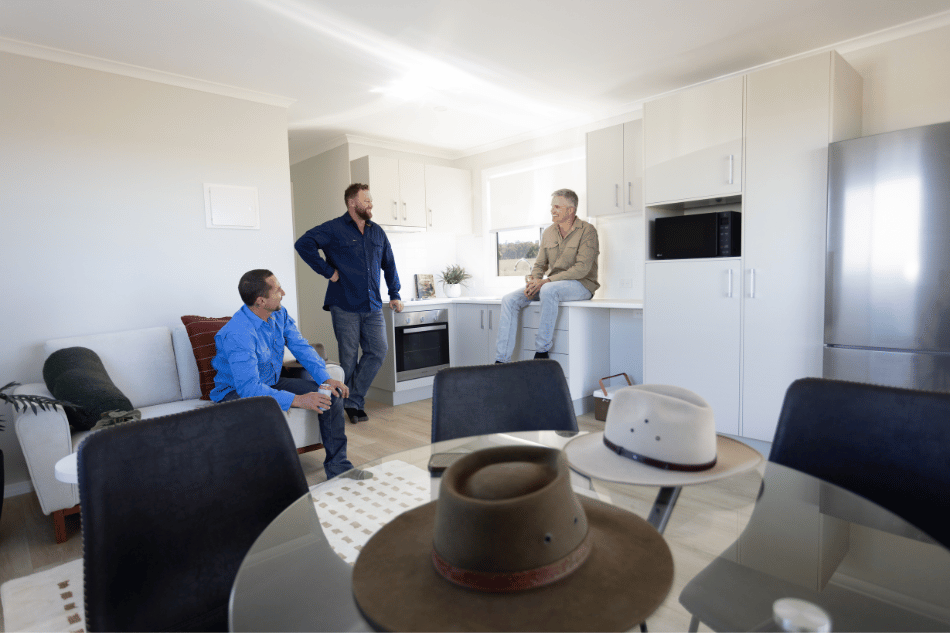
It’s about making it work.
Safe Work Australia’s model code on managing the work environment and facilities is a helpful reminder that worker facilities need to be thought through properly, especially where workers are in regional or remote areas.
This is one of the biggest advantages of modular.
When you invest in modular worker accommodation units, you’re not only solving today’s problem.
You may also be creating an asset.
Depending on the building type, approvals, transport access and site setup, modular units may be able to be moved, added to, reconfigured, repurposed or on-sold.
That changes the way you should think about the decision.
A one-bedroom unit might be used for a senior worker now, then later for a caretaker, visiting contractor, guest accommodation or overflow housing.
A two-bedroom unit might suit workers now and family visitors later.
A group of bedroom modules with a shared kitchen hub may support a larger seasonal workforce now, then be moved or expanded later as demand changes.
A four-bedroom shared unit may provide a strong cost per bed, but it may be less flexible if you later need more separation.
This is why the cheapest option isn’t always the smartest option.
Smart managers look at the whole life of the asset.
They ask:
That’s the brilliance of modular when it’s planned properly.
It gives you speed now, but it can also give you options later.
Real Living. Delivered. isn’t about flash for the sake of it. It’s about accommodation that works for real people, on real sites, with real pressures.
Here’s the simple version.
One-bedroom modular units
Best when privacy matters.
They can suit managers, caretakers, couples, senior workers, visiting contractors or long-term staff.
They usually cost more per bed, but they offer better separation and flexibility.
Two-bedroom modular units
A good middle ground.
They can suit two workers, contractors, guests or mixed use.
They’re often easier to manage than larger shared units.
Three-bedroom modular units
Useful for small crews.
They can work well when the workers know each other, share similar routines, or are comfortable living together.
Four-bedroom modular units
Efficient, but they need careful planning.
They can reduce the cost per bed, but only if the kitchen, bathroom, laundry, storage and living areas are designed properly.
Four bedrooms with poor shared spaces is not a good result.
Separate bedroom modules with a shared amenities hub
Useful for larger workforces.
This setup can suit seasonal workers, accommodation villages or larger sites. But it needs proper planning around dining, laundry, bathrooms, cleaning, privacy and traffic flow.
It’s not just a group of bedrooms.
It’s a small living system.
Before choosing modular worker accommodation units, ask these questions:
These questions are simple, but they can save a lot of pain.
Choosing modular worker accommodation units isn’t just about picking between one, two, three or four bedrooms.
It’s about asking what’ll actually work for your people.
Good worker housing helps people rest properly, live with dignity and stay longer.
That matters when good workers are hard to find.
It also matters because this isn’t just a cost. It’s an investment in your people, your operation and, in many cases, a physical asset that may keep delivering value for years.
So don’t start with the cheapest layout.
Don’t start with the biggest unit.
And don’t try to work it all out from a floorplan alone.
Start with the workers.
Then think about privacy, length of stay, shared spaces, future use and the flexibility modular can give you.
That’s how you get worker accommodation that works now, and still makes sense later.

Download your copy of our Accommodation Guide.
Aruva’s experienced team will collaborate with you about our modular accommodation solutions.

Talk to us about your property, timeline and requirements.

We’ll supply a proposal based on your design preference.

Place your order! We’ll build and install your new modular accommodation.
There’s no place like home, right? Your staff can spend their evenings in comfort and style, relaxing and connecting with friends and family, and then recharge their batteries with some quality zzzzs.


Our Resources
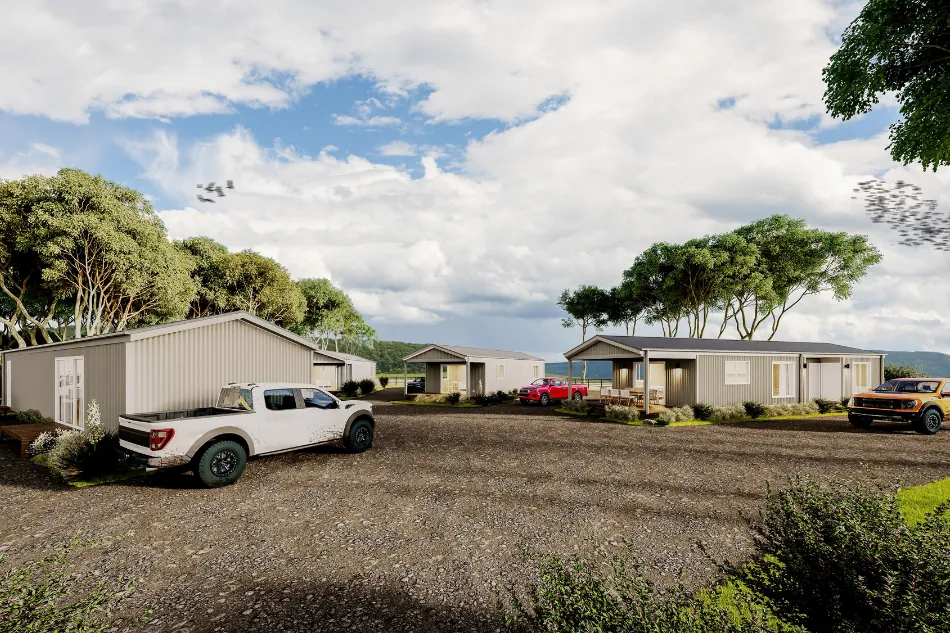
Learn how scalable worker housing helps farm operators meet current demand, plan for growth and avoid committing to excess capacity too early.

Planning multiple modular housing units? Learn what to check for power, water and wastewater before you lock in site layouts or unit numbers.
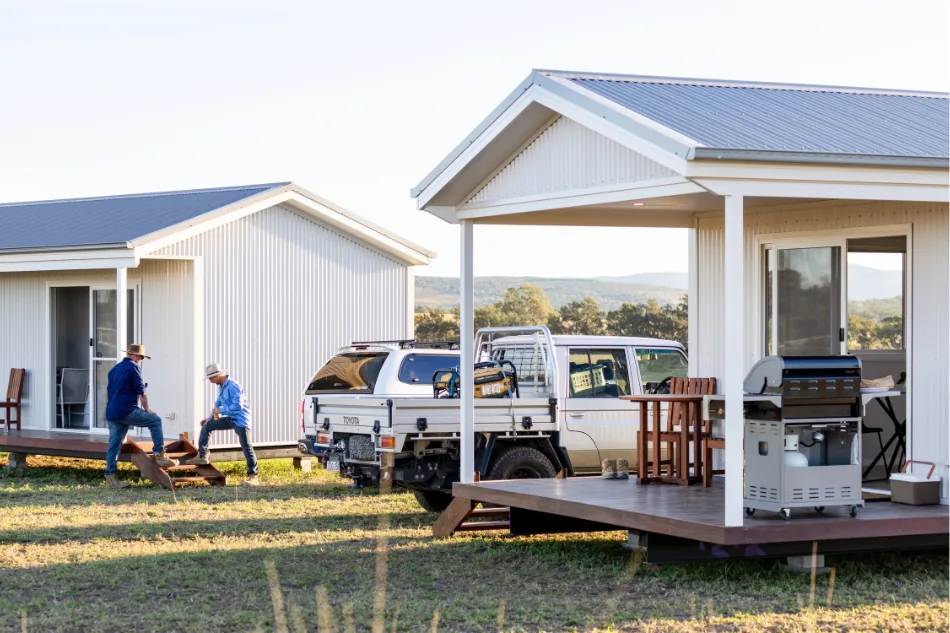
Modular housing cost Australia explained: see the seven budget areas beyond the unit price, from freight and footings to approvals and services.