



How much does a donga cost? The short answer is: anywhere from around $10,000 to more than $240,000, depending on what you mean by “donga”.
That’s a wide range, but it’s real.
Some people use the word donga to mean a basic site shed. Others mean temporary worker accommodation. Others are really looking for a proper long-term modular accommodation unit.
Those are very different products.
Smart farm managers who know good housing keeps good people usually don’t stop at the cheapest number. They ask what standard of accommodation their workers actually need.
Quick answer: donga cost guide
| Type of building | Rough cost range | What it usually means |
|---|---|---|
| Basic used donga or site shed | $10,000-$40,000 | Often a used site office, lunchroom, changeroom or simple shelter. |
| Classic donga-style temporary accommodation | $40,000-$100,000 | Basic accommodation with sleeping space, and possibly bathroom or kitchenette facilities. |
| Quality modular accommodation unit | $90,000-$240,000+ ex GST | Larger, better-finished accommodation designed for long-term use, comfort and durability. |
These figures are general only.
At the time of drafting, public transportable building listings showed used and basic buildings advertised from the low tens of thousands, while larger or newer units sat much higher.
Aruva’s FAQ pricing guide says customers typically invest between $90,000 and $240,000 ex GST for one of its modular accommodation units, depending on size, style and interior finishes.
Why the price range is so wide
The word “donga” is used loosely.
It can mean a second-hand site office, a temporary sleeping unit, a mining camp room, a lunchroom, an amenities building, a transportable building or a proper modular accommodation unit.
That’s why the price range is so broad.
It’s a bit like asking, “How much does a ute cost?”
A used farm ute and a new top-spec LandCruiser are both utes, but they’re not the same investment.
Same with dongas.
A cheap used site shed and a quality modular accommodation unit are not solving the same problem.
What changes the cost?
The main cost factors are:
- new or used
- size of the building
- number of rooms
- bathroom inclusions
- kitchen or kitchenette inclusions
- insulation and internal finish
- structural quality
- furniture and appliances
- transport distance
- crane or lifting requirements
- footings and installation
- power, water and sewerage connections
- approvals and compliance requirements
This is where buyers can get caught.
A cheap donga can stop looking cheap once transport, repairs, services, footings and site works are added.
Ausco’s modular building FAQ makes the same general point: modular building costs depend on whether you hire or buy, the location, number of modules and complexity of the build.
So the building price is only part of the total cost.
Basic donga or proper accommodation?
A basic donga may be fine for short-term use.
It might suit a site office, temporary lunchroom, basic shelter or a short project where comfort is not the main issue.
But long-term worker accommodation is different.
Workers need somewhere decent to sleep, cook, shower, store their gear and recover after work.
That usually means a better layout, better finishes, better insulation, better bathroom facilities, better kitchen facilities and a stronger focus on long-term durability.
That’s why the price is higher.
You’re not just paying for a box.
You’re paying for the standard of living inside it.
Where Aruva fits
Aruva does not build cheap, stereotypical dongas.
The better comparison is quality modular worker accommodation.
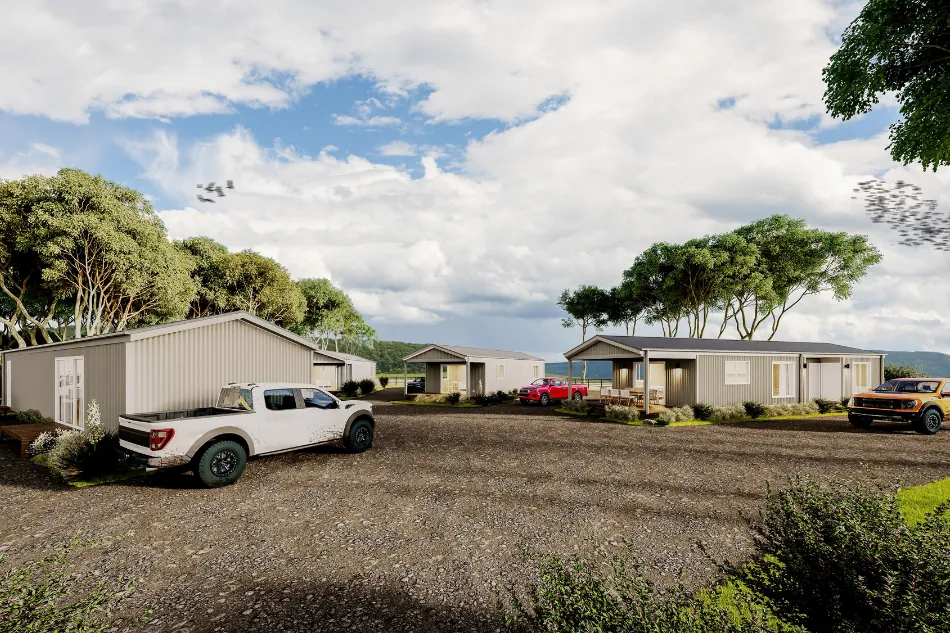
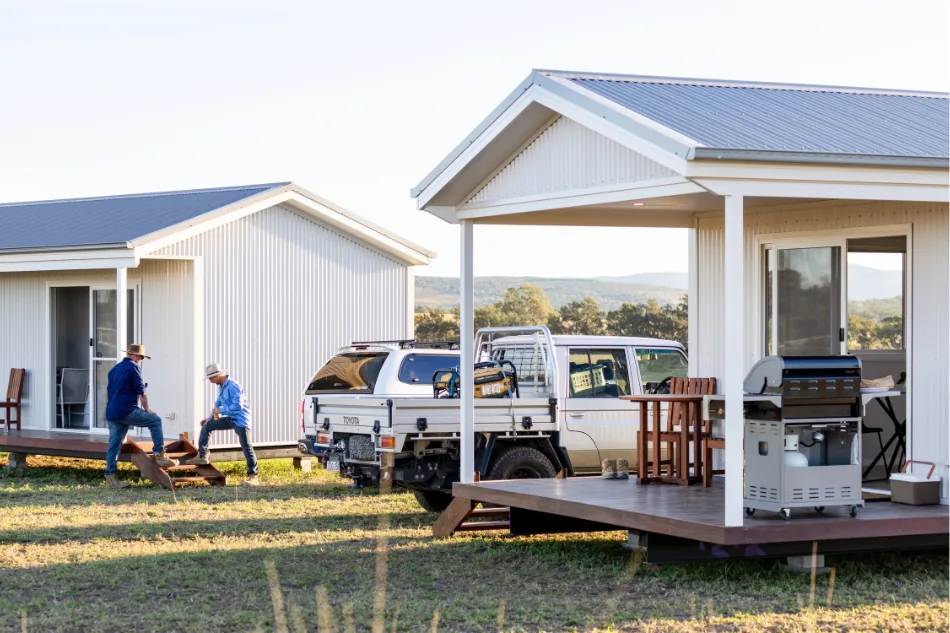
Aruva’s accommodation units sit in the higher-quality category, where the focus is on comfort, liveability, durability and long-term value.
That means they cost more than a basic used site shed.
But they’re also solving a different problem.
A basic donga may give someone somewhere to sleep.
Good modular accommodation gives workers somewhere decent to live.
That matters if you’re trying to attract workers, keep workers and provide housing that reflects well on the business.
Housing managers who are smart about getting the right balance across budgets and outcomes look at more than the upfront price.
They look at the whole result.
Don’t forget installation
Transport and installation can make a real difference to the final number.
Aruva’s cost guide for accommodation units explains that installation can vary depending on the unit, location, trade availability, site access and whether a crane is needed.
That’s why it’s risky to compare building prices without looking at the full scope.
A $40,000 unit may not be a $40,000 project.
You may still need to allow for delivery, footings, service connections, repairs, upgrades, compliance and site preparation.
The cheapest sticker price is not always the cheapest outcome.
Final thought
So, how much does a donga cost?
A basic used donga or site shed may cost around $10,000 to $40,000.
A classic donga-style temporary accommodation unit may cost around $40,000 to $100,000.
A quality long-term modular accommodation unit may cost around $90,000 to $240,000+ ex GST.
The better question is not only, “What’s the cheapest donga?”
The better question is: what standard of accommodation do your workers actually need?
If you only need short-term shelter, a basic donga may do the job.
If you need worker housing that feels decent, performs well and supports long-term staff, then proper modular accommodation is the better category to compare.
That’s the difference.
A donga is usually about temporary space.
Quality modular accommodation is about Real Living. Delivered.