


Compare stock modular housing with build-to-order options and use five practical questions to choose the right fit for your project.


HUGE SALE NOW ON MODULAR HOUSING! MASSIVE SAVINGS UP TO $30,000
When you need stock modular housing, one of the first decisions is whether to choose an available unit or order a new one from an established Aruva design.
Neither is automatically the better option.
Stock modular housing can make sense when timing is tight and an available design already does the job. Ordering a new unit can make sense when you need a particular established design or available specification that isn’t currently in stock.
That distinction matters. “Made-to-order” doesn’t mean starting with a blank sheet of paper. Aruva works with set housing designs rather than offering bespoke floorplans or open-ended design changes.
The right option is the one that solves the project requirement without adding complexity you don’t need.
For farm owners and managers, that’s usually the practical question. Good operators know suitable housing can help them attract and keep good people. The job is to get the right accommodation in place, not make the project more complicated than it needs to be.
Aruva’s approach follows the same principle: practical accommodation delivered quickly where possible, with durable housing built for long-term use.
Here are five questions to work through.
If timing is fixed, start with stock availability. A completed or in-production unit can reduce the time between making a decision and getting housing delivered. That doesn’t make delivery immediate. Approvals, site readiness, transport, installation and services still matter. Your real operational deadline should drive the decision.
If you need accommodation for harvest, a worker intake or another fixed date, timing carries more weight.
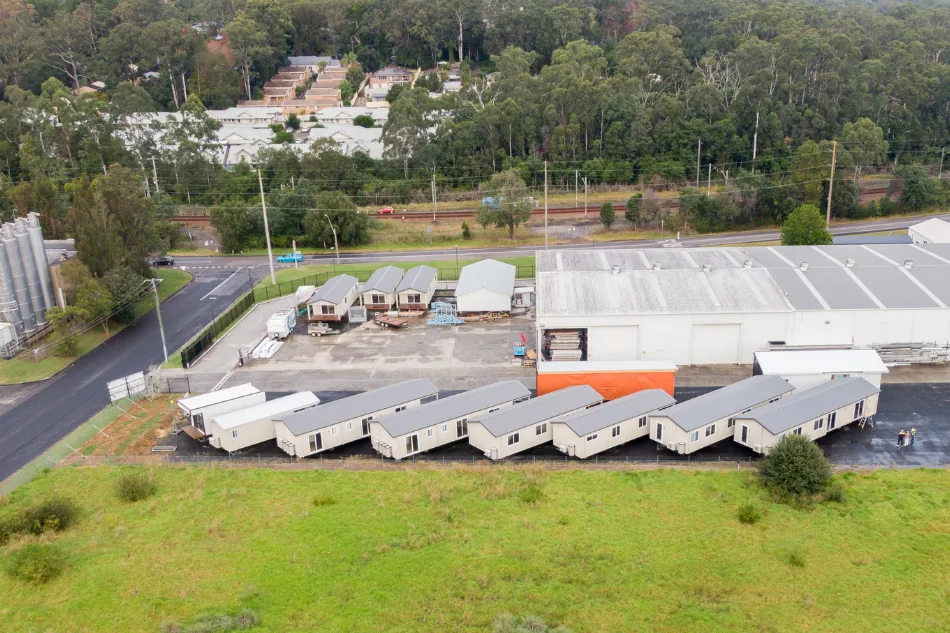
Aruva stock can include housing that’s already complete and ready for delivery. It can also include units currently in production. Stock changes regularly, so the exact options depend on what’s available at the time.
You can check Aruva’s current stock units available or under construction before comparing them with a new order.
A stock unit still doesn’t simply turn up tomorrow.
The site needs to be ready. Approvals may be required. Transport, installation and services need coordination.
However, if a suitable unit is complete or already in production, you may avoid some of the lead time involved in ordering a new build.
For new builds, Aruva’s published FAQ gives a general build period of around 8–12 weeks, depending on requirements. This excludes ordering, specification and paperwork lead time. It’s a guide, not a guaranteed completion date.
Final delivery timing depends on stock status, project requirements and site readiness.
Think about what happens if the housing isn’t there when you need it.
If harvest starts in six weeks and you need beds for seasonal workers, a delay isn’t just inconvenient. It can become an operational problem.
The same applies when you’re securing workers who need suitable accommodation before they’ll commit.
In these situations, suitable stock modular housing can make more commercial sense than waiting for a newly built unit.
Choose an existing design when it already fits the number of occupants and the way they’ll use the housing. Bedrooms, bathrooms, privacy and shared living space matter more than whether a unit is labelled “custom”. If a set design solves the operational requirement, standardisation is doing exactly what it should.
Start with the people who’ll live there.
How many people need accommodation?
How many bedrooms and bathrooms do you actually need?
Do occupants need shared living areas, or is privacy more important?
Will one person live there long term, or will several workers rotate through the accommodation?
Those questions should drive the choice of design.
Aruva works from an established range of pre-designed modular homes with different sizes and configurations. Depending on the project, the right design may already be in stock, in production or available to order as a new build.
If one of those designs meets the practical requirement, choosing it isn’t a compromise.
Standardisation can be a strength.
It removes decisions that don’t need to be made and keeps the project focused on the outcome. You’re working from a proven design with a clear job rather than designing a building from scratch.
For farm owners and managers, that matters. You’ve already got enough decisions across the operation without creating unnecessary ones around worker housing.
Ask one question:
Does one of Aruva’s established designs properly solve the housing requirement?
If it does, there may be little operational benefit in looking for something more complex.
For example, a two-bedroom design might provide the privacy, bathroom access and living space your workers need. If so, its standardised layout isn’t a drawback.
It’s doing the job it was designed to do.
If none of the established designs suits the required use, identify that early. Don’t assume walls, room sizes or the floorplan can simply be changed.
Site requirements don’t automatically mean you need a different housing design. They determine whether a particular stock or ordered design can be delivered, positioned and connected properly. Access, services, approvals and placement need to work with the building. Those issues should be checked before availability alone drives the decision.
The building is only one part of the job.
Access, orientation, services, delivery conditions and nearby buildings can all affect which housing option is practical.
You’ll need to consider:
Choosing stock modular housing doesn’t remove any of those requirements.
It simply means you’re working with a unit that’s already complete or in production.
Before delivery, Aruva’s modular delivery site checklist provides a practical way to check access, approvals, foundations, services and responsibilities before installation day.
Approval requirements also depend on the site and intended use. In NSW, Section 68 approvals can apply to activities including installing a manufactured home or moveable dwelling and carrying out certain water, sewerage and stormwater works.
The NSW Planning Portal Section 68 guidance explains those requirements in more detail.
Some sites are straightforward. Others aren’t.
You might be placing one worker unit near an existing farmhouse with suitable access and nearby services. In that case, an available stock design may fit the job well.
A larger project can be different.
You might be coordinating several buildings, dealing with difficult access or working around existing infrastructure. That can require more project planning.
Extra planning doesn’t necessarily mean changing the housing designs.
Instead, it may mean choosing the right set designs and quantities, then working out where they’ll sit on the site.
The question is whether the available housing range and the site can work together properly.
Specify the things that materially change the housing outcome. With Aruva, made-to-order means selecting an established design and working through the specifications available for it. It doesn’t mean redesigning the floorplan from scratch. Separate genuine operational requirements from preferences before adding time or complexity to the project.
It’s easy for a list of preferences to turn into a list of “requirements”.
They’re not always the same thing.
When ordering a new build, separate what the project needs from what would simply be nice to have.
Depending on the chosen design and available specification options, that may include:
Need to have
Nice to have
That doesn’t mean finishes don’t matter.
They do.
But weigh them against why you’re buying the housing in the first place.
For worker housing, the building needs to provide practical, comfortable accommodation that performs day after day.
If a pre-designed option already does that, standardisation may be helping the project rather than holding it back.
Aruva’s made-to-order option shouldn’t be read as unlimited customisation. It means ordering a suitable unit from the established design range and selecting from the specifications available for that design.
More choices don’t automatically mean a better result.
Sometimes they just mean more decisions.
A proven standard design can be a strong option because the major decisions around function have already been worked through.
That’s particularly useful on farms, where housing is one part of a much bigger operation.
The job is to get suitable accommodation in place, keep the project moving and choose something built to handle the work over the long term.
Waiting is worthwhile only when the benefit of a particular design or specification is greater than the operational cost of delay. Compare what you gain by ordering a new unit with what suitable stock can already deliver. Timing, function, budget, workforce needs and future use should all be considered together.
If you order a new unit from Aruva’s established range, what are you gaining by waiting?
If you choose stock, what are you giving up?
Judge the options on the operational outcome. Don’t assume one approach must be better.
Consider:
Budget matters too, but don’t look at it on its own.
Delay has a cost.
If workers can’t be accommodated when needed, that can affect recruitment, productivity and the wider operation.
But an available unit that doesn’t meet a long-term requirement can also create problems later.
The aim is to get timing, function, cost and complexity working together.
Stock modular housing may be the practical choice when a fixed workforce deadline is approaching and an available unit already meets the required occupancy and layout. If changing finishes or waiting for another design won’t materially improve the housing outcome, getting the suitable unit in place sooner can make better commercial sense.
A farm needs accommodation for seasonal workers before harvest.
The number of workers is known. A current stock unit has the right bedroom and bathroom configuration. The layout works, and the site can be prepared in time.
The farm owner may prefer other finishes or available options. However, none would materially change how the accommodation performs.
The existing design already solves the problem.
Waiting for a new unit simply to gain a different preference could make the job harder without improving the operational result.
Ordering new units may make more sense when a larger, long-term project needs a particular mix of Aruva’s established designs that current stock can’t provide. Where occupancy, site planning and future growth are important, the operational value of getting the right set designs can justify the additional planning and build lead time.
A larger operator is planning accommodation for a growing workforce.
The housing will be used for years. The project also needs to account for occupancy numbers, site layout and future expansion.
The stock available at the time doesn’t provide the right mix of established designs for the project.
In that case, ordering new units from Aruva’s design range may be the better fit.
That’s not because made-to-order housing is automatically better.
It’s because the operator has a clear long-term requirement. Waiting for the right established designs and available specifications may produce a better operational outcome.
Choose stock modular housing when timing matters and an available design already meets the real requirement. Order a new unit when a particular established Aruva design or available specification materially improves the project and is worth the additional lead time. Neither option wins by default; the project requirement decides.
For most projects, the decision comes back to one question:
What’s the simplest housing solution that properly solves the problem?
If an available unit does that, standardisation is doing its job.
If the right established design needs to be built, waiting may be worthwhile.
The goal isn’t to end up with the most customised building.
It’s to end up with proven accommodation that fits the requirement, can be delivered in a practical timeframe and is built for the work ahead.
Real living comes from getting those fundamentals right: housing that works for the people using it and for the operation relying on it.
Is stock modular housing ready for immediate delivery?
Not necessarily. Aruva stock can include units that are ready for delivery and units currently under construction. Stock also changes regularly. Final timing still depends on the individual unit, site readiness, approvals, transport, installation and other project requirements.
How long does a new Aruva modular build take?
Aruva’s published general guide is around 8–12 weeks to build a unit from scratch, depending on requirements. That timeframe excludes ordering, working through specifications and completing paperwork, so it shouldn’t be treated as a guaranteed project completion date.
Does Aruva offer custom modular housing in Australia?
Aruva doesn’t position its service as open-ended bespoke design. It works from an established range of pre-designed modular homes. A new unit can be ordered from that range with the specifications available for the selected design, rather than creating a general custom floorplan from scratch.
Does choosing a stock unit remove the need for approvals or site preparation?
No. A stock unit still needs a suitable site, access, foundations or footings, service connections and the relevant approval pathway. These requirements depend on the property, intended use and local rules. Aruva recommends checking them before locking in delivery.
When is ordering a new unit worth waiting for?
It’s worth considering when current stock doesn’t provide the established design, occupancy or available specification the project genuinely needs. The extra lead time should deliver a meaningful operational benefit, not simply more choice for its own sake.

Download your copy of our Accommodation Guide.
Aruva’s experienced team will collaborate with you about our modular accommodation solutions.

Talk to us about your property, timeline and requirements.

We’ll supply a proposal based on your design preference.

Place your order! We’ll build and install your new modular accommodation.
There’s no place like home, right? Your staff can spend their evenings in comfort and style, relaxing and connecting with friends and family, and then recharge their batteries with some quality zzzzs.


Our Resources

Worker housing design works best when you spend deliberately. See which specifications improve durability, comfort and lifecycle value.

Can community housing providers deliver quality homes quickly and within budget? See how modular construction helps balance all three.