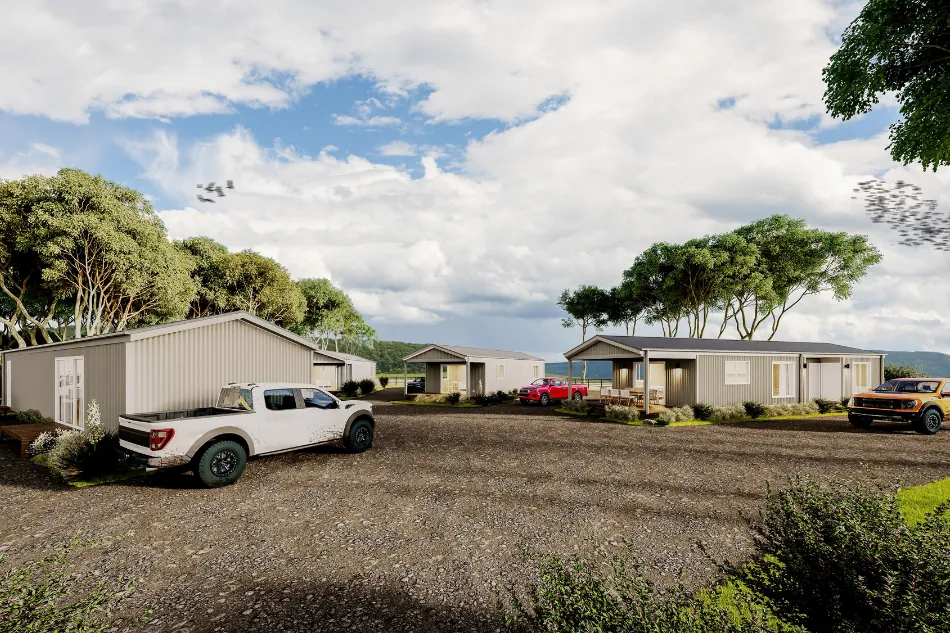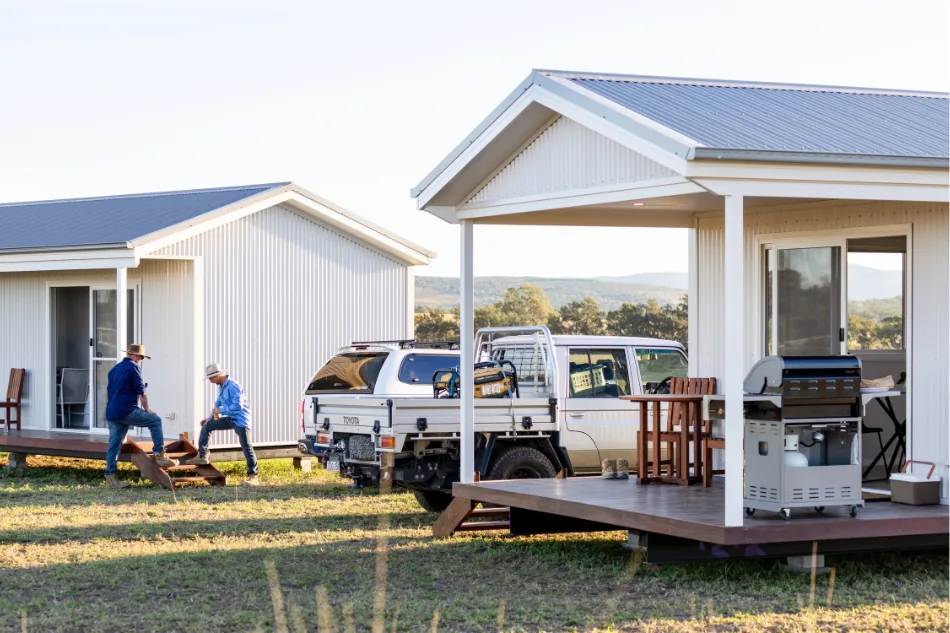


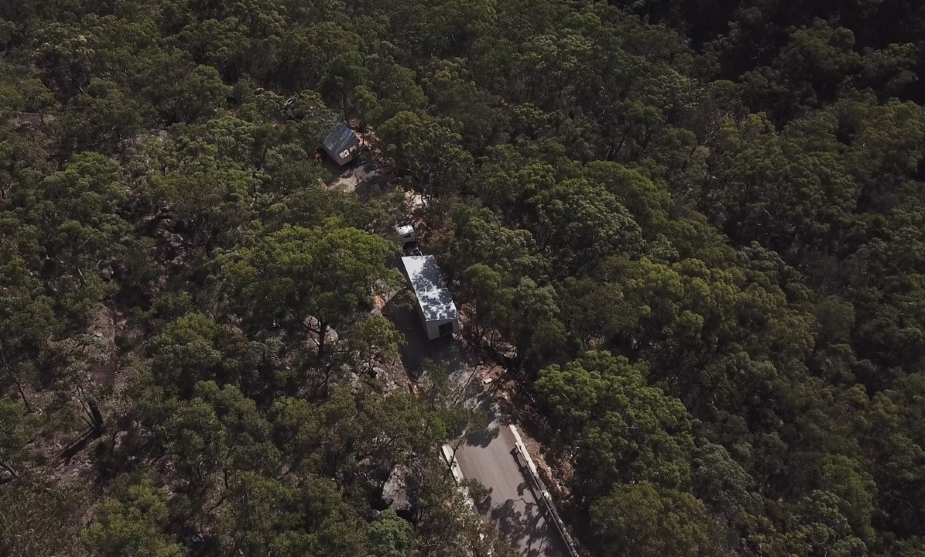


If you’re running a lifestyle village, managing a manufactured home estate, or operating a remote site where people need a decent place to rest their head, chances are you’ve looked into modular or demountable buildings. They’re practical, fast to set up, and don’t require you to pour a slab or build from the ground up.
But one question crops up often from smart business owners and managers across NSW: Can I claim depreciation on relocatable or modular buildings?
The short answer is yes—but only if they’re designed and used in a certain way. The Australian Taxation Office (ATO) has been clear about this, and there’s a ruling—TD 97/24—that lays it all out.
Here’s what you need to know if you want to stay on the right side of the tax man and make your investment pay off.
The ATO’s View: Not All Buildings Are Equal
The ATO issued Tax Determination TD 97/24 to explain what kinds of buildings used in lifestyle villages and similar settings can be depreciated as “plant”. That’s ATO speak for assets that aren’t considered permanent fixtures—things you can move or replace, like a demountable home or portable cabin.
Take this real-world example the ATO gives:
Mary owns and operates a lifestyle village.
She buys a relocatable manufactured dwelling that comes in two parts on the back of trucks. It doesn’t have wheels, but it sits on a chassis that supports it when it’s placed down. A crane lifts it into position and workers bolt the two halves together. Mary can’t move it easily—it would take a crane and some unbolting.
But because it was designed to be moved and isn’t fixed permanently to the ground, Mary can claim depreciation on the dwelling.
Now compare that with her plan to later install a kit home, which she wants to stay put permanently. The ATO rules that this type of building is a fixture, and therefore not eligible for depreciation as plant.
So, the big message here: if a building is meant to stay put, it’s not depreciable in the same way. But if it’s movable and designed to be relocatable, the ATO gives it the green light.
How Depreciation Works for These Units
If your building ticks the right boxes, you can claim depreciation over its “effective life”—the number of years the ATO reckons it’ll be useful.
Here’s what the ruling says:
- Relocatable homes and park cabins with a chassis (i.e. not fixed to the ground) are seen as articles, and have an effective life of 20 years
- Manufactured homes that are also considered articles may be written off over 30 years
Want to go your own way? No worries. You can choose to make your own estimate of the building’s effective life under Division 42 of the Act. The ATO has even put out a separate guide—Taxation Ruling IT 2685—that shows how to do that properly.
That can be handy if your buildings cop a hiding from the elements or get more use than average—like accommodation units in a regional lifestyle village, a workforce site, or transitional housing for agricultural staff in NSW.
You can read the ATO’s full determination on effective life here.
What This Means for Regional and Rural NSW
If you’re running a business in rural New South Wales, every dollar counts—and making smart decisions about infrastructure can mean the difference between growing your profits or spinning your wheels.
This ruling is a big win for lifestyle village operators and estate owners who’ve invested in—or are thinking of investing in—modular, transportable, or relocatable buildings.
Whether you’re running a manufactured home estate near Dubbo, building out accommodation for seasonal workers in Griffith, or managing affordable housing in the Northern Rivers, these types of buildings can help you:
- House residents or workers quickly
- Avoid lengthy build times
- Keep your investment mobile and flexible
- Claim depreciation and reduce your tax bill over time
It’s no surprise that accommodation managers who are smart about investing on behalf of their people are already ahead of the game here. They recognise that movable, tax-effective accommodation isn’t just a stopgap—it’s a long-term asset that can adapt with their needs.
What Qualifies as “Movable” in the ATO’s Eyes?
Let’s be clear here. Just because a building is technically able to be moved doesn’t mean it qualifies.
If you’ve poured a concrete slab and constructed the building in the traditional way—with the intention that it stay in place for good—then the ATO will treat it as a fixture. Fixtures fall under building capital works and aren’t eligible for plant depreciation.
But if the building:
- Has a steel chassis or transportable sub-frame
- Was built to be relocated (even if it requires cranes or equipment)
- Was delivered in sections and assembled on site without permanent footings
- Can be dismantled and moved in future without structural damage
…then you’re likely in the clear.
It’s worth talking to your accountant before pulling the trigger, especially if you’re ordering new units. Show them the specs. Talk about the layout and the installation method. Better to be safe than sorry.
Why Modular Makes Sense—On the Ground and on Paper
More and more rural NSW businesses are going modular. Why? Because it works.
At Aruva Modular, we build practical designs that make life easy and pay back. Whether it’s a pair of two-bedroom units or a staged rollout for a full estate, our approach keeps things efficient and flexible.
We specialise in the rapid fulfilment of superior modular buildings, driven by efficient processes & approved partnerships. That means your builds arrive quicker, install smoother, and fit your needs—without you getting tangled in delays and red tape.
Our buildings are relocatable by design. That’s important, because it means they’re eligible under the ATO’s criteria—so you’re not just saving time, you’re also getting more value back through tax deductions.
And if you’ve ever dealt with a construction project in regional NSW, you’ll appreciate this next bit: our process keeps it simple, so you’re sorted from start to finish. No fuss. No mystery quotes. Just straightforward delivery and setup by a team that gets it.
It’s why our clients tell us: Real Living. Delivered.