


Essential and key workers keep regional Australia running, but without proper housing, they won’t stay. Here’s why smart managers invest in real solutions.


HUGE SALE NOW ON MODULAR HOUSING! MASSIVE SAVINGS UP TO $30,000
Every rural community in Australia knows the struggle: we need more doctors, teachers, farmhands, aged care workers—the list goes on. Without them, towns shrink, businesses struggle, and the people who stay are left doing more with less.
But here’s something that often gets overlooked: where are these workers meant to live?
Governments and businesses talk about incentives, wages, and recruitment programs, but if a worker can’t find a decent place to call home, they won’t stick around. And that’s where understanding essential workers and key workers becomes important. They’re not just labels; they help define what different types of workers need—and why proper housing is a critical missing piece in regional Australia’s workforce puzzle.
The government uses both terms, and while they overlap, they serve different purposes. Knowing the distinction helps ensure the right support goes to the right people.
Essential Workers: The Ones Who Keep Society Running
When disasters hit, when crises unfold, when everything else shuts down—essential workers keep going. The government defines essential workers as those whose jobs are critical to basic services and public safety.
In regional areas, that means:
Without them, everything stops. Essential workers are the backbone of day-to-day survival, especially in rural and remote regions where there’s little backup if they’re not there.
Key Workers: The Ones Who Keep Communities Alive
Key workers don’t always deal with emergencies, but their presence (or absence) shapes the long-term health of a community. These are workers that industries and governments identify as crucial for the functioning of a specific area or economy—and they’re often hard to recruit and keep in regional Australia.
Examples include:
Key workers might not make headlines in a crisis, but try running a town without them. When a school can’t fill a teaching position, families move. When a hospital can’t staff its wards, patients drive hours for care. And when a farm can’t get enough workers, crops are left to rot.

Now, here’s where reality kicks in: if these workers can’t find a good place to live, they won’t come— and if they do, they won’t stay.
This is one of the biggest and most overlooked challenges facing rural Australia. Local businesses, councils, and community groups are working hard to attract essential and key workers, but housing is a dealbreaker. In too many regional towns, the options are:
The solution? Purpose-built, high-quality modular housing that makes it easy for workers to move in and settle down—quickly and affordably.
Smart accommodation and departmental managers understand this reality. They know that investing in housing isn’t just about providing shelter—it’s about securing and retaining the workforce that keeps their businesses and communities running. It’s a simple equation: give workers a reason to stay, and they will.
Companies like Aruva Modular specialise in the rapid fulfilment of superior modular buildings, driven by efficient processes & approved partnerships. That means communities, businesses, and property owners can secure needed persons with housing that’s practical, well-designed, and ready to go.
It’s why we say Real Living. Delivered. Because without reliable housing, attracting workers to regional Australia will always be an uphill battle.
Talk to any regional employer, and they’ll tell you the same thing: finding the right workers is hard. But keeping them? That’s even harder. The reality is that wages and job security only go so far—workers need a place where they can actually live, feel comfortable, and put down roots.
That’s why housing has to be part of workforce planning. Local councils, agribusinesses, hospitals, and
schools need to invest in the right accommodation solutions to make regional jobs genuinely attractive [National Farmers’ Federation – Workforce & Housing](https://nff.org.au/workforce/).
Without good housing:
With good housing:
Accommodation and departmental managers who are smart about their investments in their people for getting better performance from their organisation are already ahead of the curve. They recognise that housing is more than just an expense—it’s a strategic advantage that ensures workers stay longer, perform better, and contribute more to the community.
At the end of the day, a well-built, well-located home isn’t just a roof over someone’s head—it’s a reason to stay. And in regional Australia, that makes all the difference.
Because when a worker gets A Good Night’s Sleep, they’re far more likely to stick around.

Download your copy of our Accommodation Guide.
Aruva’s experienced team will collaborate with you about our modular accommodation solutions.

Talk to us about your property, timeline and requirements.

We’ll supply a proposal based on your design preference.

Place your order! We’ll build and install your new modular accommodation.
There’s no place like home, right? Your staff can spend their evenings in comfort and style, relaxing and connecting with friends and family, and then recharge their batteries with some quality zzzzs.


Our Resources
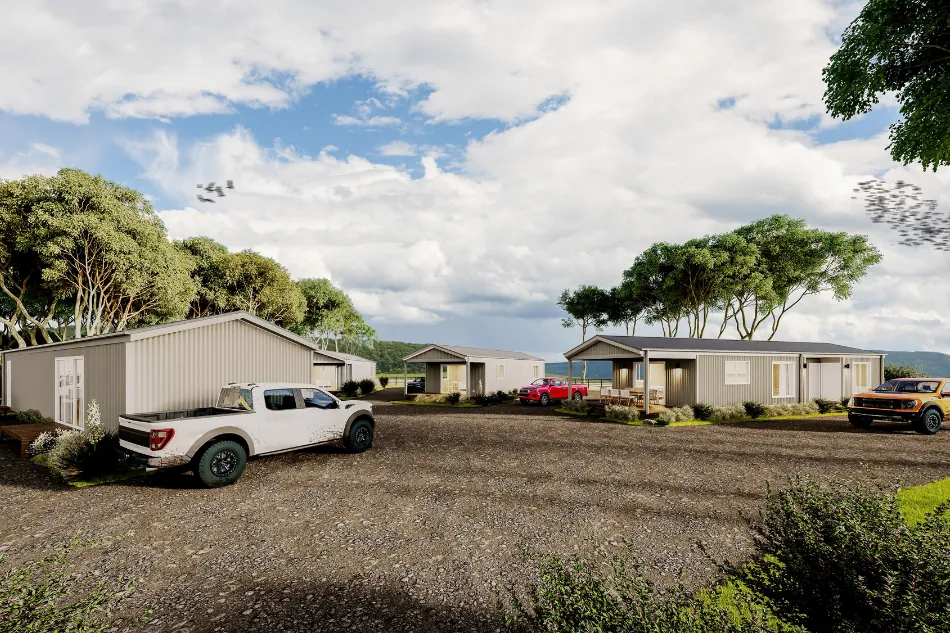
Learn how scalable worker housing helps farm operators meet current demand, plan for growth and avoid committing to excess capacity too early.

Planning multiple modular housing units? Learn what to check for power, water and wastewater before you lock in site layouts or unit numbers.
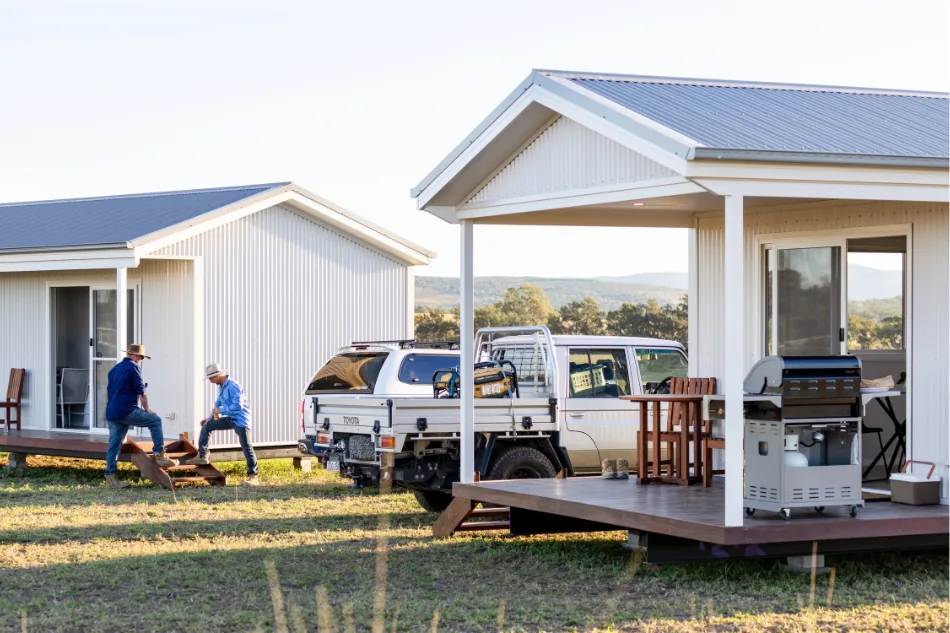
Modular housing cost Australia explained: see the seven budget areas beyond the unit price, from freight and footings to approvals and services.