


Housing fire and electrical safety, made simple. Quick checks and the right questions to ask so you know the housing is up to spec and low-risk.


HUGE SALE NOW ON MODULAR HOUSING! MASSIVE SAVINGS UP TO $30,000
If you’re responsible for people, you want one thing: confidence. You want to know the housing fire and electrical safety is up to spec, without having to become an electrician or fire engineer.
The challenge is simple: most safety features are hidden. They sit behind walls, above ceilings, and inside the switchboard. So when you’re comparing housing options, it’s easy to focus on layout and finishes and miss what protects people.
This is a straight, practical guide. It’s here to reassure you, and it gives you the exact questions to ask before you commit.
Good safety doesn’t shout. It just works.
That’s why the best safety features are the ones you’ll be glad you never notice. Housing managers who are smart about getting the right balance across budgets and outcomes usually focus on reliability and risk, not bells and whistles.
Also, requirements can change depending on how the housing is used and classified. So instead of getting lost in technicalities, ask for clear answers and handover evidence.
1) Fast shut-off protection (safety switches)
A good system cuts power quickly when a fault happens. For example: a damaged cord, a wet-area issue, or a faulty appliance.
Why it matters: it lowers shock risk and helps stop small faults turning into bigger problems.
What to ask:
2) A switchboard that’s tidy, labelled, and easy to service
You don’t need a fancy switchboard. You need a logical one that someone can understand quickly.
Why it matters: when something trips, you want a quick fix, not a guessing game. Clear labels also make servicing safer.
What to ask:
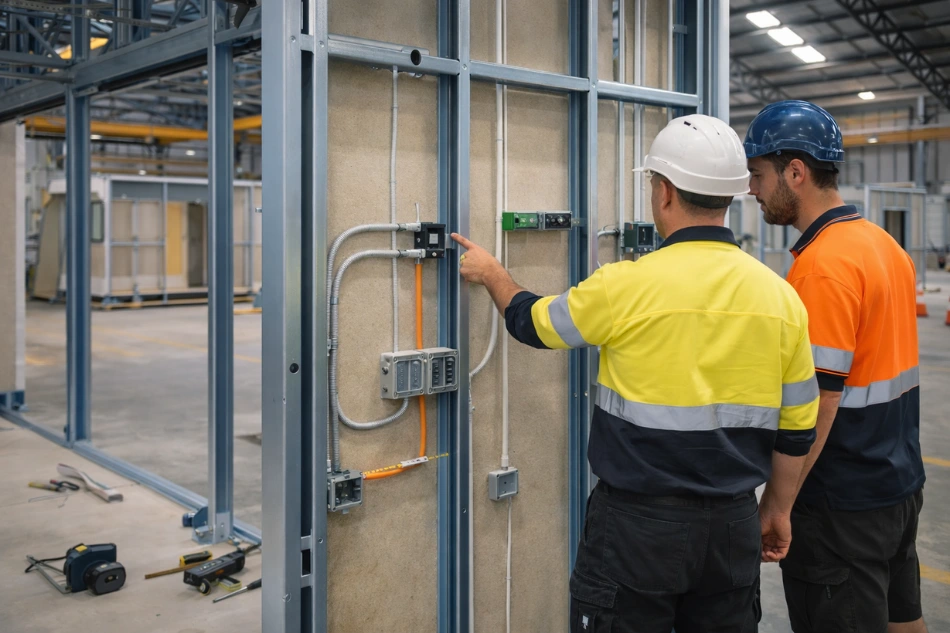
3) Wiring that’s protected and finished properly
Most electrical problems don’t start with drama. They start with wear, damage, moisture, or poor finishing.
Why it matters: good installation reduces faults over time and cuts down call-outs.
What to ask:
1) Smoke alarms done properly (not just “there’s an alarm”)
Most people know smoke alarms matter. Fewer people think about the setup: correct locations, and alarms working together when required.
Why it matters: early warning buys time. Time is everything when people are asleep.
What to ask:
2) No gaps where services pass through walls and ceilings
Every building has penetrations: power, plumbing, exhausts, air-con lines, data. If someone leaves gaps around these, smoke can move faster than most people expect.
Why it matters: good sealing helps slow smoke spread and keeps the housing performing as intended.
What to ask:
When the basics are done properly, you usually get:
Smart farm managers who know good housing keeps good people tend to care about that quiet reliability more than anything else.
Use this list as-is. Keep it simple. A good supplier will answer clearly.
Electrical
1. What safety switch protection is included as standard?
2. Is the switchboard clearly labelled and easy to service?
3. What testing is done before handover, and what paperwork do we get?
Fire safety
4. What’s the smoke alarm setup, and where are the alarms placed?
5. Are the alarms linked together where required for this type of housing?
6. How are wall/ceiling penetrations sealed where services pass through?
After delivery
7. If something goes wrong, what support do you provide and how fast do you respond?
You don’t need to know every rule. However, you do need straight answers and a supplier who can back up the basics at handover.
Because the best housing fire and electrical safety features are the ones you’ll never notice — until the day you’re very glad they were done properly.

Download your copy of our Accommodation Guide.
Aruva’s experienced team will collaborate with you about our modular accommodation solutions.

Talk to us about your property, timeline and requirements.

We’ll supply a proposal based on your design preference.

Place your order! We’ll build and install your new modular accommodation.
There’s no place like home, right? Your staff can spend their evenings in comfort and style, relaxing and connecting with friends and family, and then recharge their batteries with some quality zzzzs.


Our Resources
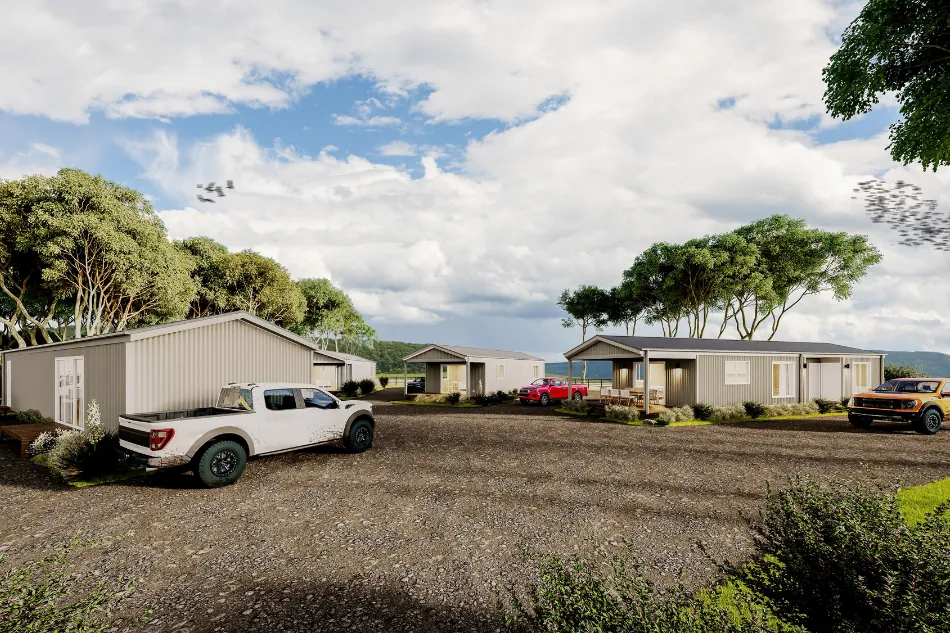
Learn how scalable worker housing helps farm operators meet current demand, plan for growth and avoid committing to excess capacity too early.

Planning multiple modular housing units? Learn what to check for power, water and wastewater before you lock in site layouts or unit numbers.
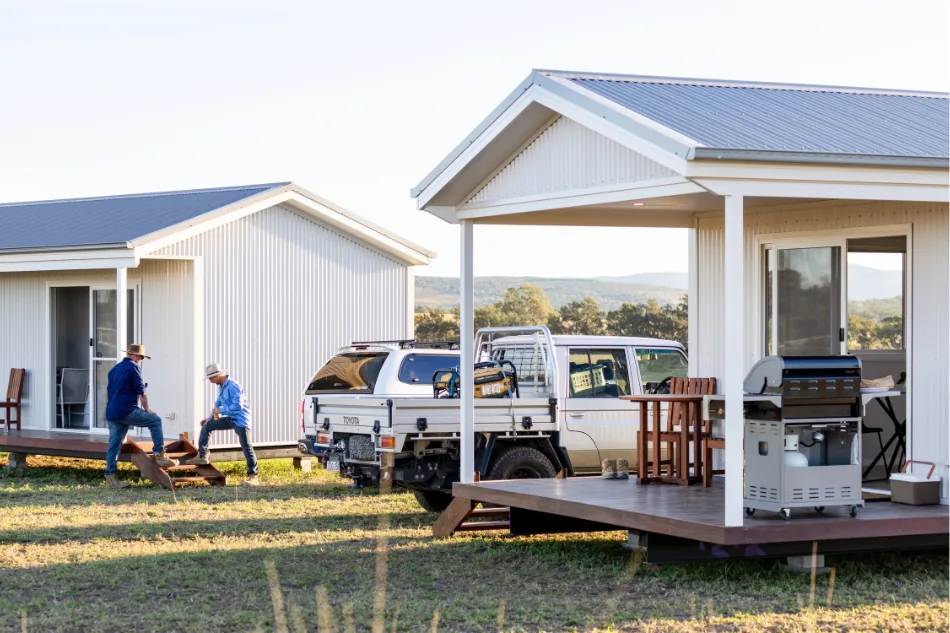
Modular housing cost Australia explained: see the seven budget areas beyond the unit price, from freight and footings to approvals and services.