



Summary of the State of the Housing System 2025 for community housing providers, with clear takeaways on supply shortfalls and delivery.


HUGE SALE NOW ON MODULAR HOUSING! MASSIVE SAVINGS UP TO $30,000
Australia’s housing system remains under heavy strain. The State of the Housing System 2025 report commissioned by the Australian Government is useful because it links the numbers to real outcomes: stress, scarcity, and people missing out.
Smart housing managers already know the practical truth: good housing keeps good people. That matters in community housing, and it also matters for anyone housing a workforce.
So, instead of adding noise, this article focuses on what the report actually says, plus what it means for delivery.
In 2024, a median household needed around 50% of income for a new mortgage, and 33% for a new lease. The report also notes 10.6 years to save a deposit, and a price-to-income ratio of 8.0.
In addition, national prices rose 4.9% in 2024, with rents up 4.8%. Early 2025 continued that trend.
The report says 2024 completions hit 177,000 dwellings. It also estimates underlying demand of ~223,000 dwellings in 2024. That gap adds to an existing backlog.
The Council forecasts 938,000 completions over the Accord period, which falls short of the 1.2 million target. After demolitions, net new supply is 825,000, which is ~79,000 fewer dwellings than underlying demand.
The report separates cyclical pressures from structural constraints.
Yes, some cyclical constraints are easing. However, the report says structural constraints remain the main barrier.
These structural constraints include:
As a result, the system pushes pressure downstream. When supply stays short, the report flags greater reliance on “suboptimal” shelter such as caravan parks, hotels, and emergency shelters, as well as more homelessness and overcrowding.
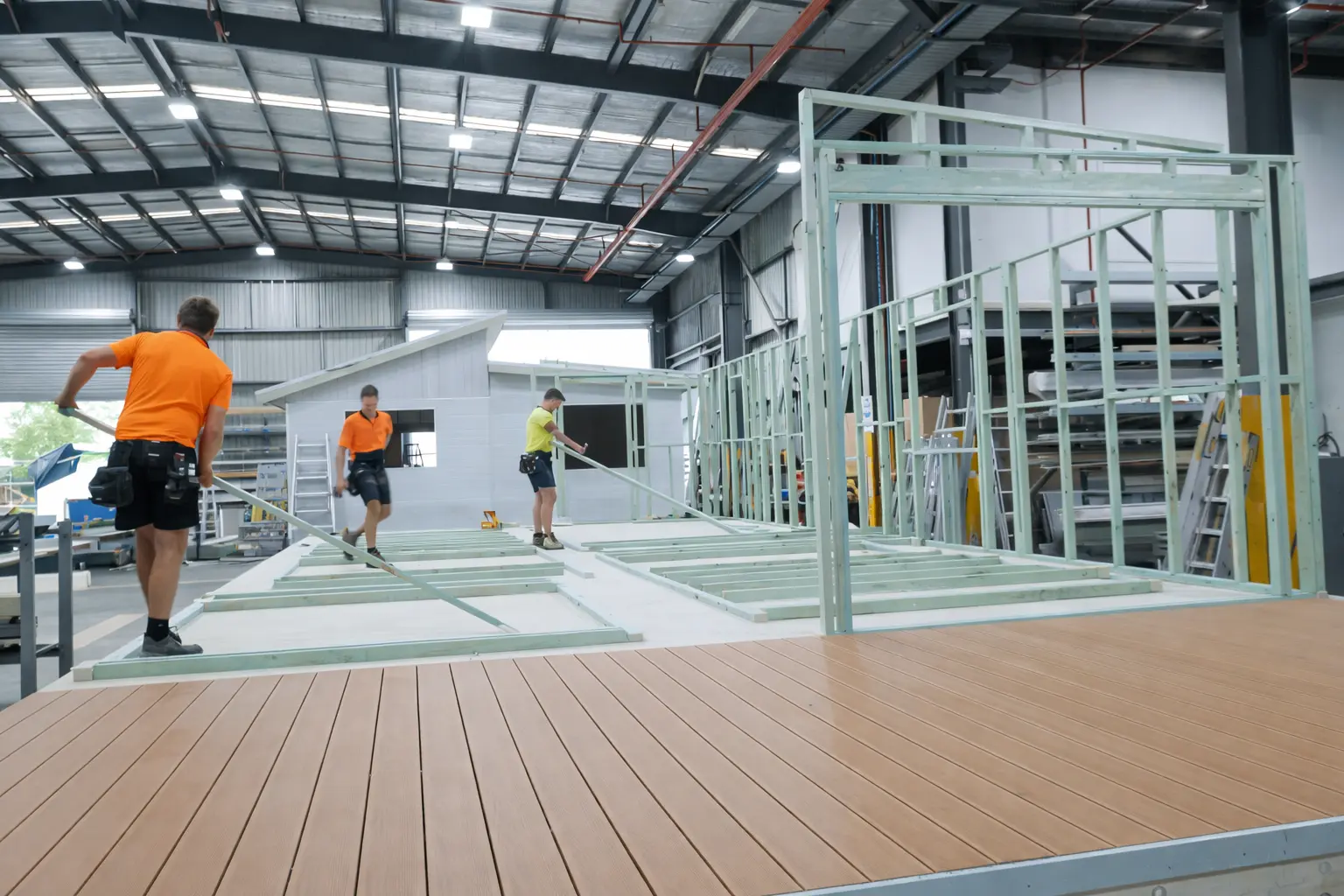
Funding matters. Yet delivery reliability matters just as much when constraints sit outside your control.
Therefore, CHPs will benefit from treating supply as a repeatable operating model. Not a one-off project cycle.
The report notes governments target 55,000 new social and affordable dwellings over the Accord period.
That target increases expectations. It also increases scrutiny on timelines, governance, and outcomes.
The Council recommends reviewing the National Regulatory System for Community Housing (NRSCH), with the long-term goal of a best-practice national framework.
So, trust and transparency won’t be “nice to have”. They’ll be part of the delivery environment.
If the report points to one practical priority, it’s this: reduce uncertainty in delivery.
That means three things for CHPs and delivery partners.
Standardise where you can. Repeat what works. Keep learning loops tight.
Treat land readiness, approvals pathways, and services planning as front-end work. Do it early. Do it properly.
The report supports unlocking modern methods of construction (MMC) and recommends governments investigate feasibility and address barriers to uptake. It also flags the role of stable procurement pipelines to support investment.
MMC won’t fit every site. However, the intent is clear: Australia needs delivery models that cut time, variability, and reliance on scarce site labour.
To keep it practical, here are questions that help you test delivery credibility:
Because when the system stays tight, the housing managers who balance budgets and outcomes well are the ones who keep delivering.
The crisis didn’t appear overnight. The report frames it as decades in the making, and the data supports that.
Even so, delivery is still the lever that changes lived outcomes. Investors who back builds that actually pay off will keep leaning towards delivery models that perform under constraint.
Source: National Housing Supply and Affordability Council, State of the Housing System 2025.

Download your copy of our Accommodation Guide.
Aruva’s experienced team will collaborate with you about our modular accommodation solutions.

Talk to us about your property, timeline and requirements.

We’ll supply a proposal based on your design preference.

Place your order! We’ll build and install your new modular accommodation.
There’s no place like home, right? Your staff can spend their evenings in comfort and style, relaxing and connecting with friends and family, and then recharge their batteries with some quality zzzzs.


Our Resources
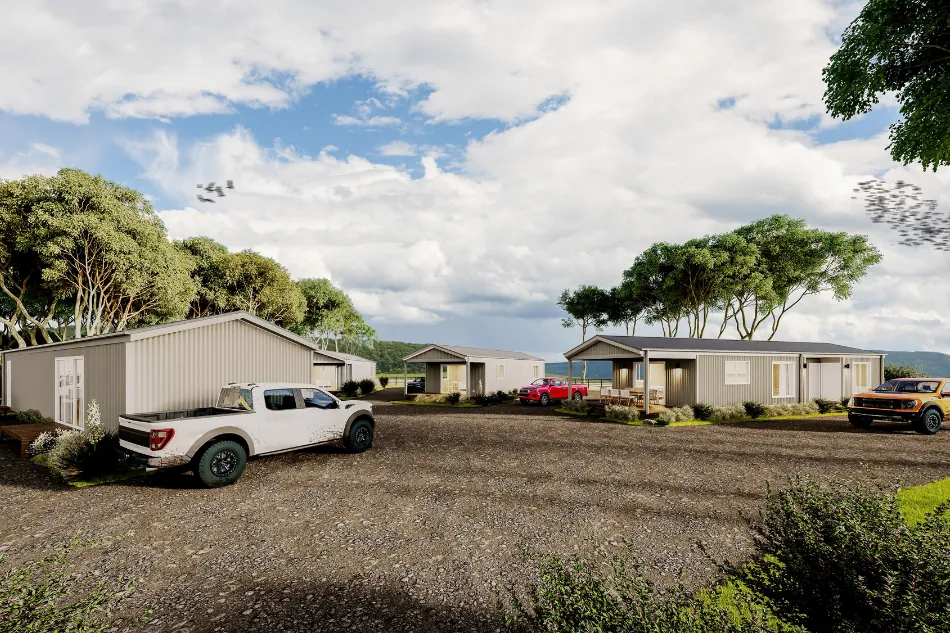
Learn how scalable worker housing helps farm operators meet current demand, plan for growth and avoid committing to excess capacity too early.

Planning multiple modular housing units? Learn what to check for power, water and wastewater before you lock in site layouts or unit numbers.
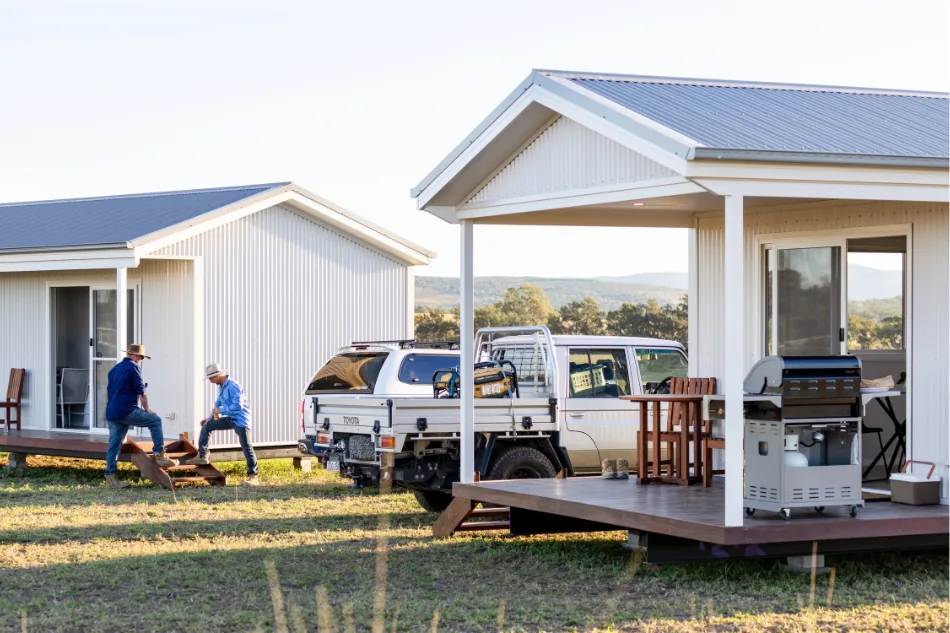
Modular housing cost Australia explained: see the seven budget areas beyond the unit price, from freight and footings to approvals and services.