The mistake is designing traditionally, then trying to convert it
This is where many government and large accommodation projects go wrong.
The project goes through a conventional design process. The brief’s written. Plans are developed. The layout, appearance and construction approach become increasingly fixed. Then a modular manufacturer is asked to make it work.
Sometimes they can. But it’s far harder than considering modular from the beginning.
The manufacturer may need to revisit decisions that have already been approved. The design team may need to redraw parts of the building. Time gets lost. Costs increase. The efficiencies everyone expected start to disappear.
That doesn’t prove modular couldn’t deliver the building. It proves modular wasn’t allowed to shape the building early enough.
The comparison between site-built and modular accommodation isn’t really about which method can produce an attractive building. Both can. The key difference is the delivery process.
Designing for modular doesn’t restrict the outcome
Every construction method has a process. Traditional construction has one. Modular has another.
Understanding that process doesn’t reduce the client’s options. It helps the design team make better decisions earlier.
There may be a slightly different way to create a particular roofline, room layout or external finish. That doesn’t mean the outcome can’t be achieved. It means the team needs to design it with the delivery method in mind.
Once that happens, the options can be remarkable. The project can still respond to its location, the people using it, the required level of comfort, surrounding buildings, visual preferences, accessibility, performance requirements and day-to-day operations.
Modular-first thinking isn’t about lowering the ambition. It’s about achieving the ambition through a more considered process.
Modular-first design can preserve more options
There’s another advantage that often gets missed.
A project designed properly for modular construction can often still be delivered using traditional construction if circumstances change. Going the other way is generally much harder.
Once a building has been fully designed around conventional on-site construction, converting it into an efficient modular project can require substantial redesign.
So modular-first thinking doesn’t necessarily lock a client into one construction method. In many cases, it preserves more options.
The project starts with a logical and buildable design. The client can then make an informed decision about how it’ll be delivered. That’s a stronger position than trying to add modular efficiency after the design is finished.
Government needs to work directly with experienced manufacturers
Government’s renewed interest in modular housing is welcome. But announcing a program or consulting the market isn’t enough.
There’s a major difference between working with industry while the solution is still being developed and asking industry to price a completed solution.
The people shaping government programs need direct input from manufacturers who’ve actually delivered modular projects. People who’ve built the accommodation, transported it, installed it, solved the practical problems and improved their processes through experience.
This knowledge helps government understand what’s genuinely possible, where the efficiencies are and how early decisions affect the final outcome.
It also aligns with established Australian procurement guidance. The Australian Government’s National Guidelines for Infrastructure Project Delivery recognise early contractor involvement and collaborative delivery models as ways to access private-sector knowledge and innovation earlier in a project.
The same thinking should apply to modular accommodation.
Architects still matter—but they can’t work alone
This isn’t an argument against architects. Good architects are essential. They help create buildings that are attractive, functional, comfortable, accessible and suited to their location.
But they shouldn’t be expected to know everything about modular manufacturing. That’s not their job. In the same way, manufacturers shouldn’t be expected to replace architects.
The issue is collaboration and timing.
If the architect develops the entire project in isolation and the manufacturer arrives later, the team may need to undo decisions. If the manufacturer’s involved early, the architect can design with a clearer understanding of the delivery method.
The result isn’t less design freedom. It’s better-informed design.
Industry groups such as prefabAUS are actively promoting closer collaboration between government, designers, manufacturers and other industry participants to improve prefabricated and modular construction in Australia.
That collaboration needs to happen at the start. Not once the drawings are finished.
Smart managers don’t try to become modular experts
There’s a practical lesson here for farm managers, accommodation managers and project managers.
The strongest managers don’t try to become architects, builders and modular manufacturing experts themselves. They don’t need to.
They define the outcome: how many people need accommodation, who’ll be living there, what level of comfort is required, where the site is, when it needs to be ready and what success looks like.
Then they go directly to experienced manufacturers and involve them early. They find people who’ve already worked through the modular accommodation process and know how to turn the requirement into a practical solution.
That’s what smart managers do. They don’t spend months trying to design the answer before speaking to the people who’ll deliver it. They get the right people into the conversation early.
Experience creates more options, not fewer
An experienced modular manufacturer won’t only tell a client what can’t be done. They’ll explain how it can be done.
They may suggest a different way to arrange the building, create the required appearance or stage the project. They’ll understand which parts can be standardised and where flexibility adds real value.
That’s where experience matters. A manager who’s new to modular may only see the first option. A manufacturer who’s delivered multiple projects can often see five.
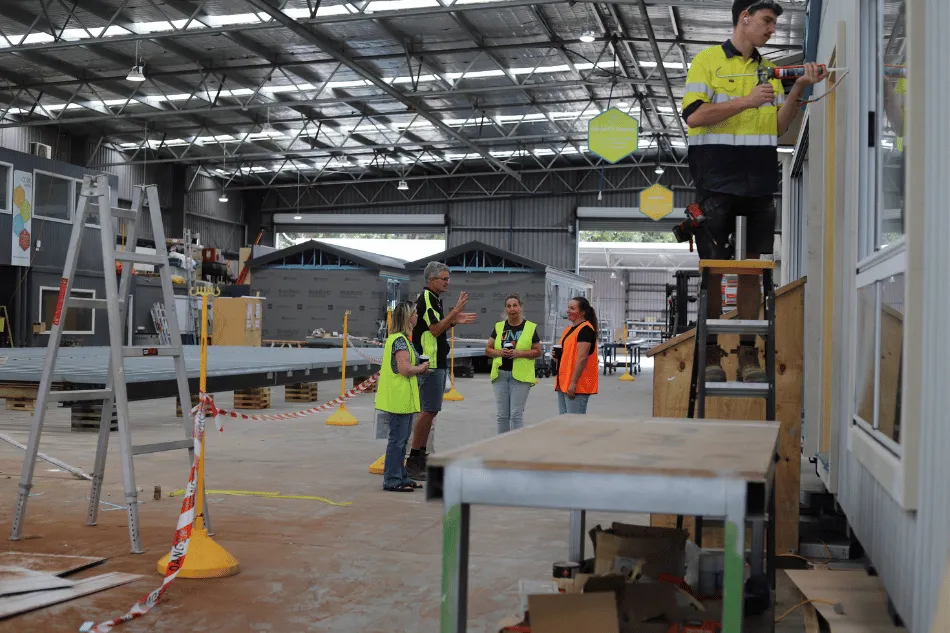
That’s also why visiting a working modular accommodation factory can be valuable.
It allows managers to see how the process works, understand the quality controls and speak directly with people who’ve delivered the work before. The objective isn’t to turn the manager into a manufacturing expert. It’s to help them choose the right experts.
Procurement needs to allow industry to contribute
Government procurement can either support modular innovation or shut it down.
If a project’s fully designed before manufacturers become involved, they’re left competing to build someone else’s solution. Their practical knowledge has little opportunity to shape the outcome.
A better process starts with clear requirements. Government can define the number of people to be accommodated, quality, comfort, accessibility, durability, timing and performance. Experienced manufacturers can then show how they’d achieve those outcomes.
The question shouldn’t only be: “Can you build this exact design?” It should also be: “What’s the smartest way to achieve this result?”
That opens the door to proven systems, practical ideas and better value.
Modular isn’t the compromise
Modular is sometimes treated as the fallback option. The faster option. The cheaper option. The temporary option.
That misses the point. Modular is a construction method.
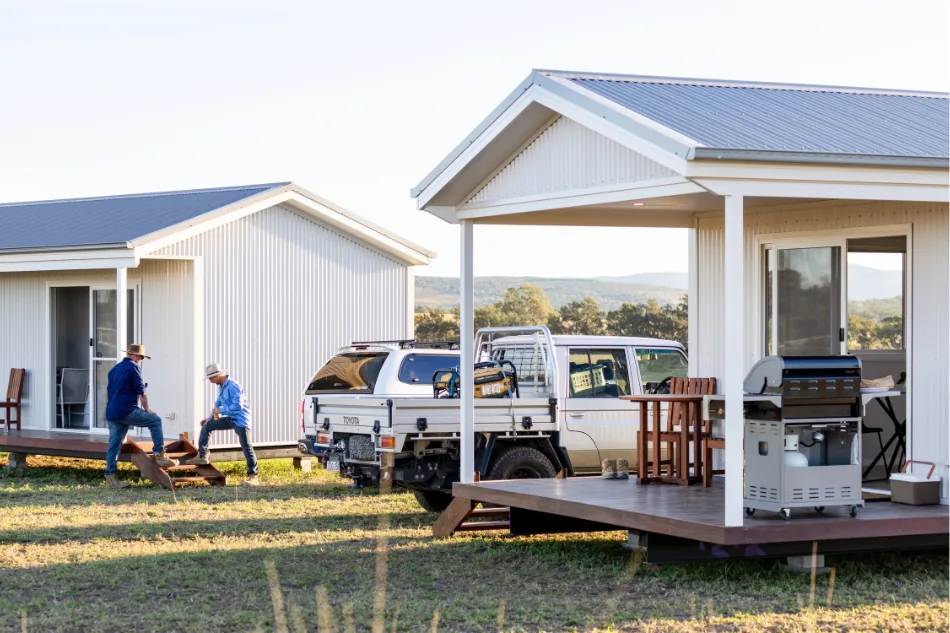
When it’s planned well, it can produce quality accommodation with strong design, good amenity and long-term value. It can also provide greater control over production and delivery.
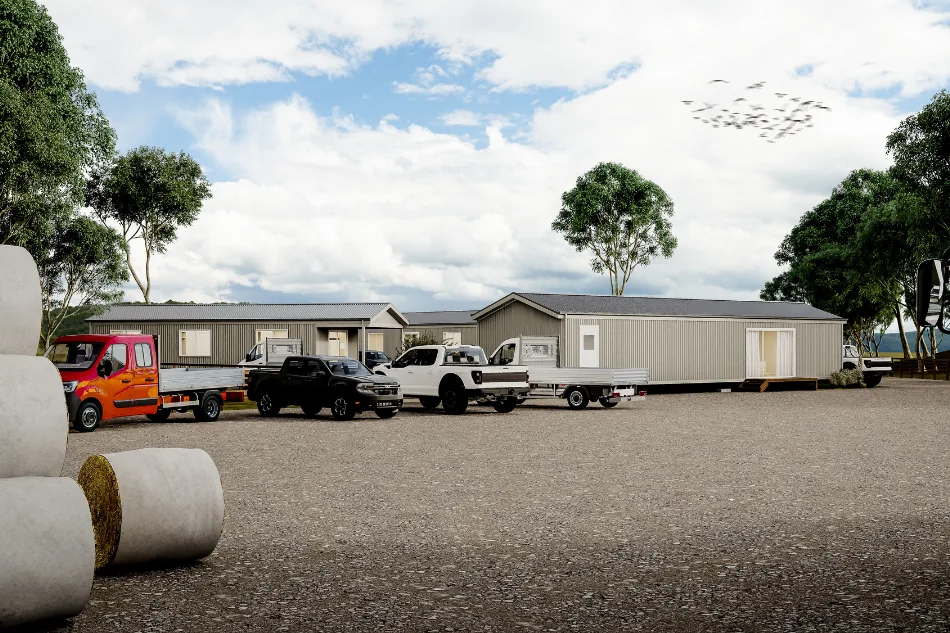
Understanding what happens during delivery and installation makes it clear that modular isn’t about cutting out the important parts of construction. It’s about organising them differently.
The limitation usually isn’t modular itself. It’s bringing modular expertise into the project too late.
Frequently asked questions
| Can modular accommodation look like traditional construction?
Yes. Modular describes how the building is produced, not how it needs to look. With the right design approach, modular accommodation can closely match traditional construction in appearance, layout, comfort and quality. |
| Is modular accommodation highly restricted?
Not in the way many people assume. Every construction method has practical considerations. When architects and experienced manufacturers work together early, modular can deliver a wide range of designs and outcomes. |
| When should a modular manufacturer become involved?
As early as possible. Ideally, the manufacturer should contribute while the brief and concept are still being developed. |
| Can a modular design be built traditionally?
In many cases, yes. A project designed around sound modular principles can often be adapted for traditional construction. Converting a completed conventional design into modular is usually more difficult. |
| Why should managers speak directly with manufacturers?
Because experienced manufacturers understand the full process—from early design through to production, transport and installation. They can identify more options and prevent unnecessary redesign later. |
The opportunity is bigger than many people think
Modular accommodation is back in the national housing conversation because Australia needs better ways to deliver buildings.
The construction system’s under pressure. Productivity has fallen. Skilled labour is limited. Traditional delivery isn’t producing enough completed accommodation quickly enough.
Modular can help. But the discussion needs to move beyond the idea that modular is full of limitations.
The better question is: What can modular achieve when it’s understood and planned properly?
The answer is: a great deal. In many cases, almost everything traditional construction can achieve. The process is simply different.
That’s why government needs to work directly with experienced manufacturers. It’s why architects and manufacturers need to work together early.
And it’s why smart farm managers, accommodation managers and project leaders go straight to people who’ve already done it before.
They’re not trying to become the expert. They’re bringing the experts in early enough to make a difference.
Real Living. Delivered. Accommodation delivered fast and built to last.