



Learn what waterproof modular accommodation should deliver, including NCC compliance, wet-area protection, weatherproofing and durability.


HUGE SALE NOW ON MODULAR HOUSING! MASSIVE SAVINGS UP TO $30,000
Waterproof modular accommodation has to keep water where it belongs. Rain should stay outside, while water used in bathrooms and laundries should remain contained. The building should also keep performing over time.
So, “Is it waterproof?” is a fair question.
The direct answer is yes. Quality modular accommodation is waterproofed where the building requirements call for it. It’s also weatherproofed to protect the building from rain and outside moisture.
This isn’t an optional extra. It isn’t added because a builder thinks it sounds good. Waterproofing and weatherproofing form part of Australia’s building requirements.
Compliance is only part of the reason they matter. Water causes damage when it reaches places it shouldn’t. Good water management protects the building, its finishes and the people living in it.
Most waterproofing disappears behind tiles, linings and floor finishes. That makes it easy to overlook. It also makes it critical to get right before it’s covered.
Smart farm managers already understand the broader point: good accommodation helps keep good people. If a building’s going to support people properly, its hidden construction details must perform too.
Is waterproof modular accommodation really waterproof?
Yes. Waterproof modular accommodation is waterproofed in the internal areas where water must be contained. It’s also weatherproofed to stop rain entering through the roof, external walls, windows and doors. These are different systems, but both are essential to a building that’s compliant, durable and fit for everyday use.
There’s an important distinction here. Builders don’t usually describe an entire building as completely waterproof.
A building uses different systems to manage water in different locations.
Inside, bathrooms, showers, laundries and other wet areas need specific waterproof or water-resistant treatments.
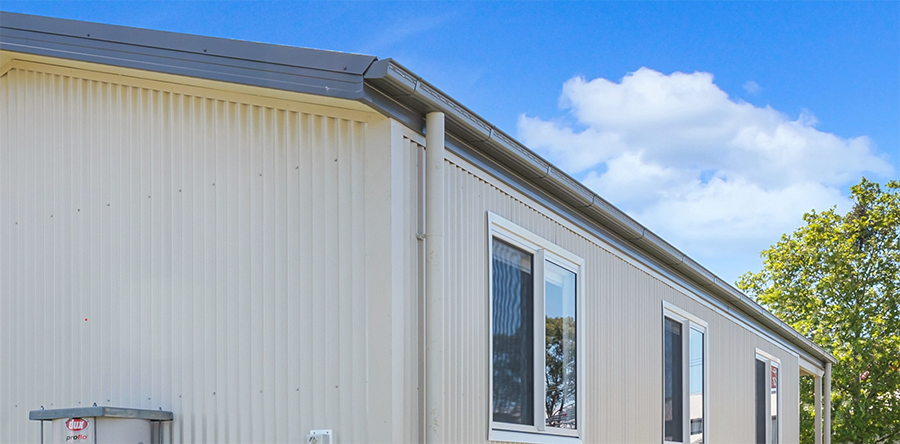
Outside, the roof, cladding, flashings, seals, windows and doors work together as the weatherproof envelope.
Both systems matter. They simply deal with water coming from different directions.
What does “waterproof” mean in a building?
In building work, waterproof means a material or system prevents moisture from passing through it. Water-resistant means a surface can resist moisture under expected conditions but isn’t necessarily impervious. The required treatment depends on where the surface is located, what it’s made from and how much water it’ll face.
What’s the difference between waterproof and water-resistant?
A shower floor receives direct water every day. It needs more protection than a bathroom wall located outside the shower area.
The NCC Housing Provisions for wet-area waterproofing identify which parts of showers, bathrooms, laundries and sanitary areas must be waterproof or water-resistant.
For example, shower floors must be waterproof. Shower walls must generally be waterproof to at least 1,800 millimetres above the floor substrate. Junctions and penetrations inside the shower area must also be waterproof.
Other surfaces may only need to be water-resistant. The required treatment can depend on whether the substrate is concrete, fibre-cement sheeting, timber, particleboard or plywood.
These terms aren’t interchangeable. They describe different levels of protection for different conditions.
What’s the difference between waterproofing and weatherproofing?
Waterproofing generally refers to internal areas where water is used. These include showers, bathrooms and laundries.
Weatherproofing deals with water entering from outside.
A waterproof shower won’t make up for poorly sealed external cladding. Likewise, a sound roof won’t protect a bathroom if its wet-area junctions haven’t been treated properly.
Quality accommodation needs both systems to work.
What waterproofing rules must modular accommodation meet?
Waterproof modular accommodation must satisfy the National Construction Code, applicable state or territory requirements and the Australian Standards referenced through its compliance pathway. The exact provisions depend on the building’s classification, design, location and use. Modular construction doesn’t receive an exemption simply because much of the building is completed off site.
The NCC sets minimum requirements for building design, construction and performance. It covers matters such as structure, fire safety, health, amenity, accessibility and sustainability.
These requirements aren’t suggestions.
As Aruva’s guide to Australian Standards and modular construction explains, compliance is a baseline for modular accommodation. Certifiers assess whether a building meets the required provisions, not whether it was built in a factory or entirely on site.
What does the National Construction Code require?
The NCC identifies which building elements must be waterproof. It also identifies where water-resistant construction may be used.
In wet areas, the relevant elements can include:
The exact requirements depend on the room layout, substrate, building classification and applicable jurisdiction.
For example, a bathroom or laundry floor waste can trigger additional requirements for the floor, wall junctions and penetrations.
That level of detail matters. Water often finds its way through junctions and penetrations rather than the centre of a properly installed surface.
What is AS 3740:2021?
AS 3740:2021, Waterproofing of domestic wet areas, sets minimum requirements for the materials, design and installation of waterproofing in domestic wet areas.
Its scope covers wet areas in Class 1, Class 2 and Class 4 buildings.
In practical terms, it addresses areas such as showers, bathrooms and laundries. It considers the complete waterproofing system, not one product used on its own.
That system may include:
The membrane matters. So does every part around it.
Do the same requirements apply to every building?
No. Waterproofing requirements can change with the building’s classification, intended use, design and location. A standalone dwelling mightn’t follow exactly the same provisions as shared accommodation or a larger commercial project. State and territory variations may also apply, so each building needs to be assessed against its own compliance pathway.
In NSW, the current National Construction Code requirements are based on NCC 2022 Amendment 2. NSW-specific variations and requirements must also be considered.
That’s why saying every modular building uses one identical waterproofing detail would be misleading.
The principle remains consistent: each building must meet the provisions that apply to its classification, design, location and use.
Where does waterproofing matter most?
Waterproofing matters most wherever water can collect, splash, flow or pass through a building element. Showers receive the greatest direct exposure, but bathrooms, laundries, floor wastes, junctions and plumbing penetrations also need careful treatment. Large surfaces matter, although many problems begin around edges, corners, joints and openings.
Shower floors and walls
A shower takes concentrated water exposure every day. The floor, walls, junctions and penetrations must work together as one system.
A break in that system can give water a path behind tiles or wall finishes.
Tiles are a durable finish. However, tiles and grout aren’t the complete waterproofing system. The real protection sits underneath or behind the visible finish.
Bathroom and laundry floors
Bathrooms and laundries can face splashing, overflowing fixtures and leaking appliances.
The required treatment depends partly on the floor material. It can also depend on whether a floor waste is installed.
Timber-based substrates usually need different protection from concrete or fibre-cement substrates.
The correct detail must be established before the final finishes go down.
Junctions
Waterproofing problems often occur where one building element meets another.
Common examples include:
These areas can move slightly as a building responds to use, temperature changes and normal structural movement.
A sound waterproofing system must account for that movement.
Pipes, taps and other penetrations
Every pipe, tap, mixer or fitting passing through a waterproofed surface creates a potential weak point.
The membrane needs to be sealed correctly around each penetration.
Cutting through a finished system without properly treating the opening can compromise the surrounding detail.
Falls and drainage
Waterproofing and drainage need to work together.
The waterproofing system contains the water. Falls direct it towards the waste. The drainage system removes it.
A waterproof surface with poor falls can still leave standing water. Good water management involves more than applying a membrane.
What does quality waterproofing look like before it’s covered?
Quality waterproofing starts with a sound substrate and finishes with a protected, properly cured system. Between those points, junctions, penetrations, water stops, membranes and drainage details must be treated correctly. The work should follow the applicable design and compliance requirements before tiles, linings or other finishes hide it from view.
The process may include:
Once the tiles and fixtures are installed, most of this work disappears.
That’s why waterproofing needs attention before it’s covered. The completed bathroom may look simple, but its performance depends on what’s underneath.
How is waterproof modular accommodation protected from rain?
Waterproof modular accommodation is protected from rain through its complete external envelope. The roof, wall cladding, flashings, windows, doors, joints and service penetrations must manage water together. No single product does the entire job. Each component needs to be suitable, correctly installed and properly connected to the surrounding building elements.
Internal waterproofing is only one side of the job. The external building envelope must also manage weather.
The NCC’s roof and external-wall weatherproofing provisions are intended to prevent water penetration that could cause dampness, deterioration, unhealthy conditions or loss of amenity.
Weather protection can involve:
No single part does the whole job.
A window may meet its own product requirements, but it still needs to be installed and flashed correctly.
Roof sheeting may also be suitable. Even so, the laps, fixings, penetrations and flashings still need to perform.
The aim isn’t to pretend rain will never touch the building. The aim is to control it and stop it reaching places where it can cause damage.
Why does waterproofing affect long-term durability?
Waterproofing supports durability by protecting concealed materials from ongoing moisture exposure. When water reaches wall linings, floor substrates, insulation, cabinetry or structural elements, damage may remain hidden until repairs become disruptive. Proper waterproofing reduces that risk and helps the accommodation keep performing without avoidable moisture-related maintenance.
Uncontrolled moisture can cause finishes to lift, swell, stain or break down.
The problem mightn’t appear straight away. Water can move behind a surface and remain unnoticed until visible damage develops.
By then, fixing the source may require the removal of tiles, linings, fixtures or floor finishes.
Proper waterproofing helps:
This matters on every accommodation project. It matters even more in regional and remote areas.
A small defect can become a major operational problem when trades and replacement materials are hours away.
Whether the buyer manages a farm, a housing portfolio or project delivery, durable accommodation shouldn’t create avoidable maintenance problems.
Aruva’s approach is straightforward: accommodation should be delivered efficiently and built to keep performing. Waterproofing is one of the hidden systems supporting that long-term result.
Buyers assessing durability should also understand what a modular building warranty covers, what sits under manufacturer warranties and what ongoing maintenance remains the owner’s responsibility.
What should buyers ask about waterproof modular accommodation?
Buyers should ask which compliance provisions apply, how wet areas have been treated and what evidence supports the completed work. They don’t need to become waterproofing specialists. However, they should expect direct answers about building classification, applicable standards, junctions, penetrations, drainage, external weatherproofing, documentation, warranties and maintenance.
Useful questions include:
Clear answers show waterproofing has been considered as part of the complete build. It hasn’t been left to assumption.
Housing managers who balance budgets against long-term outcomes already understand the value of getting these details right. A lower upfront figure won’t help if the accommodation creates avoidable repair costs or operational disruption later.
Is waterproofing simply a compliance exercise?
No. Compliance establishes the minimum result, but waterproofing also protects the building and the people using it. The rules exist because uncontrolled moisture can cause deterioration, unsafe conditions and expensive repairs. Quality construction supports those requirements because containing water properly is fundamental to reliable accommodation.
Aruva supports the need for proper waterproofing because it makes practical sense.
Accommodation should provide a dry, dependable place to live. Bathrooms and laundries should contain water. Roofs and external walls should keep weather outside.
The building should continue doing its job without preventable moisture damage.
That’s what quality waterproof modular accommodation should deliver.
So, is quality modular accommodation waterproof?
Yes. Quality modular accommodation is waterproofed where the applicable building requirements call for it and weatherproofed against external conditions. Those systems should form part of a complete, compliant building rather than being treated as an afterthought. Although much of the work becomes invisible, the people using the accommodation rely on it every day.
That’s the point of doing it properly.
Water stays where it belongs. The building stays protected. The accommodation remains ready to perform over the long term.
Real living depends on the work you can see and the work you can’t.
Both need to be delivered properly.
Real Living. Delivered.
Frequently Asked Questions
Is Aruva modular accommodation waterproof?
Aruva modular accommodation is waterproofed in the wet areas where the applicable building requirements call for it. The external building envelope is also designed to manage rain and weather. The exact details depend on the building’s classification, design, use and project location.
Are bathroom tiles and grout waterproof?
Tiles and grout aren’t the complete waterproofing system. They provide the visible finish, while the membrane and associated junction, penetration and drainage details provide the underlying protection. A tiled surface can still develop water problems if the concealed system hasn’t been detailed correctly.
Does every modular building use the same waterproofing details?
No. Requirements can vary with building classification, substrate, room layout, intended use and jurisdiction. A standalone dwelling may need different details from shared or commercial accommodation. Each project must be assessed against its applicable NCC provisions and compliance pathway.
Which Australian Standard covers domestic wet-area waterproofing?
AS 3740:2021 covers the materials, design and installation of waterproofing in domestic wet areas within Class 1, Class 2 and Class 4 buildings. Other standards and NCC provisions may also apply to the building, depending on its classification and design.
Why is waterproofing important if it’s hidden?
It protects materials that are often difficult and expensive to reach after construction. Once tiles, linings and fixtures are installed, repairing a concealed defect can require significant removal work. Getting the waterproofing right early supports durability and reduces avoidable disruption later.

Download your copy of our Accommodation Guide.
Aruva’s experienced team will collaborate with you about our modular accommodation solutions.

Talk to us about your property, timeline and requirements.

We’ll supply a proposal based on your design preference.

Place your order! We’ll build and install your new modular accommodation.
There’s no place like home, right? Your staff can spend their evenings in comfort and style, relaxing and connecting with friends and family, and then recharge their batteries with some quality zzzzs.


Our Resources

Planning multiple modular housing units? Learn what to check for power, water and wastewater before you lock in site layouts or unit numbers.
Modular housing cost Australia explained: see the seven budget areas beyond the unit price, from freight and footings to approvals and services.
Worker housing costs go beyond the build. See how vacancies, overtime, travel and management time can raise the cost of inadequate housing.