


Wondering what warranty comes with modular buildings? Learn how Aruva’s 7+1 modular building warranty works, what’s covered, and what pass-through warranties mean.


HUGE SALE NOW ON MODULAR HOUSING! MASSIVE SAVINGS UP TO $30,000
If you’re investing in modular accommodation—whether it’s for workforce housing, essential services, mining, government, or remote infrastructure—there’s one question that comes up nearly every time:
“What’s the warranty?”
It’s a fair and practical question.
You’re making a capital investment. You need to know how long it’s protected, what’s covered, and where the responsibility sits if something goes wrong.
This article breaks it down in plain terms. No spin. No sales talk.
Just a straight answer to a question that anyone buying modular buildings should be asking.
Speaking purely from what we see in the market, warranty terms can vary significantly across modular suppliers.
Broadly speaking, most warranties split into two categories:
Under Australian law, major defects are typically covered for six years, and minor defects for about one to two years, depending on the state. More information on these statutory warranties can be found at the Master Builders Association.
That’s the minimum.
But we’ve observed that not all modular buildings meet the same standards—especially with reports circulating about lower-cost imported products that don’t always perform as expected.
This has led to a growing number of complaints from asset owners facing premature failures, warranty headaches, or costly repairs.
That’s why it’s absolutely reasonable—and smart—to ask exactly what warranty coverage looks like when assessing modular building suppliers.
Every modular building supplied by Aruva comes with the following:
This warranty applies across the board, no matter the project size or type—whether it’s a mining camp, government facility, emergency accommodation, or remote workforce housing.
It’s one of the reasons why managers who are smart about their investments in the people they’re providing for—whether that’s staff, community members, or clients—pay close attention to warranty terms when choosing modular infrastructure. It’s not just about the building; it’s about long-term performance and avoiding unexpected downtime.
Not everything in a modular building is built by the builder.
Some components—like air conditioning systems, roofing materials, specialist cladding, or appliances—come from third-party manufacturers.
These items carry their own manufacturer warranties, which pass directly to you as the building owner.
For example:
These warranties are independent of the builder’s warranty but run in parallel. If a cladding manufacturer offers a 20-year product warranty, that’s on top of Aruva’s 7-year structural cover.
Every warranty has boundaries. It’s designed to cover product defects—not the wear and tear of normal life or damage from external events.
Here’s what generally isn’t covered:
The full warranty document spells out the details, but in short—it’s based on fair use under expected conditions.

If you’re managing assets, this isn’t about whether things might go wrong—it’s about knowing that if something does, you’re covered.
A strong warranty is about risk management. It means:
It’s one of the reasons why property managers who prioritise the wellbeing and performance of their teams tend to look closely at not just the upfront cost of modular buildings, but the long-term reliability, support, and protection that comes with them.
From what we can speak for, warranty claims on Aruva buildings are extremely low.
These buildings are engineered for Australian conditions, built to high standards, and designed to perform reliably over time. When systems are designed right and built right, they deliver what’s expected—and our claims history reflects that.
At the same time, we’re aware of growing concerns in the market about cheaper imported modular units that don’t always meet expectations. We won’t comment on the specifics of other suppliers, but it’s a reminder of why due diligence around warranty and quality should be part of every procurement decision.
Here it is, boiled down:
The warranty simply reflects how Aruva buildings are designed and built.
It’s a formal commitment that covers the real-world outcomes expected from the materials, construction methods, and processes used. It also aligns with Aruva’s approach to delivering buildings that perform over time in Australian conditions.
That’s it.
No spin—just clarity about what’s covered and how it applies.
If you’re making a modular investment, ask for the full warranty document. It’s straightforward, written in clear language, and designed to be read—not hidden behind fine print.
You can also visit the Aruva Modular website to explore our building solutions or contact the team for a walk-through of how the warranty applies to your project.
Because in the end, it’s about making sure you’re backed by something real.
It’s why we say: Real Living, Delivered.
And it’s all about A Good Night’s Sleep.

Download your copy of our Accommodation Guide.
Aruva’s experienced team will collaborate with you about our modular accommodation solutions.

Talk to us about your property, timeline and requirements.

We’ll supply a proposal based on your design preference.

Place your order! We’ll build and install your new modular accommodation.
There’s no place like home, right? Your staff can spend their evenings in comfort and style, relaxing and connecting with friends and family, and then recharge their batteries with some quality zzzzs.


Our Resources
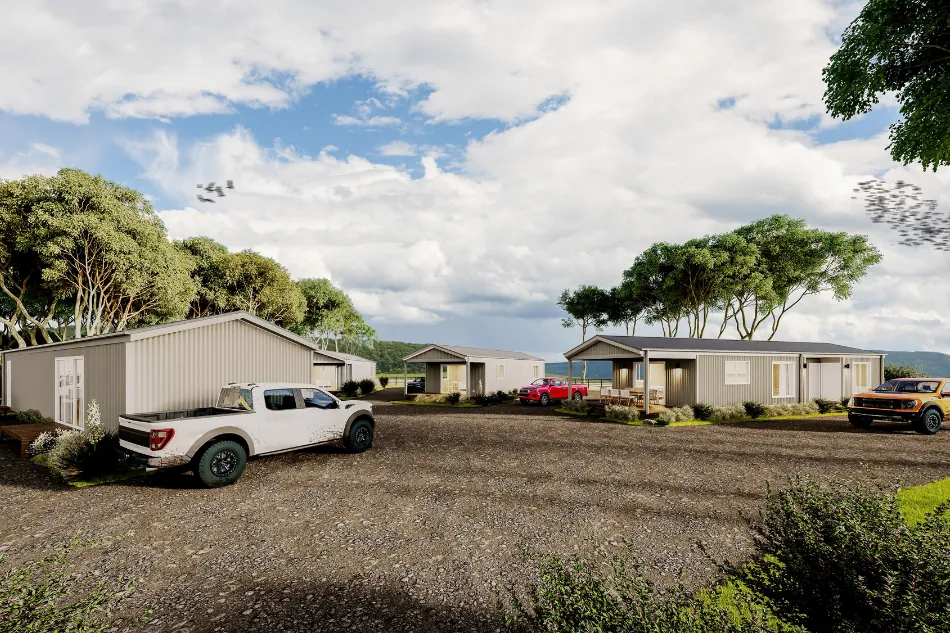
Learn how scalable worker housing helps farm operators meet current demand, plan for growth and avoid committing to excess capacity too early.

Planning multiple modular housing units? Learn what to check for power, water and wastewater before you lock in site layouts or unit numbers.
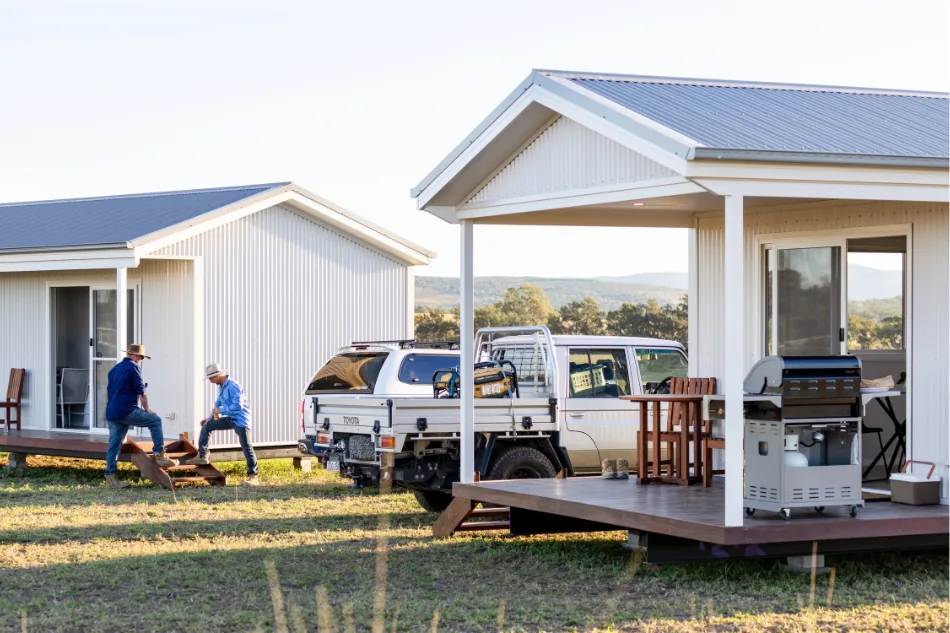
Modular housing cost Australia explained: see the seven budget areas beyond the unit price, from freight and footings to approvals and services.