


Discover the difference between safe vs compliant worker accommodation and why smart landowners invest in safety beyond the legal minimum.


HUGE SALE NOW ON MODULAR HOUSING! MASSIVE SAVINGS UP TO $30,000

If you’re responsible for providing accommodation—whether it’s for ag workers, mining crews, contractors, or station hands—you’ve probably heard the word “compliant” thrown around like it’s the gold standard.
But here’s the thing: compliant just means you’ve met the minimum the government requires. It ticks the legal boxes—floor space, locks, toilets, ventilation. All the must‑haves are technically there. You’ll pass the audit. But does that mean your workers are genuinely safe? Not always.
Let’s unpack what safe vs compliant worker accommodation really means—and why smart operators know that compliance is only the starting point.
“Compliant” means you’re on the right side of the law. That’s it.
Every state and territory in Australia has minimum legal standards that must be met before you can house workers on‑site. Things like:
If your setup ticks those boxes, congratulations—it’s compliant.
But here’s the catch: compliant doesn’t always mean safe. And that’s where the conversation really starts.
Being safe means your accommodation doesn’t just meet the legal low-bar. It means the setup works in the real world. It’s built to handle rough conditions, heavy use, and the unexpected—whether that’s a summer heatwave, a freak storm, or just the wear and tear of a busy season.
Safe means your workers feel secure—physically, mentally and socially.
It means:
And importantly, people feel like they’re being looked after—not just managed—with layout and ventilation doing just as much work as any lock or latch in keeping conditions right.
Compliant is about ticking the government’s boxes.
Safe is about doing the right thing—and protecting your investment while you’re at it.
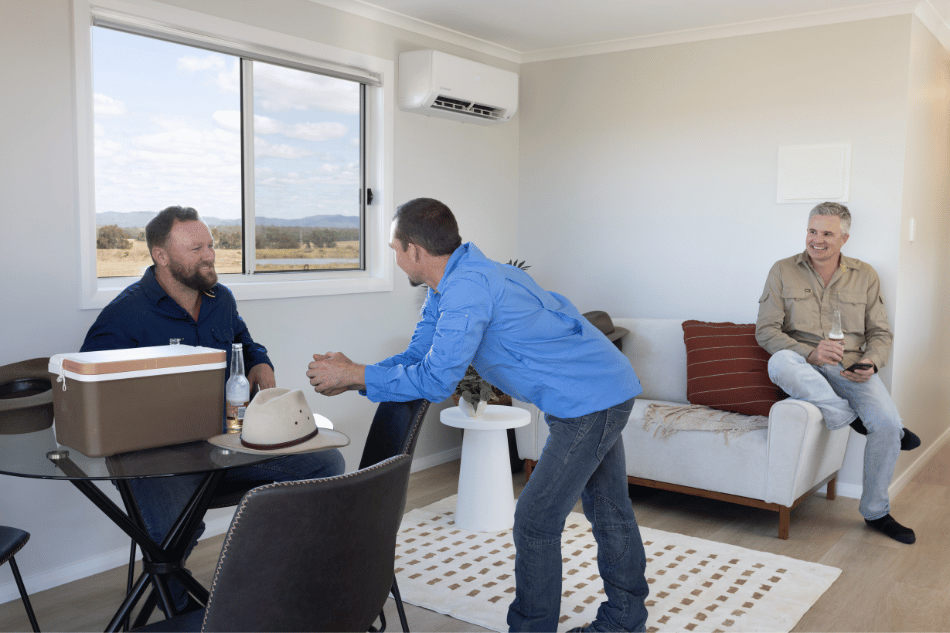
For landholders, contractors, and regional business owners, accommodation is an asset. And like any asset, it can turn into a liability if it’s not up to scratch.
Here’s how cutting corners on safety (while still being technically compliant) can backfire:
| Problem | Compliant Might Allow It | Safe Fixes It |
| Mould or rot in wet areas | Plumbing meets minimum specs, but bad design lets moisture in | Proper ventilation, materials that breathe, sealed joints |
| Hot box effect in summer | Compliant vents in place, but not enough to cool the room | Better insulation, shade, passive airflow, smart layouts |
| Stress or unrest among workers | Rooms meet legal size, but no privacy or breakout space | Dividers, lighting control, community areas, quiet zones |
| Injury risks | Meets access laws, but stairs are slippery when wet | Anti‑slip treads, covered access, proper drainage |
| High maintenance costs | Materials are allowed by code, but wear fast | More durable fittings, fewer moving parts, smarter design |
Smart operators know: “just enough” isn’t always enough.
It might seem like playing it close to the line saves money. But the savings can evaporate fast.
Retrofitting after a WorkSafe inspection, paying for emergency repairs, or losing staff over bad conditions can cost far more than getting it right up front.
And let’s be real—no one wants their name tied to a preventable injury, a viral social media post, or worse.
That’s why Australian landowners and managers who are smart about their investment in their land or workers know that “safe” isn’t a luxury—it’s a safeguard. They understand that safe, reliable housing pays back—because it protects staff, reduces churn, and keeps operations running.
A safe setup isn’t complicated, it’s just well thought out. It includes:
And as AHURI research shows, just ticking the minimum standards doesn’t always mean the setup’s good enough—especially when it comes to housing workers in the real world.
For modular options designed with durability, ventilation, and simplicity in mind, the Aruva Modular accommodation range may be worth a look—especially when compliance isn’t enough on its own.
If you’re housing workers, whether it’s seasonal, year‑round or project‑based, the question isn’t just “Is it compliant?” The real question is:
“Is it safe enough to keep my business running, and my workers well?”
Because strong, simple, and built to last—so your investment keeps delivering isn’t just a design philosophy. It’s a smart business move.
That’s why owners who are serious about getting better performance from their operation lean into designs that go further than the bare minimum.
We say: It’s why we deliver Real Living. Delivered.
Because when the sun’s down and the work’s done, It’s all about A Good Night’s Sleep.

Download your copy of our Accommodation Guide.

Talk to us about your property, timeline and requirements.

We’ll supply a proposal based on your design preference.

Place your order! We’ll build and install your new modular accommodation.
There’s no place like home, right? Your staff can spend their evenings in comfort and style, relaxing and connecting with friends and family, and then recharge their batteries with some quality zzzzs.


Our Resources
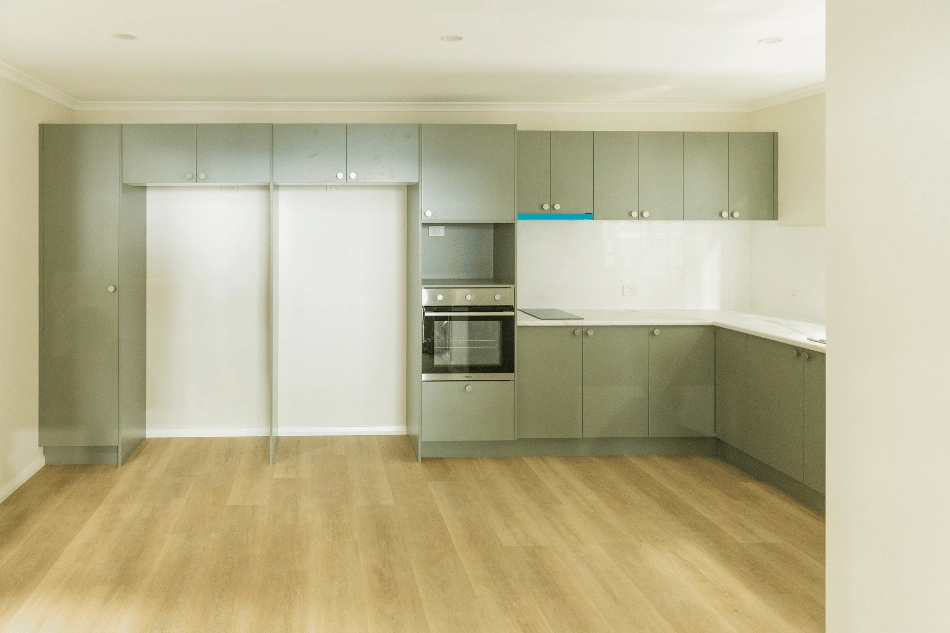
Vinyl plank flooring for modular accommodation offers easy cleaning, lower maintenance and strong long-term value for housing managers and farm operators.
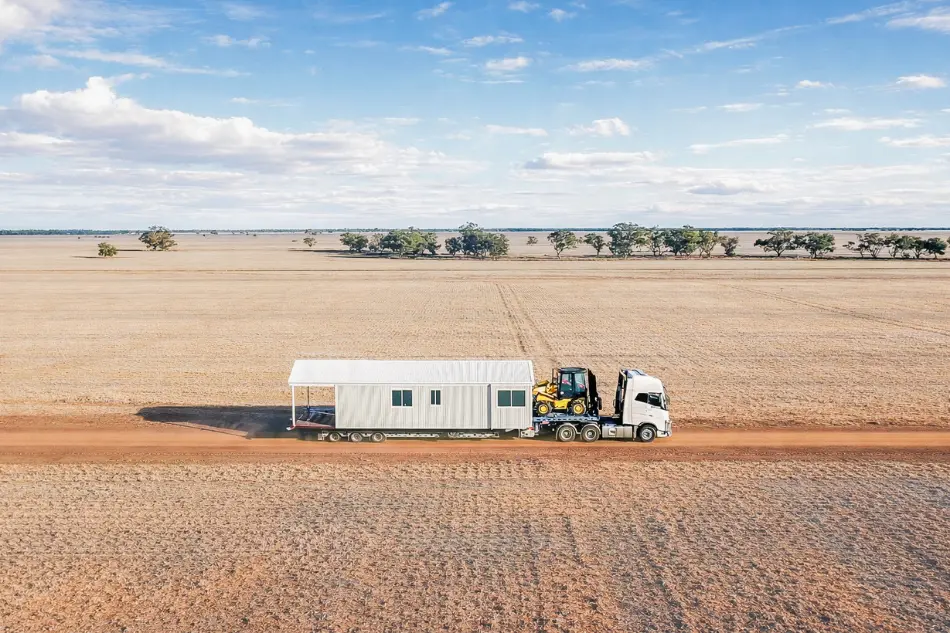
Modern methods of construction can cut site hours, reduce delay risk, and improve value. Here’s how to compare build options with confidence.