



Learn what a donga really is and how it differs from modern modular buildings like accommodation units and granny flats. Discover why choosing the right structure matters.


HUGE SALE NOW ON MODULAR HOUSING! MASSIVE SAVINGS UP TO $30,000
In rural NSW and on remote worksites, the word “donga” gets thrown around as shorthand for portable buildings. But here’s the thing: while dongas have played a vital role in Australia’s construction and mining history, the needs of workers—and the standards for accommodation—have come a long way.
The original donga served its purpose: a simple, portable shelter for remote jobs. But what worked decades ago isn’t cutting it anymore. In today’s world, where attracting and retaining skilled workers is tougher than ever, old-school dongas just aren’t enough.
The solution to meet that same purpose—safe, practical, temporary accommodation—is evolving fast. Modern modular options like Accommodation Units are stepping in to deliver more comfort, functionality, and value. Let’s unpack why.
The term “donga” has been around for decades, apparently from an African word. It came into Aussie slang in mining and construction circles, describing lightweight, portable shelters that could be hauled from site to site.
Dongas were built for practicality, not luxury. Their key features included:
They were perfect for the time—when workers didn’t expect much and budgets were tight. But as expectations for comfort, safety, and aesthetics have risen, dongas have become less relevant.
Today, calling everything a “donga” is like calling all work vehicles “utes.” The term just doesn’t capture the full picture. Modular options have diversified to meet a range of needs, and modern alternatives blow traditional dongas out of the water.
Here’s how they stack up:
Dongas
Modern Accommodation Units
Granny Flats
Container Homes
Site Huts
Back in the day, workers accepted dongas because they didn’t have many alternatives. But in today’s competitive labour market, where skilled workers have higher expectations, providing outdated accommodation can send the wrong message.
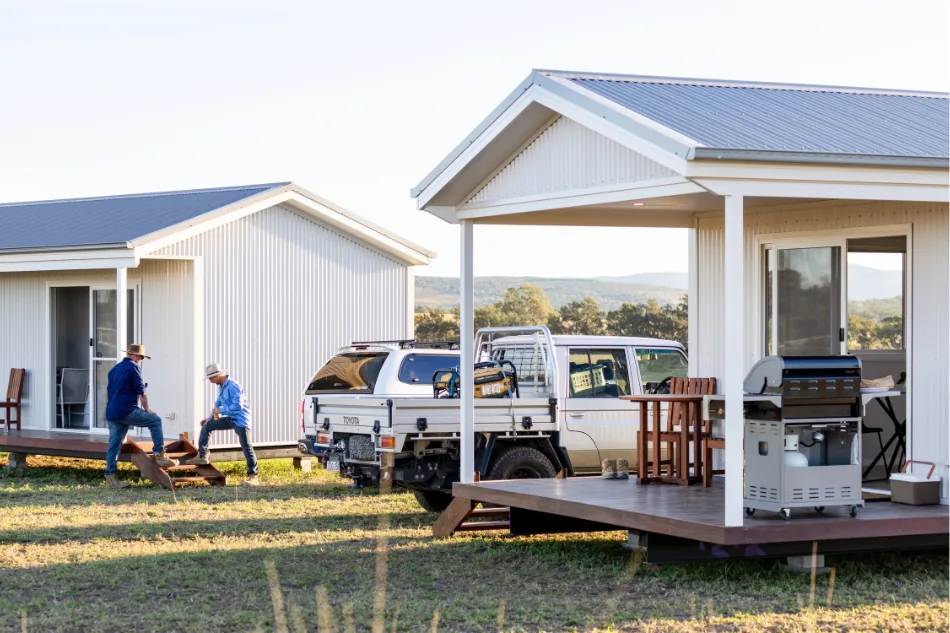
Modern accommodation units offer a better solution. They meet the same purpose as dongas—providing housing close to the action—but they do it with a focus on comfort, safety, and style.
Think about it: when you’re asking workers to spend weeks or months away from home, a cramped, outdated donga won’t cut it. On the other hand, a well-equipped accommodation unit makes workers feel valued, increasing retention and productivity.

Picking the wrong structure is like trying to tow a caravan with a hatchback. It’s not going to work, and it’s going to cost you in the long run. Here’s how to match your needs to the right solution:
Dongas may always have a place in Australia’s construction and mining history, but the game has changed. Modern modular buildings are designed to attract and retain the people you need, offering a level of comfort and practicality that dongas just can’t match.
Because at the end of the day, it’s all about Real Living. Delivered.

Download your copy of our Accommodation Guide.
Aruva’s experienced team will collaborate with you about our modular accommodation solutions.

Talk to us about your property, timeline and requirements.

We’ll supply a proposal based on your design preference.

Place your order! We’ll build and install your new modular accommodation.
There’s no place like home, right? Your staff can spend their evenings in comfort and style, relaxing and connecting with friends and family, and then recharge their batteries with some quality zzzzs.


Our Resources

Planning multiple modular housing units? Learn what to check for power, water and wastewater before you lock in site layouts or unit numbers.
Modular housing cost Australia explained: see the seven budget areas beyond the unit price, from freight and footings to approvals and services.
Worker housing costs go beyond the build. See how vacancies, overtime, travel and management time can raise the cost of inadequate housing.