


When costs shift, faster housing pathways can reduce delay, risk and exposure for regional businesses buying worker housing.


HUGE SALE NOW ON MODULAR HOUSING! MASSIVE SAVINGS UP TO $30,000
A recent SBS News article has pushed one issue back into the spotlight: faster housing pathways matter more when construction costs start moving around. For businesses in regional, rural and remote Australia, that’s not theory. It’s practical. If you’re buying housing for workers, every delay can hurt your budget, your operations and your ability to keep good people on the ground.
That’s why this conversation can’t stop at fuel prices alone.
Yes, rising fuel and freight costs matter. However, the bigger issue is exposure. When a project drags on, it stays exposed for longer. That means more risk, more uncertainty and more chances for costs to shift again.
For employers housing workers, that matters a lot.
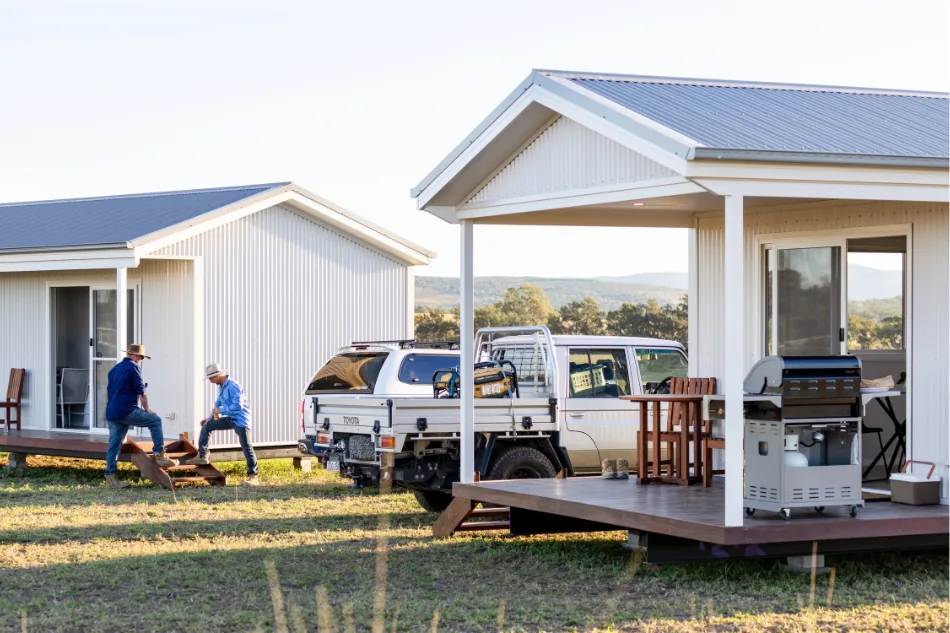
This is especially true in agriculture and other regional industries. Smart farm managers who know good housing keeps good people already understand that poor housing decisions rarely stay contained to the housing budget. They flow into recruitment, retention and day-to-day performance.
That’s where off-site and modular building deserve serious attention.
Not as a gimmick. Not as hype. And not as something to compare at the very end.
As a practical way to reduce risk.
Most people see cost pressure and think about price first. Fair enough. Price matters.
But price isn’t the whole story.
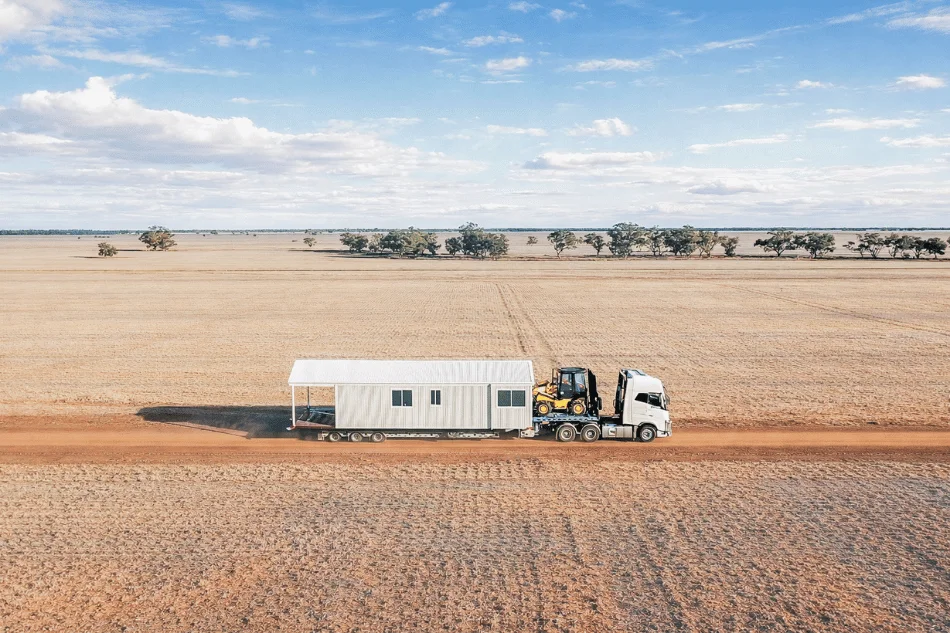
The longer a project runs, the longer it stays exposed to freight rises, labour shortages, weather delays, site issues and supply-chain pressure. Each extra week gives the market more time to move against you.
That’s the real problem.
In a calm market, businesses can often absorb some delay. In a volatile market, delay becomes more expensive. It can also become more disruptive.
That’s why faster housing pathways matter more in periods like this. They can reduce the time a project stays exposed to the unknown.
That doesn’t mean every project will move at the same speed. It also doesn’t mean modular solves every problem. But it does mean delivery pathway should be part of the risk discussion from day one.
When businesses buy housing for workers, they’re usually solving an operational problem.
They need homes in place. They need people living properly. And they need housing that helps keep the workforce stable.
That’s different from a lifestyle purchase.
A family building a dream home may weigh style, emotion and personal preference above all else. A business buying worker housing has a different job to do. It has to balance budgets, timelines, outcomes and workforce needs.
That’s why time matters so much.
If the housing arrives earlier, workers can move in earlier. Pressure comes off earlier. The business gets the benefit sooner. Just as importantly, the project has less time sitting in the path of rising costs or fresh disruption.
In other words, speed isn’t only about convenience.
It’s about reduced exposure.
This point gets stronger once you move outside metro areas.
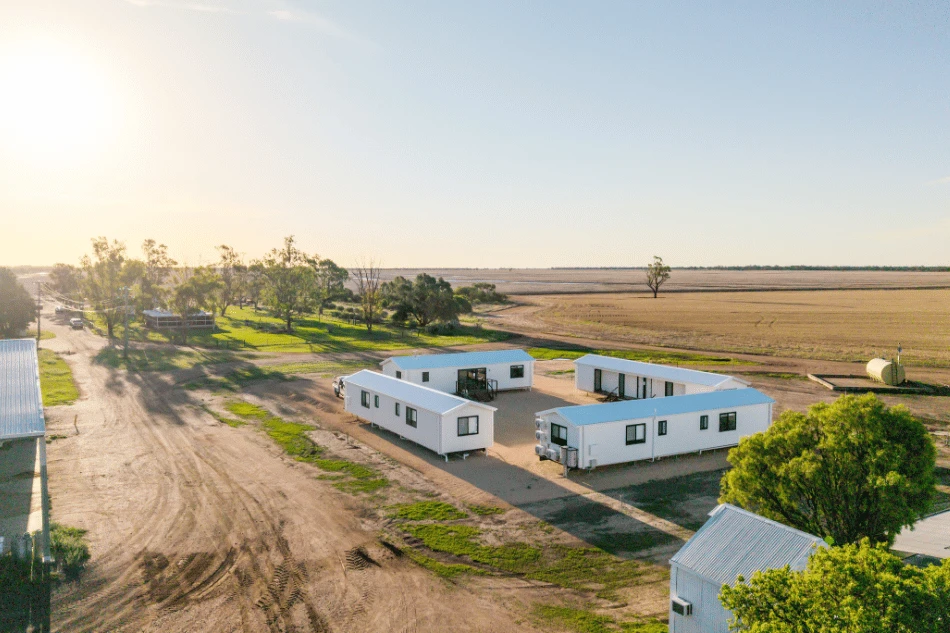
Regional, rural and remote projects often face longer freight routes, tighter labour markets and more site challenges. Trades can be harder to coordinate. Weather can have a bigger impact. Access can be trickier. Small setbacks can quickly become bigger ones.
That’s one reason off-site and modular building make practical sense.
They don’t remove every challenge. Nothing does. Site works still matter. Transport still matters. Installation still matters. Good planning still matters.
However, off-site pathways can reduce how much work has to be managed in the field. They can also reduce how long the project stays vulnerable to local delays and site-based disruption.
That’s a real advantage in regional Australia.
If fewer things need to go right on-site, the project has a better chance of staying on track.
Too many housing decisions still start with the wrong question.
People ask, “What will this cost us?”
That’s not a bad question. It’s simply incomplete.
A better question is, “What pathway gives us the best chance of getting quality housing delivered with less exposure to delay, disruption and cost movement?”
That’s the question more regional employers should ask first.
Because in a volatile market, the pathway matters. A longer, more fragmented build process creates more exposure. A more controlled and streamlined pathway can reduce it.
That’s why off-site and modular building should no longer sit in the “alternative options” bucket. In many cases, it belongs much earlier in the conversation.
Not because it sounds modern.
Because it makes commercial sense.
Good worker housing does more than put a roof over someone’s head.
It supports the workforce behind the business. It helps attract people. It helps keep them. It can improve morale, stability and day-to-day performance.
Poor housing can do the opposite.
It can make recruitment harder. It can wear people down. It can create frustration inside the team. It can also make regional businesses less competitive when they’re trying to bring good people into hard-to-staff locations.
That’s why this isn’t only a building discussion.
It’s a business discussion.
Housing managers who are smart about getting the right balance across budgets and outcomes are increasingly looking beyond upfront cost alone. They’re paying closer attention to delivery certainty, durability and speed to operation.
That’s a smarter way to assess value.
Let’s be clear.
Off-site and modular housing aren’t silver bullets. Some projects won’t suit them. Some providers won’t deliver well. Businesses still need to ask hard questions about quality, durability, process and scope.
That said, none of that weakens the core point.
When construction costs shift, slower and more exposed delivery models become riskier. Meanwhile, faster and more controlled pathways become more valuable.
That’s simply the market doing what markets do.
So this isn’t about pushing a trend. It’s about responding to real conditions with clear thinking.
If you need durable worker housing in regional, rural and remote Australia, then delivery speed, control and resilience should be part of the decision. They’re not side issues. They’re central.
For businesses buying housing for other people, the basics still matter most.
The housing has to work. It has to feel fit for real life. And it has to stand up over time.
That’s why the strongest modular thinking doesn’t chase gimmicks. It focuses on practical outcomes.
Real Living. Delivered.
Accommodation delivered fast and built to last.
Those words only matter if the outcome backs them up. For regional businesses, that means housing that arrives in a sensible timeframe, performs well, and helps support the people who keep the operation moving.
That’s the standard that matters.
The SBS article used the phrase “COVID 2.0”. Whether that label sticks or not isn’t really the point.
The real takeaway is simpler than that.
When construction costs shift, faster housing pathways matter more.
Not because speed is everything.
Because reduced exposure matters.
And for businesses trying to provide worker housing in regional, rural and remote Australia, that can make a real difference.

Download your copy of our Accommodation Guide.
Aruva’s experienced team will collaborate with you about our modular accommodation solutions.

Talk to us about your property, timeline and requirements.

We’ll supply a proposal based on your design preference.

Place your order! We’ll build and install your new modular accommodation.
There’s no place like home, right? Your staff can spend their evenings in comfort and style, relaxing and connecting with friends and family, and then recharge their batteries with some quality zzzzs.


Our Resources
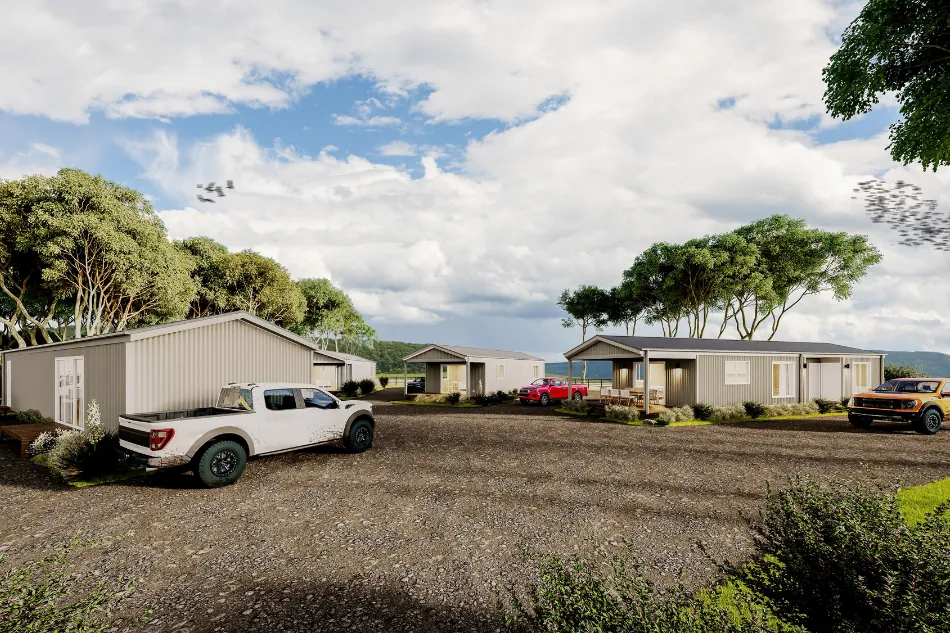
Learn how scalable worker housing helps farm operators meet current demand, plan for growth and avoid committing to excess capacity too early.

Planning multiple modular housing units? Learn what to check for power, water and wastewater before you lock in site layouts or unit numbers.
Modular housing cost Australia explained: see the seven budget areas beyond the unit price, from freight and footings to approvals and services.