



See how farm accommodation helped one family support succession, provide a proper home and plan for the farm’s future.


HUGE SALE NOW ON MODULAR HOUSING! MASSIVE SAVINGS UP TO $30,000
Farm accommodation can play a practical role in the future of a family farm. Succession is usually discussed in terms of land, ownership and responsibility. However, there is another important question that can be easy to miss: where will the next generation live?
A family member may be ready to work on the farm, learn the operation and take over one day. Yet that future is harder to make real when there is no suitable home for them on the property.
Farm accommodation will not create a succession plan on its own. It will not guarantee that a son, daughter or grandchild stays. However, the right accommodation can remove a major barrier. It gives the next generation somewhere permanent to live, settle and build a future of their own.
Aruva’s case study of Don and Tracie Finlay reflects something practical farm managers already understand: good housing helps keep good people.
That was the issue the Finlays needed to solve.
Farm accommodation belongs in succession planning because a handover must work in daily life, not only on paper. The next generation may be offered responsibility and a future stake in the property. However, they still need privacy, independence and a proper place to come home to.
Aruva’s guide to keeping the family on the farm explores the wider succession discussion. This includes communication, involvement and the life the next generation is being asked to build.
The NSW Government’s succession planning guidance describes succession as an ongoing process involving the farm, the business and family relationships. It also encourages farming families to start early, communicate clearly and seek suitable professional support.
Living arrangements belong in that discussion.
Suitable accommodation becomes even more important when the next generation has a partner or plans to raise a family. Temporary arrangements may work for a season. They are less convincing when someone is being asked to make a long-term commitment.
Good farm accommodation shows there is room for the next generation to establish their own life on the property. They are not simply being brought back as extra labour.
The Finlays needed a proper home for their grandson, who was already working alongside them and preparing to take the reins. Their mixed cropping and livestock operation west of Gunnedah was meant to stay in the family, so full-time living on the property had to be practical.
Don and Tracie were not looking for an extra room or somewhere to sleep during busy periods. They needed a proper home suited to the long-term future they were planning.
The Finlays considered the available options.
Caravans and dongas were cheaper. However, they did not offer the strength or permanence the family wanted. Tiny homes were another possibility, but they did not suit the type of long-term living the Finlays had in mind.
That distinction matters.
There is a major difference between housing someone on a farm and giving them a home on the farm. A temporary unit may solve an immediate problem. It can also make the arrangement itself feel temporary.
For a family member preparing to take over the operation, that is not a small detail. Their accommodation should reflect the seriousness of the role and the future being discussed.
The chosen farm accommodation worked because it was a complete three-bedroom home, not a temporary stopgap. It provided the space, facilities and sense of permanence needed for full-time living. Just as importantly, it gave the Finlays’ grandson somewhere he could make his own.
At the AgQuip field days in August 2023, Don and Tracie inspected several accommodation options. These included dongas, cabins, caravans and huts. They compared the choices and looked closely at what each offered.
The Cypress 31 modular home stood out because it included open-plan living, a full kitchen, a bathroom and a laundry. It felt permanent rather than makeshift.
The Finlays did not rush the decision. They took the information home, discussed it and compared the alternatives. They returned the next day before deciding to proceed.
That approach makes sense. Farm accommodation is an investment, and it needs to stack up beyond the initial price. It must suit the person living in it, handle country conditions and keep serving the farm well into the future.
The Finlays received a permanent home without a drawn-out building process. They ordered the Cypress 31 at AgQuip in August 2023, and it was delivered and installed on the farm within five weeks.
That balance mattered. They received accommodation quickly, but it was built for the long haul rather than treated as a short-term fix.
Their grandson was already working on the farm. The living arrangements needed to support the succession plan taking shape, not a vague possibility years down the track.
A modular home gave the Finlays a practical way to establish proper accommodation without treating quality as optional. Every project differs, so farming families should also understand the full modular accommodation delivery and installation timeframe, including approvals, site preparation and access requirements.
It is a clear example of accommodation delivered quickly and built for long-term use.
Once the home was in place, the Finlays’ grandson could live comfortably on the farm while preparing to take over operations. The building did not create the succession plan, but it made the plan workable by giving him privacy, stability and a proper base for his future.
Don and Tracie had already built the relationship, passed on their knowledge and given their grandson an active role in the business.
What the home did was support that work.
Their grandson could stay close to the operation without relying on temporary accommodation. Most importantly, it turned the idea of a future on the farm into something he could live every day.
The Finlays considered the other choices. However, the Cypress was the option that felt like a proper home.
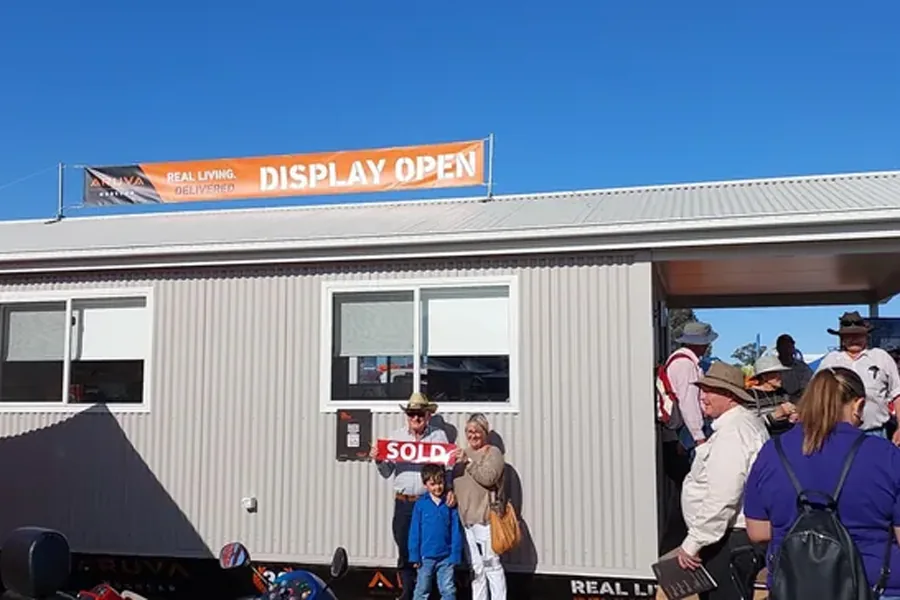
Other farming families can learn one clear lesson from the Finlays: discuss accommodation early. Do not wait until a son, daughter or grandchild has committed to returning before deciding where they will live. Housing should sit alongside roles, responsibilities and ownership in the succession conversation.
The Finlays’ circumstances are their own, and no two succession plans are the same. Still, their experience raises several practical points.
Start the living-arrangement discussion early. Consider it alongside future roles, business responsibilities and ownership.
Think beyond the work they will perform. Consider the life the next generation is being asked to build. That may include privacy, comfort, relationships and room for a family of their own.
Treat accommodation as farm infrastructure. A suitable home can support people the operation may depend on for decades.
Know the difference between temporary housing and a permanent home. The cheapest option may solve today’s problem. It may not support the future you are trying to build.
Keeping a farm in the family takes more than a handover date and a conversation about ownership. The next generation needs to see a workable life on the property, with meaningful responsibility, a clear opportunity and somewhere they can properly call home.
Farm accommodation is only one part of that picture. However, it is not a part farming families should leave until last.
The Finlays looked beyond the building itself. They saw that a proper home could support their grandson as he learned the operation and prepared for what came next.
That is the real value of farm accommodation. It does more than put a roof on the property. It helps make the future of the farm possible.
Can farm accommodation guarantee that the next generation will stay?
No. Accommodation cannot create interest, commitment or a sound succession plan. It can remove a major practical barrier by giving the next generation a suitable place to live and establish an independent life on the property.
When should accommodation be discussed during farm succession planning?
Accommodation should be discussed early, alongside future roles, ownership, finances and responsibilities. Waiting until someone has committed to returning may leave the family with a housing problem that takes time to solve.
What type of accommodation is suitable for long-term farm succession?
The right option should be suitable for permanent living, not only short stays. It should provide privacy, practical living areas and enough room for the resident’s likely future needs. It must also suit the property, site and budget.
Why might a modular home suit a farming family?
A modular home can reduce the amount of construction completed on the property and provide a clearer manufacturing process. However, the total timeframe still depends on unit availability, approvals, site readiness, access, footings and service connections.
How did accommodation support the Finlays’ succession plans?
The Cypress 31 gave their grandson a proper home on the farm while he worked alongside Don and Tracie and prepared to take over operations. It made the family’s long-term plan more practical in everyday life.

Download your copy of our Accommodation Guide.
Aruva’s experienced team will collaborate with you about our modular accommodation solutions.

Talk to us about your property, timeline and requirements.

We’ll supply a proposal based on your design preference.

Place your order! We’ll build and install your new modular accommodation.
There’s no place like home, right? Your staff can spend their evenings in comfort and style, relaxing and connecting with friends and family, and then recharge their batteries with some quality zzzzs.


Our Resources

Planning multiple modular housing units? Learn what to check for power, water and wastewater before you lock in site layouts or unit numbers.
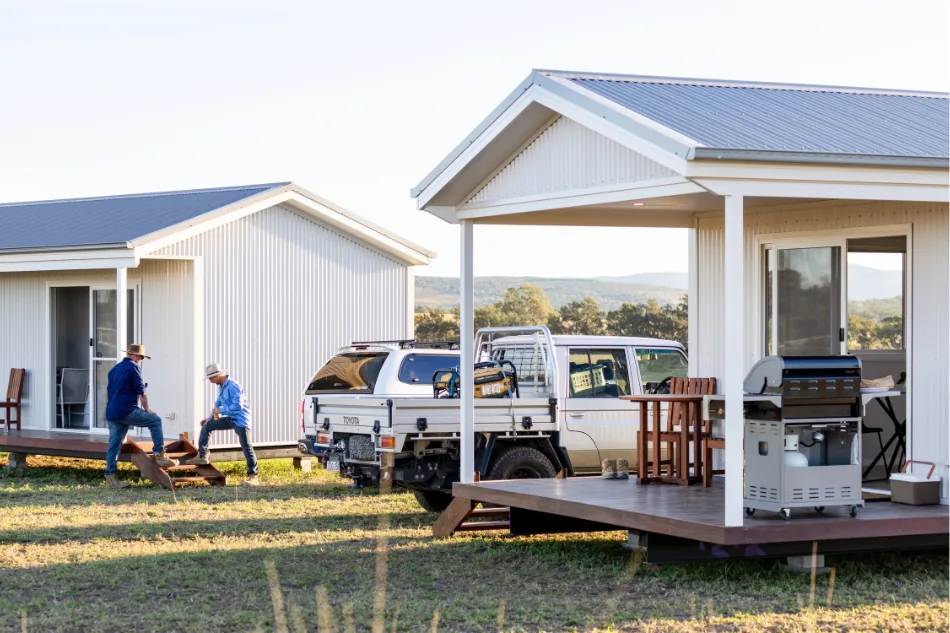
Modular housing cost Australia explained: see the seven budget areas beyond the unit price, from freight and footings to approvals and services.
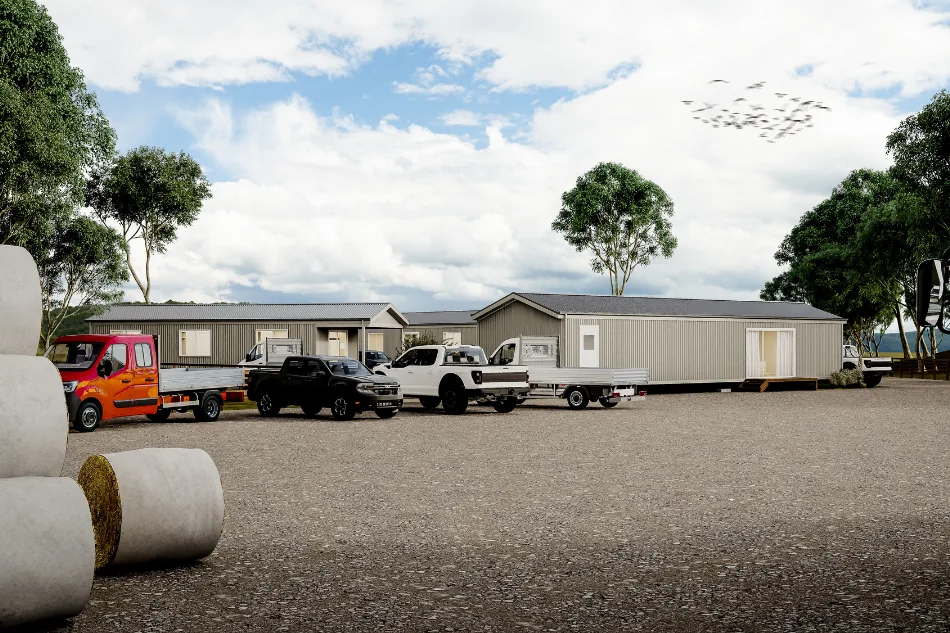
Worker housing costs go beyond the build. See how vacancies, overtime, travel and management time can raise the cost of inadequate housing.