



Can community housing providers deliver quality homes quickly and within budget? See how modular construction helps balance all three.


HUGE SALE NOW ON MODULAR HOUSING! MASSIVE SAVINGS UP TO $30,000
Community housing providers can deliver quality housing quickly while maintaining tighter control over the budget. However, they need a construction method and project plan designed around all three priorities from the start.
That is where modular housing has a strong role to play.
Community housing providers face pressure to deliver more homes, sooner. At the same time, quality cannot slip and budgets cannot run away.
That raises a fair question: can a provider achieve speed, quality and cost control on the same project?
Housing managers who get this balance right treat all three as one project decision. They do not manage budget, delivery time and tenant outcomes as separate problems.
With conventional construction, those priorities often pull against each other. Push the program too hard and costs may rise. Cut the budget too far and quality may suffer. Leave decisions open too long and the timeframe stretches.
Modular housing changes that equation.
It does not remove every project risk. Nor does it guarantee the cheapest possible build. However, when planned from the start, it offers a practical way to manage all three priorities.
This is also becoming a more serious part of government housing policy. On 5 August 2026, the NSW Government outlined new laws intended to formally recognise prefabricated buildings and streamline their approval, manufacture, transport and installation. The government said modern methods of construction could reduce overall building costs by up to 20 per cent and deliver homes up to 50 per cent faster. These are potential gains, not guaranteed results for every project.
Speed, quality and cost usually compete because conventional construction depends on many activities happening in sequence. When approvals, site preparation, trades, materials and weather do not line up, the program stretches. Trying to recover lost time can then increase costs or place pressure on quality.
The site must be ready before much of the building work can begin. Different trades then arrive at different stages. Weather, labour shortages, material delays, approvals and variations can disrupt that sequence.
A delay in one area can affect the whole job.
The Productivity Commission’s housing construction research found that Australia now completes about half as many homes per hour worked as it did in 1995. It identified slow approvals, workforce constraints, limited innovation and fragmented regulation among the barriers to more efficient delivery.
For community housing providers, those problems have direct consequences. They affect funding deadlines, holding costs, contractor risk and tenant move-in dates.
This is where the pressure builds.
A provider cannot simply chase speed and hope everything else follows. It needs a delivery model that protects the complete outcome.
Yes. Modular housing can change the trade-off by moving much of the building work into a controlled factory while site preparation happens separately. This allows parts of the program to run at the same time, rather than waiting for each stage of construction to finish in sequence.
Most of the home is built away from the site. Meanwhile, civil works, access, services and foundations can progress on the property.
That does not mean every modular project will be quick or inexpensive. The result depends on decisions made before manufacturing starts.
Factory construction moves much of the building work into an organised production environment.
Materials, equipment and trades come together in one location. Work follows a planned sequence rather than being repeatedly established across different sites.
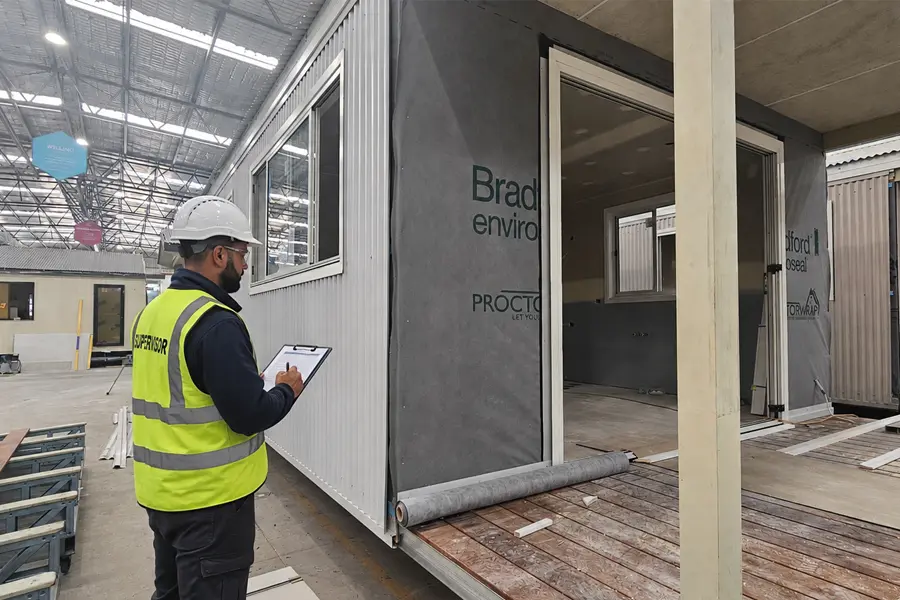
The factory also protects much of the building from weather exposure. Teams can inspect work at defined stages and identify defects before the modules leave the facility.
That creates a more repeatable process.
Repeatability matters for community housing. A provider may need several homes with similar layouts, specifications and performance requirements.
Standardising those elements reduces unnecessary design work. It also helps the manufacturer maintain a steady production flow.
The Australian Government says prefabricated and modular homes may be built up to 50 per cent faster than traditionally constructed homes. That result will not apply to every project. However, its investment in modular housing certification and industry capability shows that offsite construction is now being treated as a serious housing-supply option.
Modular works best when providers select it at the start of a project.
It is less effective when introduced after a conventional design is already complete.
The design must account for manufacturing, transport, cranage, installation and service connections. It must also respond to site conditions.
Building dimensions may need to suit transport limits. Structural connections must be resolved. The team must check road access and crane positions.
Planning and building approvals still apply.
These decisions do not disappear because the home is modular. They simply need to happen earlier.
That early decision-making is one of the method’s main strengths. It forces the team to resolve important details before construction is well underway.
Aruva’s article on why modular accommodation is back in the national housing conversation explains why experienced manufacturers should contribute while the brief and concept are still being developed.
However, late changes can become expensive.
An unresolved brief will slow factory production. So will changing specifications or incomplete site information. The factory cannot work efficiently while the design keeps moving.
Modular housing can shorten delivery because the factory and site workstreams can operate in parallel. While the home is manufactured, crews can prepare access, foundations, drainage and services. Once both workstreams are ready, the modules can be delivered, installed and connected.
This overlap can remove significant time from the right project.
Factory production also faces fewer weather interruptions. Work can continue indoors when a conventional building site may slow down or stop.
Standard designs can create another gain.
The manufacturer does not need to solve every detail again for each dwelling. Proven layouts, materials and construction details can move through production with fewer interruptions.
In June 2026, the NSW Government announced a Modern Methods of Construction Innovation Facility intended to produce high-quality housing faster, ease cost pressures and strengthen the state’s building supply chain.
The point is not that every provider must use the same system.
Instead, community housing providers now have another credible delivery method when a conventional program cannot meet the required timeframe.
Faster construction can still deliver quality housing when speed comes from planning, repetition and better sequencing. It should not come from skipping checks, compressing essential work or lowering the specification. A controlled factory can support consistent workmanship and make formal quality checks easier to repeat.
A factory gives the builder more control over how teams complete and inspect the work.
Materials can remain under cover. Workers use areas designed for repeat tasks. Supervisors can check the same stages across several homes without travelling between sites.
The production process can include clear quality-control points.
For example, inspectors can check framing before workers close the walls. They can inspect waterproofing, services and finishes at set stages.
Teams can fix problems while the home remains in the factory. The required tools, equipment and trades are already available.
That does not make defects impossible. Quality still depends on competent people, clear standards and proper systems.
However, a controlled environment makes consistency easier to manage.
This is especially useful across multi-dwelling community housing programs. The provider can set the required standard once and inspect it through a repeatable process.
Yes. Modular homes must meet the planning and building requirements that apply to their classification, location and intended use.
These may include structural, fire, accessibility, health, amenity and energy-efficiency requirements.
The construction method changes where teams complete the work. It does not remove the standards that apply to the finished home.
Aruva’s explanation of how Australian standards support quality in modular construction addresses the assumption that factory-built housing must mean a lower standard.
The provider’s specification must also reflect how tenants will use the property.
A home may need accessible features, durable finishes and efficient heating and cooling. It may also need low-maintenance materials or layouts suited to particular tenants.
The team must include these needs in the brief before manufacturing begins.
Quality is not just about the home’s appearance at handover.
It is also about whether the home remains safe, comfortable and practical throughout its working life.
Modular housing can improve cost control by settling more design, material and production decisions before construction begins. However, it will not always produce the lowest initial quote. Its main financial strength is often greater certainty, a shorter site program and fewer opportunities for delay and rework.
The cheapest construction price and the best project value are not always the same.
A conventional quote may appear lower at the start. Yet delays, variations and extended site supervision can increase the final cost.
Repeated trade mobilisation and late material changes can add more pressure.
Modular construction aims to reduce those unknowns. It requires the project team to settle the design and production process earlier.
As a result, the provider gains a clearer view of the scope. It can see what the factory will supply and which works remain on site.
Budget control can improve through:
Earlier occupation matters.
A completed home can house someone. An unfinished project cannot.
Reducing the gap between funding approval and tenant occupation can improve the practical value of the investment.
However, the full budget must include more than the module price.
Providers must allow for transport, cranage, foundations and service connections. They must also include approvals, site access, landscaping and local works.
Aruva’s guide to the cost of accommodation units explains why transport, installation, services and finishing works must be included in the complete project budget.
Leaving these items out does not make the project cheaper. It only moves the cost elsewhere.
A community housing provider must treat modular housing as a complete project-delivery method, not a product purchase. The building, site, approvals, transport and installation must form one coordinated plan. The provider also needs clear responsibilities, an early site assessment and a settled brief before factory production begins.
A proper site assessment should happen early.
The project team must understand access, levels, soil conditions and existing services. It must also check planning controls and environmental constraints.
The team also needs to confirm that the modules can reach the site.
A suitable home design is no use when road widths or overhead services block delivery. Turning areas and crane access also matter.
The provider should settle the dwelling mix, layouts and accessibility requirements before manufacturing begins.
It should also confirm finishes, services and operational needs.
This does not mean accepting a poor standard design.
It means resolving the brief while changes remain easy to make. Once production starts, late variations can affect both cost and timing.
Not every dwelling needs to be identical. However, repeating elements that do not need to change can improve efficiency.
Bathrooms, kitchens and structural grids are useful areas to standardise. The same applies to window sizes and service locations.
Selected finishes or layout options can still respond to tenants and sites.
The aim is controlled flexibility. It is not endless customisation or a one-size-fits-all result.
Community housing providers must understand who controls each stage.
Who manages the design? Who handles approvals? Who completes the foundations? Who coordinates transport and service connections?
The provider must also know who handles defects after installation.
A low module price offers little value when responsibility remains unclear.
The right delivery model connects each stage. It also gives the provider a clear line of accountability.
This is where experience matters. Community housing is a long-term accommodation investment. Providers need quality-built homes delivered by people who understand the design, factory, site and installation as one job.
No. Modular housing is a strong delivery option, but it will not suit every project. It may offer less value where access is restricted, transport is impractical, the design is highly customised or the site remains unresolved. Each project still needs an honest feasibility assessment.
Transport distance can affect costs. Difficult terrain can complicate installation. Repeated design changes can disrupt production.
Small one-off projects may not gain the same efficiencies as a repeatable program.
These limits do not weaken the case for modular.
Instead, they help providers identify the projects where it works best.
A provider should assess the site, program, dwelling mix and future project pipeline first. The construction method should follow the project requirements.
Modular housing is not a shortcut, and it is not a universal fix.
It is a construction method that performs best when the project is designed around its strengths.
Yes. Community housing providers can deliver speed, quality and cost control when they plan the three priorities together. Modular construction provides a practical way to shorten the program, standardise quality checks and settle more of the budget before work reaches the site.
However, modular cannot rescue a poorly defined project.
The site still needs proper investigation. The brief must be clear. The provider must manage approvals, transport and installation.
The team must also make decisions early enough for factory production to work.
The real advantage is not speed on its own.
It is a more controlled path from project approval to completed housing.
That is the balance smart community housing managers are working towards. They need responsible budgets, sound housing outcomes and homes delivered when people need them.
For Aruva, the principle is straightforward: community housing should be treated as a quality-built accommodation investment, delivered by people who understand the entire job.
That means the design, factory, site and installation must work as one process.
Community housing providers do not have to choose blindly between speed, quality and cost. Done properly, modular housing provides a practical way to manage all three.
Is modular community housing always cheaper than conventional construction?
No. Modular housing does not always have the lowest initial quote. Its financial advantage often comes from improved cost certainty, reduced site time, fewer weather interruptions and less exposure to late design changes.
How much faster can modular housing be delivered?
The Australian and NSW governments have stated that modular and prefabricated homes can potentially be delivered up to 50 per cent faster. The actual saving depends on approvals, site readiness, design decisions, factory capacity, transport and installation.
Does modular community housing meet the same standards as site-built housing?
It must meet the building, planning and performance requirements that apply to the completed building. The intended use and building classification determine which structural, accessibility, fire, health, amenity and energy-efficiency requirements apply.
When should a modular manufacturer become involved?
The manufacturer should be involved while the project brief and early design are still being developed. Early input helps the team account for manufacturing, transport, installation, standardisation and site constraints before the design becomes difficult or expensive to change.
What role can Aruva play in early project planning?
Aruva can contribute practical manufacturing and delivery knowledge while a project is being defined. Early involvement helps identify what can be standardised, where flexibility adds value and which site, transport or installation issues need to be addressed.

Download your copy of our Accommodation Guide.
Aruva’s experienced team will collaborate with you about our modular accommodation solutions.

Talk to us about your property, timeline and requirements.

We’ll supply a proposal based on your design preference.

Place your order! We’ll build and install your new modular accommodation.
There’s no place like home, right? Your staff can spend their evenings in comfort and style, relaxing and connecting with friends and family, and then recharge their batteries with some quality zzzzs.


Our Resources
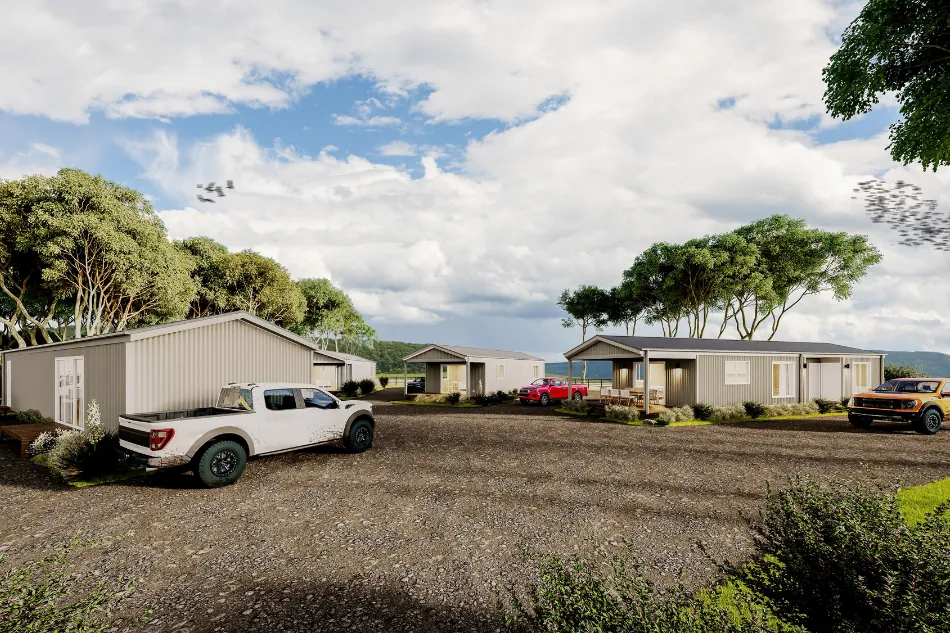
Learn how scalable worker housing helps farm operators meet current demand, plan for growth and avoid committing to excess capacity too early.

Planning multiple modular housing units? Learn what to check for power, water and wastewater before you lock in site layouts or unit numbers.
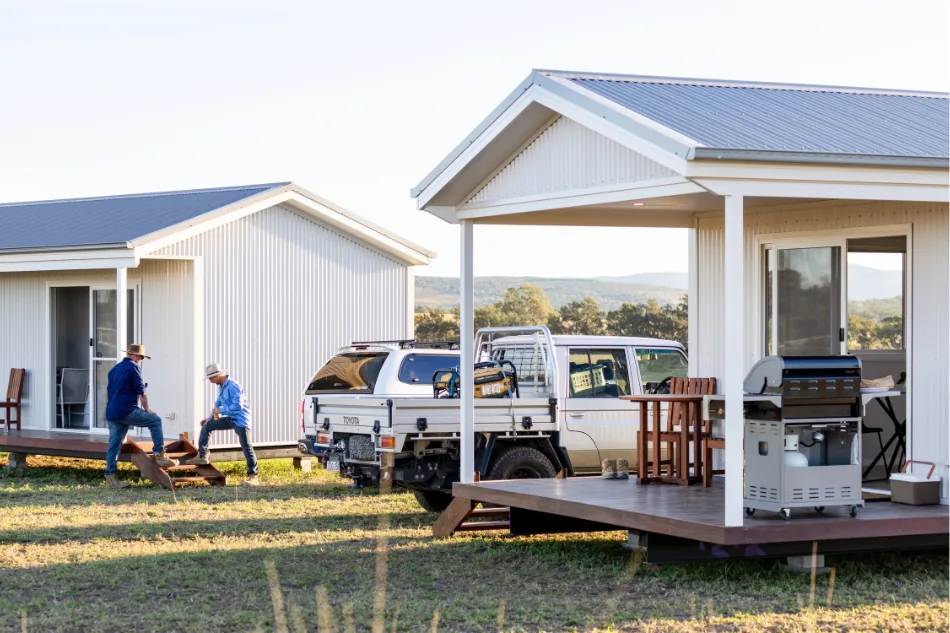
Modular housing cost Australia explained: see the seven budget areas beyond the unit price, from freight and footings to approvals and services.