

Discover how a solid steel chassis and welded subfloor make modular buildings stronger, straighter, and built to last. Learn why this foundation matters for durability, transport, and long-term ROI.



Let’s clear something up.
Modular buildings have come a long way—but some people still reckon they’re a bit lightweight. That they flex, twist, or won’t last long in rough conditions.
The truth? There’s a lot that goes into making a modular building truly strong and durable—from the roof structure to the wall systems, right down to how it’s assembled.
But for this blog, we’re just zooming in on one critical part of the picture: the solid steel chassis and welded subfloor. If you care about long-term strength and ROI, it’s one of the first places you should be looking.
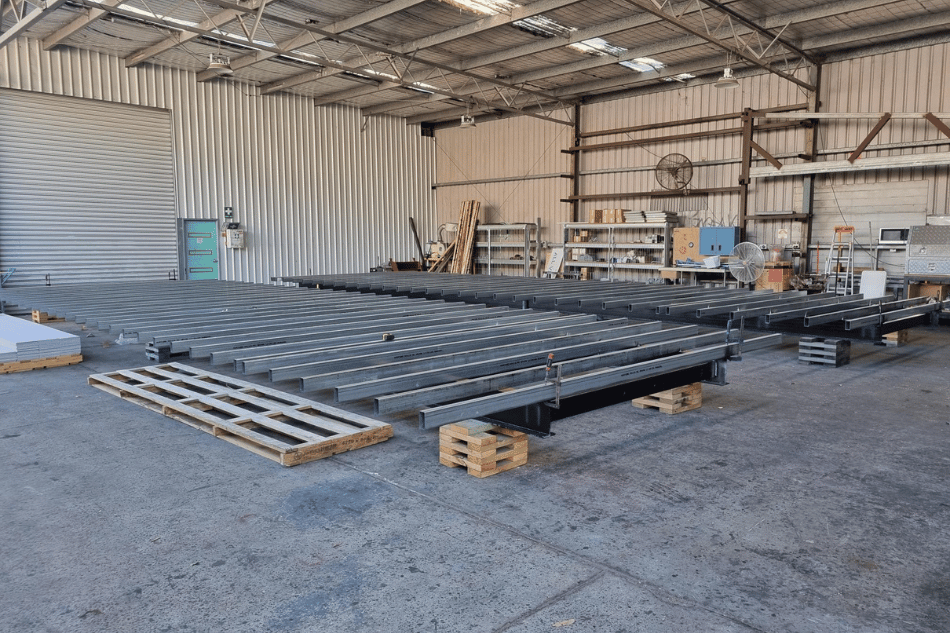
Under every Aruva module, we run two full-length Universal Beams (UBs)—the same kind of steel used in bridges and commercial construction.
They’re usually 250mm or 310mm deep, running the entire length of the module. Each beam weighs around 25–37 kg per metre. That’s hundreds of kilos of serious steel under each building, doing the heavy lifting—literally.
On top of those beams? We weld in a complete 100mm RHS (Rectangular Hollow Section) frame, made from thick, galvanised steel—not light-gauge. It forms the base of the floor structure and ties directly into the strength of the chassis.
And unlike bolted frames, ours are fully welded—which means there’s no movement, no loosening, and no weak points over time. Just one solid, integrated foundation.
One of the biggest advantages of steel over timber? It’s perfectly flat and straight.
With steel, there’s no twisting, no shrinking, no warping. That gives you a dead-level base—so everything that gets built on top of it is more accurate. Doors don’t jam. Windows sit square. The whole module stays aligned and stable over time.
Timber, by contrast, can shift from day one—especially when exposed to the elements. That movement might seem minor at first, but over months and years, it adds up to uneven floors, stuck windows, and costly maintenance.
Before a modular building even reaches your site, it’s had a rough trip.
Lifted. Craned. Trucked. Tied down. Hauled through wind, vibration and movement at 100 km/h. That kind of stress would wreck a weak frame.
But Aruva’s base system is made to handle it. The UB chassis and RHS subfloor form a rugged backbone that resists flexing under transport stress—and holds strong once installed. Whether you’re planting it permanently or moving it down the line, the frame is built to perform.
If you’re managing housing or accommodation assets, strength isn’t just about peace of mind—it’s about payback.
With a welded steel subfloor and UB chassis, you get:
This is why smart operators—from property developers to CHB providers and asset managers—look below the surface before signing off. Because strength is more than skin deep.
You wouldn’t build a house on a dodgy foundation—and the same goes for modular buildings. The steel chassis and welded subfloor are just one part of what makes Aruva’s builds hold up—but it’s a big one.
We’ve put a lot of thought into every layer of our system, from roof to floor. But this base? It’s where the serious strength starts.
At Aruva, this is just how we build—strong, simple, and built to last—so your investment keeps delivering.
It’s why we say: Real Living. Delivered.
Want to see how this works on site? Visit www.aruva.au

Download your copy of our Accommodation Guide.

Talk to us about your property, timeline and requirements.

We’ll supply a proposal based on your design preference.

Place your order! We’ll build and install your new modular accommodation.
There’s no place like home, right? Your staff can spend their evenings in comfort and style, relaxing and connecting with friends and family, and then recharge their batteries with some quality zzzzs.


Our Resources

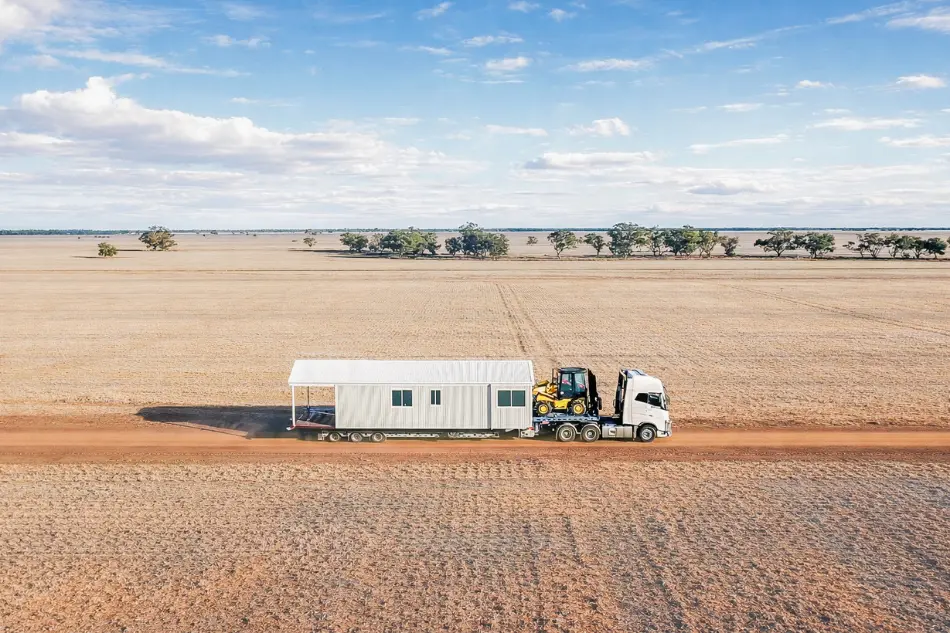
Modern methods of construction can cut site hours, reduce delay risk, and improve value. Here’s how to compare build options with confidence.
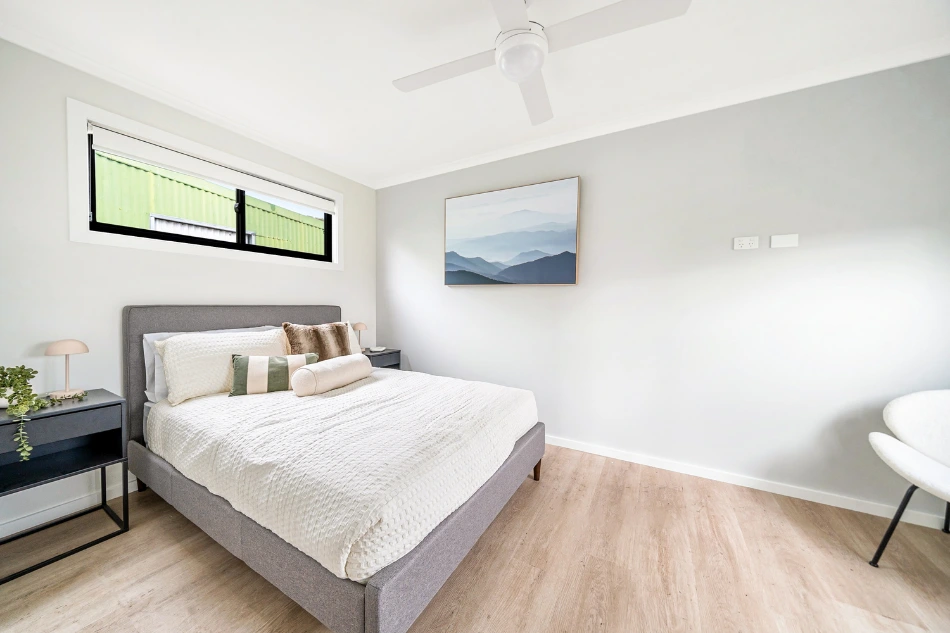
How many people per bedroom in worker accommodation? Practical limits, WHS risks, and a simple checklist to set a clear, defensible standard.