



Long commutes can drain your rural workers’ energy and productivity. Discover how on-farm accommodation could improve safety, morale, and efficiency on your farm.


HUGE SALE NOW ON MODULAR HOUSING! MASSIVE SAVINGS UP TO $30,000
For many Australian farms and other agricultural entities, the question of worker accommodation is a balancing act. Long commutes can tire rural workers out, cost time and money, and reduce productivity. On the flip side, investing in on-site accommodation comes with its own set of considerations.
How do you decide? Let’s unpack this question in a way that makes sense for hardworking owners who value both practicality and their workers’ well-being.
If your workers are commuting daily, it’s worth considering what that drive means for their performance and safety. Here are some key factors:
1. Travel Time
2. Road and Traffic Conditions
3. Worker Fatigue
Ask yourself: Are my workers turning up refreshed and ready, or are they worn out from the drive?
Commuting isn’t just about time; it has real financial implications too.
If you’ve noticed higher turnover rates or trouble retaining good rural workers, long drives might be part of the problem.
Providing on-farm accommodation could be the solution your farm needs. Let’s weigh up the benefits:
1. Better Rest and Recovery
With workers living on-site, they can spend their evenings resting instead of driving. A good night’s sleep leads to safer and more productive workdays.
2. Improved Worker Satisfaction
On-site housing makes life easier for your team. Less travel means more time with family, less stress, and happier workers who are more likely to stick around.
3. Attracting and Keeping Talent
The rural labour market is competitive. Providing quality housing gives you an edge when recruiting and helps keep your team around long-term.
Remember: It’s not just about providing a bed; it’s about offering comfort and connection. Quality modular housing—like the solutions from Aruva Modular—delivers rest and reliability, making workers feel valued.
Here’s a simple way to weigh up commuting versus on-farm accommodation.
1. Calculate Commute Costs
2. Assess Accommodation Costs
3. Factor in Peak Seasons
During times like harvest, long hours and long drives are a dangerous combination. Accommodation can solve that problem, keeping your team safe and focused.
Create a table to compare commuting and on-site accommodation for your farm. Exactly how you rate it will be up to you—it needs to make sense based on your situation. Here’s an example of what we mean.
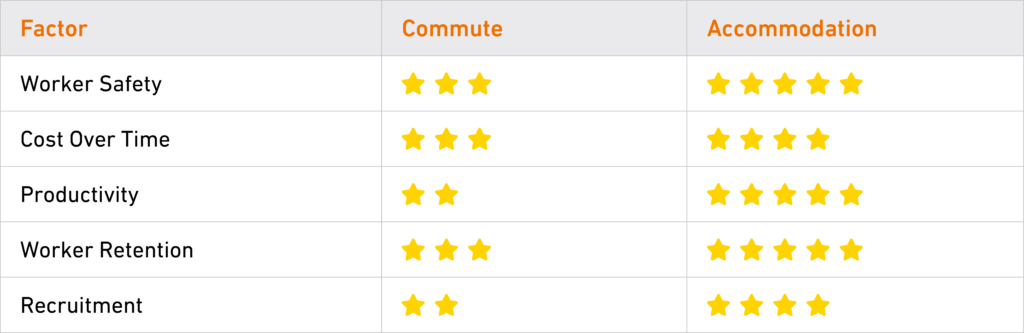
Whichever option has the most stars for your needs wins.
If you’re leaning towards on-farm accommodation, consider modular housing. It’s cost-effective, quick to install, and designed for rural properties.
Companies like Aruva Modular specialise in practical designs that make life easy and pay back over time. Their process keeps it simple, so you’re sorted from start to finish. Plus, their down-to-earth team understands what Australian farmers need.
Deciding between commuting and on-farm accommodation is about more than just numbers. It’s about the health and safety of your rural workers, the productivity of your farm, and your ability to build a team that’s happy and motivated.
By evaluating the costs and benefits—and keeping worker well-being at the forefront—you can make the choice that delivers the best results for your farm.
After all, as the saying goes, it’s all about A Good Night’s Sleep.
Want to explore modular housing options for your rural workers? Visit Aruva Modular today to find the right solution for your team.

Download your copy of our Accommodation Guide.
Aruva’s experienced team will collaborate with you about our modular accommodation solutions.

Talk to us about your property, timeline and requirements.

We’ll supply a proposal based on your design preference.

Place your order! We’ll build and install your new modular accommodation.
There’s no place like home, right? Your staff can spend their evenings in comfort and style, relaxing and connecting with friends and family, and then recharge their batteries with some quality zzzzs.


Our Resources

Planning multiple modular housing units? Learn what to check for power, water and wastewater before you lock in site layouts or unit numbers.
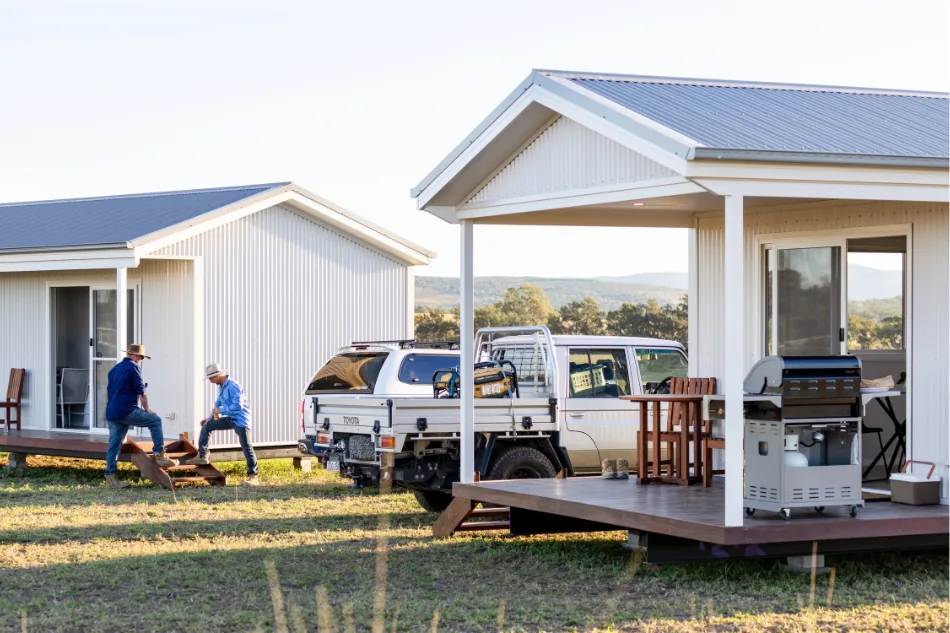
Modular housing cost Australia explained: see the seven budget areas beyond the unit price, from freight and footings to approvals and services.
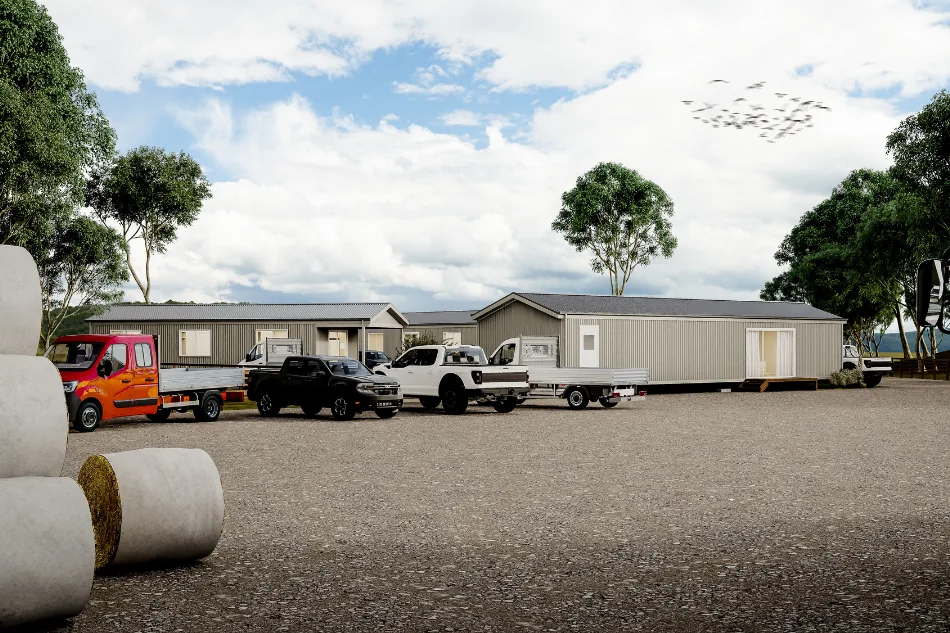
Worker housing costs go beyond the build. See how vacancies, overtime, travel and management time can raise the cost of inadequate housing.