


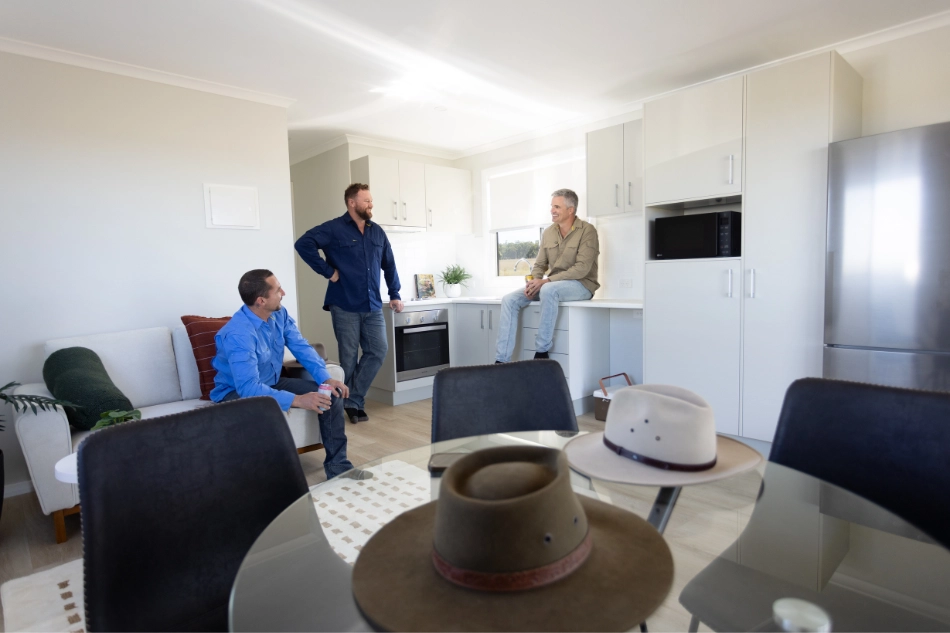
Modular isn’t just faster. Factory-built work conditions reduce variables — improving quality, predictability and project certainty.


HUGE SALE NOW ON MODULAR HOUSING! MASSIVE SAVINGS UP TO $30,000
A recent Build-it article made an interesting point: tradies report higher career satisfaction than university graduates — 60% vs 42% — and they’re also more likely to be employed soon after finishing training (84.1% vs 68.8%).
At face value, that’s a story about careers.
But if you’re a community housing provider, government team, investor or developer, there’s a bigger takeaway hiding in plain sight:
And this is one of those areas where factory-built modular construction quietly comes into its own.
Let’s paint a simple picture. Two tradespeople. Same capability. Same pride in workmanship.
It’s an early start. He’s in the ute before sunrise. Today’s job is “ready”… mostly. But not entirely.
He still gets it done. Because good tradies do.
But the work environment is always changing, and that variability shows up somewhere — time, quality, cost, or all three.
Same early start. But instead of driving to a different site with different conditions, she walks into a controlled build environment.
Same trade. Same pride. Far fewer variables.
And when variables reduce, two things happen:
That predictability is a big deal for customers.
In Australia, skilled trades are in shortage — and not by a small margin. In the 2021 Skills Priority List findings, 42% of assessed Technician and Trades Worker occupations were in shortage, compared to 19% across all occupations.
When the labour market is tight, the best people gravitate toward work that is:
Factory-based modular doesn’t just build differently — it works differently.
And that difference can show up in outcomes customers actually care about.
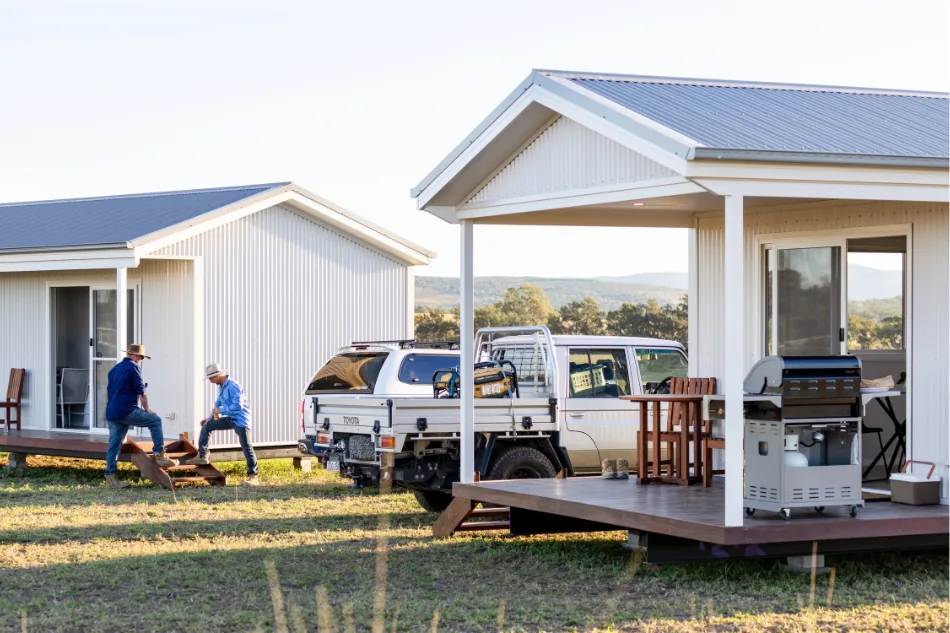
Here’s the practical link between factory conditions and project results.
In a factory environment, quality isn’t dependent on “who turned up today” or “how the weather held”. Processes are repeatable. Checks are built in. Issues get caught earlier — when they’re cheaper and easier to fix.
Traditional sites lose time to rain, wind, heat, and the knock-on effects that follow. A covered build environment reduces that exposure, which helps stabilise timelines.
Trades do their best work when they can focus on the craft — not spend hours “making do” with what’s available. A factory setting reduces the friction.
Problems get solved faster when the right people are nearby and working in sync, not spread across multiple sites and subcontractor schedules.
When the work environment is designed properly — with equipment, lifting aids, benches and layout — it reduces unnecessary physical strain. That’s not just a safety point; it affects output consistency and retention over time.
This one’s often overlooked: people generally do better work when their days are more stable and sustainable. The Build-it article focuses on satisfaction in trades more broadly — modular can amplify that by making the work environment calmer, more consistent, and more team-oriented.
A lot of modular conversations start with the obvious: speed, program certainty, reduced disruption, and quality control.
All true.
But here’s another angle that matters, especially for government and community housing:
Modular is also about building in a way that’s more sustainable for the workforce.
Not because it’s “easier” — but because it’s better organised, more consistent, and less exposed to daily chaos.
And when you’re trying to deliver housing outcomes at scale, consistency isn’t a “nice to have”.
It’s the whole game.
If you’re weighing up modular for community housing, key worker accommodation, regional housing or government delivery, here’s the simple point:
Factory-based modular reduces variables — and that improves predictability.
It’s not just a construction method.
It’s a different operating environment that can make delivery more reliable, quality more consistent, and project planning more certain.
If you’re planning a program of works (or even just testing the waters), the Aruva team can help you map what factory-built modular could look like for your site, scope and delivery requirements.
Enquire with us to talk through timelines, design pathways, and what “certainty” could look like on your next build.

Download your copy of our Accommodation Guide.
Aruva’s experienced team will collaborate with you about our modular accommodation solutions.

Talk to us about your property, timeline and requirements.

We’ll supply a proposal based on your design preference.

Place your order! We’ll build and install your new modular accommodation.
There’s no place like home, right? Your staff can spend their evenings in comfort and style, relaxing and connecting with friends and family, and then recharge their batteries with some quality zzzzs.


Our Resources

Planning multiple modular housing units? Learn what to check for power, water and wastewater before you lock in site layouts or unit numbers.
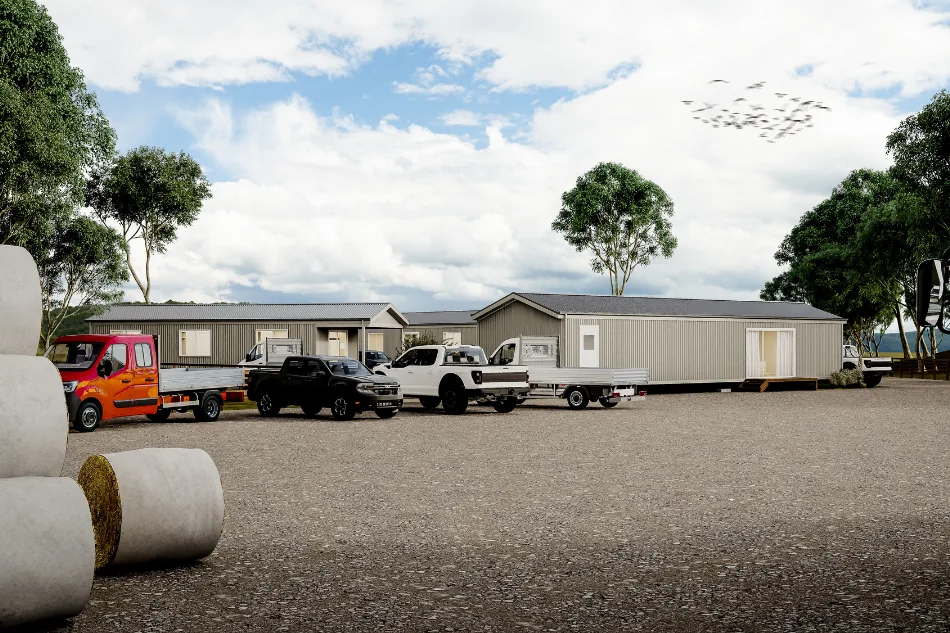
Modular housing cost Australia explained: see the seven budget areas beyond the unit price, from freight and footings to approvals and services.
Worker housing costs go beyond the build. See how vacancies, overtime, travel and management time can raise the cost of inadequate housing.