



A practical guide to modular house foundations on farms—concrete blocks, fixed steel piers, and adjustable steel piers—and why engineers choose each one.


HUGE SALE NOW ON MODULAR HOUSING! MASSIVE SAVINGS UP TO $30,000
If you’ve ever driven past a modular house on a farm and thought, “Why is it sitting up on blocks?”—you’re not alone.
Rural landowners are practical. You want to see a clear reason for every decision, especially when it’s literally holding the building up.
This is where adjustable steel piers come into the conversation.
They’re one of three common pier options used under raised-floor housing, and they exist for a simple reason: some sites move, and the foundation system needs to deal with that movement sensibly.
At Aruva, we build practical modular housing for people who need to get on with the job. That includes choosing a footing approach that suits the site, the build, and the long-term performance—because smart decision-makers don’t want surprises later.
On rural sites, a raised-floor system supported by piers is often a clean, efficient solution because it can help with:
It’s also straightforward to inspect and maintain over time—important when your priority is running a property, not babysitting a build.
You’ll usually see these on sites where:
They’re familiar, and they make sense when the ground conditions and design loads are suited.
Fixed steel piers are common where you want:
They’re a solid “commercial toughness” option when the site doesn’t need future adjustment.

Adjustable steel piers are typically used when the site conditions increase the likelihood of minor movement over time, such as:
The key feature is the threaded adjustment at the top, which allows controlled re-levelling if required. That doesn’t mean the building is “meant to move around.” It means the system gives you a practical way to fine-tune levels without ripping everything up.
From a performance and ROI perspective, adjustable piers can help reduce:
It’s not about being fancy. It’s about choosing a footing approach that matches the reality of the ground.
Yes—when it’s designed and installed properly.
The important bit is this: pier selection isn’t a guess. It’s driven by engineering design, site information, and compliance requirements. In plain terms, the footing system must be designed to suit the site classification and expected ground behaviour.
And that’s the whole point of Aruva’s approach: we use a proven process that makes it easy for our customers. We don’t just pick a pier type because it’s “standard”—we pick it because it makes sense for the project.
If you want a quick mental model:
There’s always a reason for which one gets used.
If you’re comparing quotes or trying to sanity-check what you’re seeing on-site, ask:
This is where modular housing that performs shows up in the details—not the brochure.
On farms, the best foundation solution is the one that delivers stable performance with minimal fuss—now and later. Sometimes that’s blocks. Sometimes it’s fixed steel.
And sometimes adjustable steel piers are the smart call for a site that’s likely to shift with moisture and seasons.
Aruva makes housing delivery fast, simple and reliable—because it’s backed by a proven system. Superior housing delivered for your people means thinking through the footing system the same way you’d think through any long-term asset: match it to conditions, and build it to last.
Want to talk through your site and what footing approach is likely to suit it? Start at www.aruva.au.

Download your copy of our Accommodation Guide.
Aruva’s experienced team will collaborate with you about our modular accommodation solutions.

Talk to us about your property, timeline and requirements.

We’ll supply a proposal based on your design preference.

Place your order! We’ll build and install your new modular accommodation.
There’s no place like home, right? Your staff can spend their evenings in comfort and style, relaxing and connecting with friends and family, and then recharge their batteries with some quality zzzzs.


Our Resources
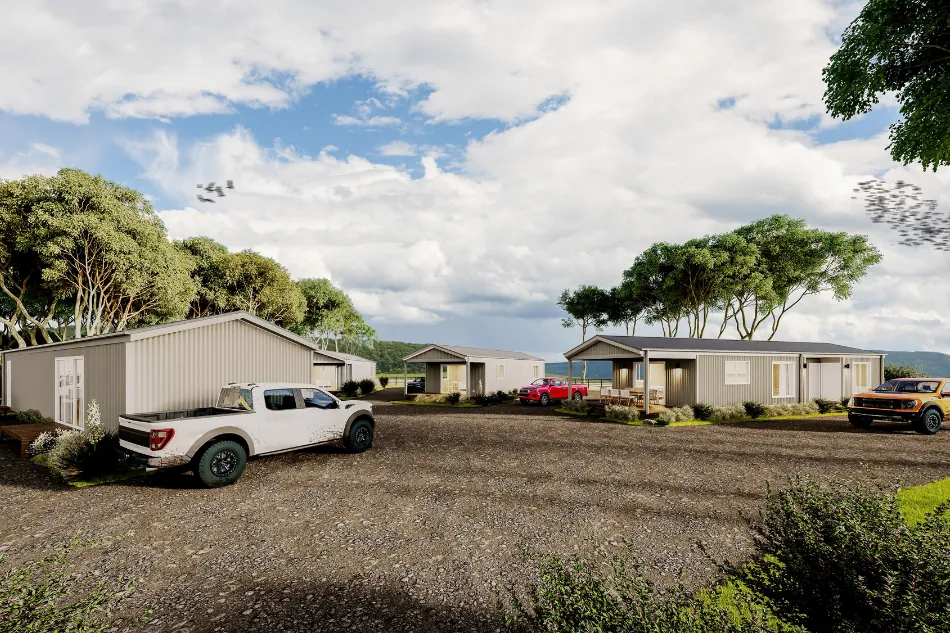
Learn how scalable worker housing helps farm operators meet current demand, plan for growth and avoid committing to excess capacity too early.

Planning multiple modular housing units? Learn what to check for power, water and wastewater before you lock in site layouts or unit numbers.
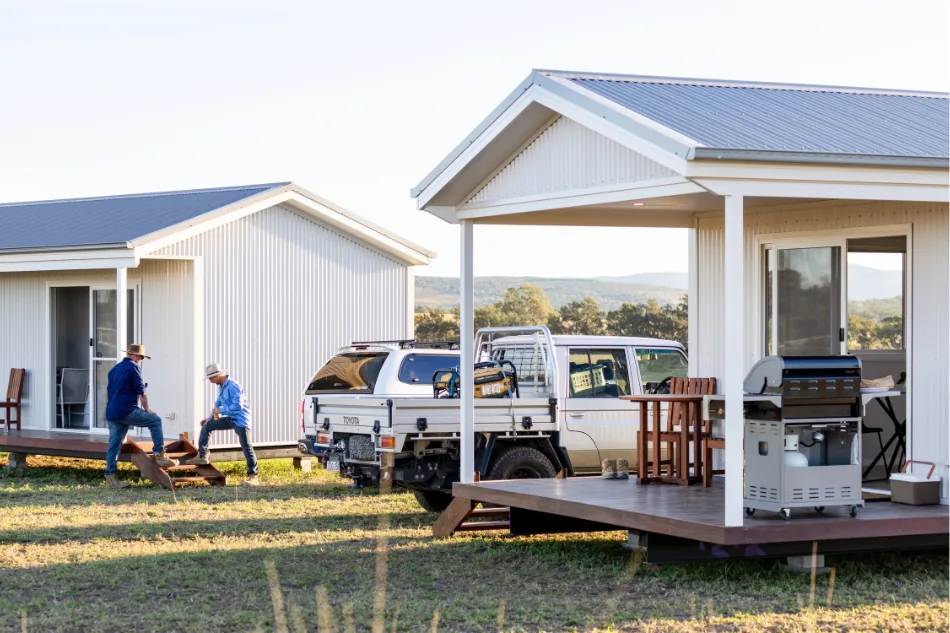
Modular housing cost Australia explained: see the seven budget areas beyond the unit price, from freight and footings to approvals and services.