



Compare renovating an old farmhouse vs installing new accommodation for workers. A practical guide for Aussie landowners focused on value and performance.


HUGE SALE NOW ON MODULAR HOUSING! MASSIVE SAVINGS UP TO $30,000
When accommodation is needed for workers or tenants on a farm, many landowners ask a practical question:
“Should we fix up the old farmhouse, or install something new?”
The answer isn’t always straightforward. Each approach has its advantages and limitations. Below is a direct, no-nonsense comparison to help you assess what’s more suitable for your property, budget, and long-term plans.
Renovating the old farmhouse often comes with a lower upfront price tag—especially if the structure is already sound. But there’s a higher chance of unexpected costs along the way. Hidden issues (plumbing, electrical, structural) are common and can push budgets beyond the original estimate.
Installing new accommodation is typically more expensive up front, but costs are more predictable. With most new units built off-site, the scope and spend are clear from the outset.
In summary: Renovation can be cheaper—if there are no major surprises. New installation gives you a more fixed cost with fewer unknowns.
Older buildings typically weren’t built to current energy standards. Even post-renovation, factors like poor insulation, air leaks, or inefficient fittings can result in higher power bills.
New accommodation is designed to meet modern requirements like those set by NatHERS. That often translates into lower heating and cooling costs and improved comfort for occupants.
Takeaway: If energy performance and utility costs matter in your long-term planning, this is an important consideration.
Renovated farmhouses can offer more space and traditional charm. However, older layouts might not suit modern accommodation needs—especially when it comes to shared living, privacy, or noise control.
New accommodation units are purpose-built, with layouts designed for staff or tenant use. They generally offer modern amenities, better soundproofing, and consistent finishes.
Takeaway: Comfort can be achieved either way, but layout and functionality might require more effort in older buildings.
With renovation, you’re still dealing with an old structure—even if it looks new on the surface. Ongoing maintenance is likely to be more frequent as existing systems age.
New units typically come with new plumbing, electrical systems, roofing and materials. They’re unlikely to need major maintenance for several years, depending on build quality and usage.
Takeaway: Renovation can stretch the life of a structure but usually comes with more upkeep over time.
Renovated homes are fixed to the land and generally form part of the overall property. Their resale value is tied to location and broader farm valuation.
New accommodation units, especially modular options, can often be relocated, repurposed or resold. This may suit farm owners who want flexibility as staffing or operational needs change.
Takeaway: Renovation is more permanent; new can offer adaptability.
Older buildings may fall short of current building codes, especially around fire safety, ventilation, and accessibility. Upgrading to compliance can require structural changes and significant investment.
New units are designed to meet the current National Construction Code, making certification and approval more straightforward.
Takeaway: Compliance is possible in both cases, but older structures may require more effort and cost to meet standards.
Renovation timelines can vary depending on the condition of the building, trade availability, and unexpected setbacks. Some projects can stretch well beyond their initial timeframe.
New accommodation can often be delivered and installed quickly, particularly if using prefabricated designs. That said, site preparation and permits still take time.
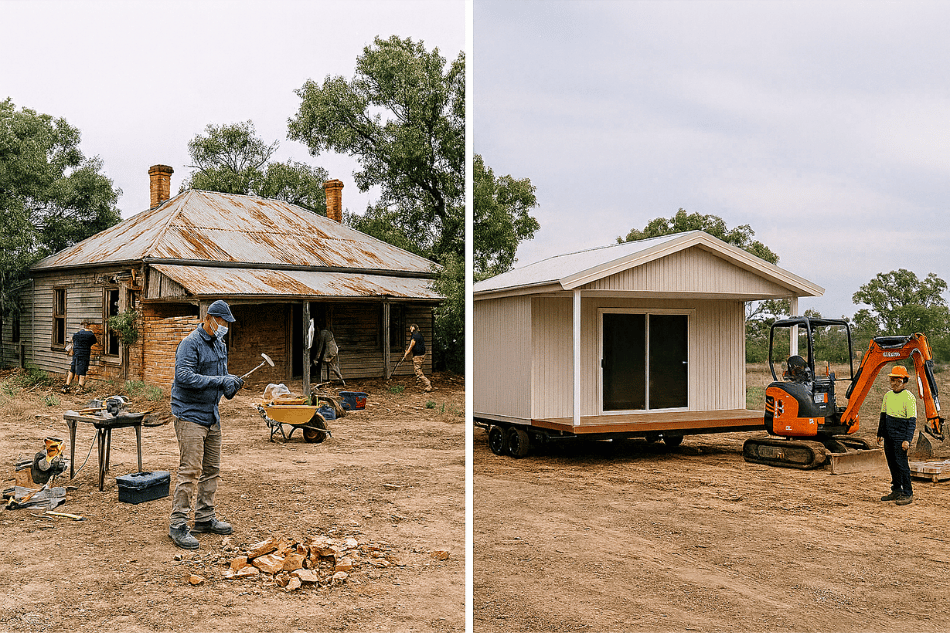
Choosing between renovating and installing new accommodation isn’t just about cost—it’s about fit. The right option depends on how long you need the space, what condition the old building is in, and how much time or flexibility you have.
Some farm owners value the familiarity and practicality of working with what’s already there. Others prioritise compliance, predictable running costs, and the ability to move or reuse the asset in future.
The key is to weigh both paths fairly—then invest in the one that works for your operation.
For more side-by-side comparisons and practical planning tools, visit www.aruva.au.

Download your copy of our Accommodation Guide.
Aruva’s experienced team will collaborate with you about our modular accommodation solutions.

Talk to us about your property, timeline and requirements.

We’ll supply a proposal based on your design preference.

Place your order! We’ll build and install your new modular accommodation.
There’s no place like home, right? Your staff can spend their evenings in comfort and style, relaxing and connecting with friends and family, and then recharge their batteries with some quality zzzzs.


Our Resources

Planning multiple modular housing units? Learn what to check for power, water and wastewater before you lock in site layouts or unit numbers.
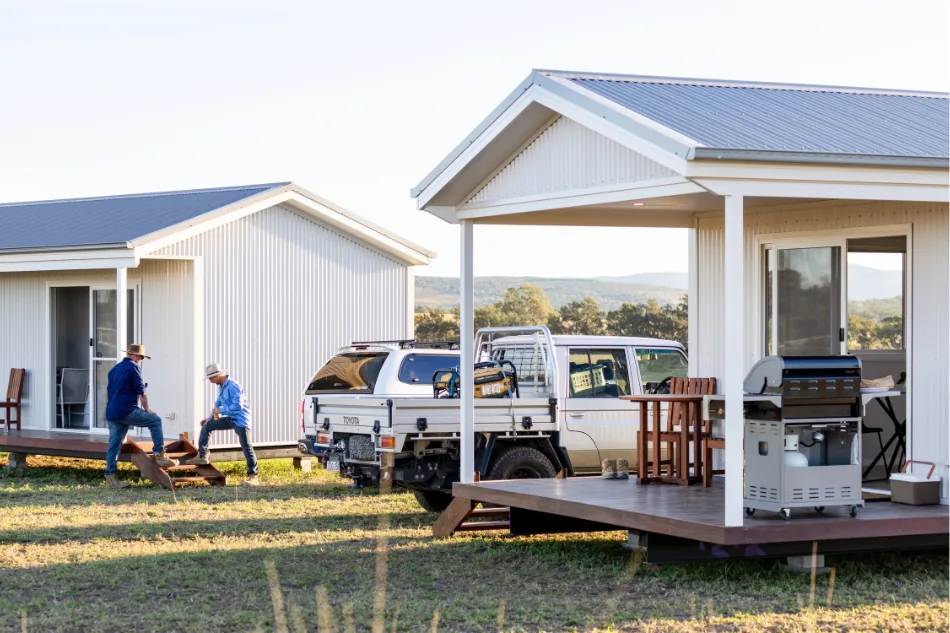
Modular housing cost Australia explained: see the seven budget areas beyond the unit price, from freight and footings to approvals and services.
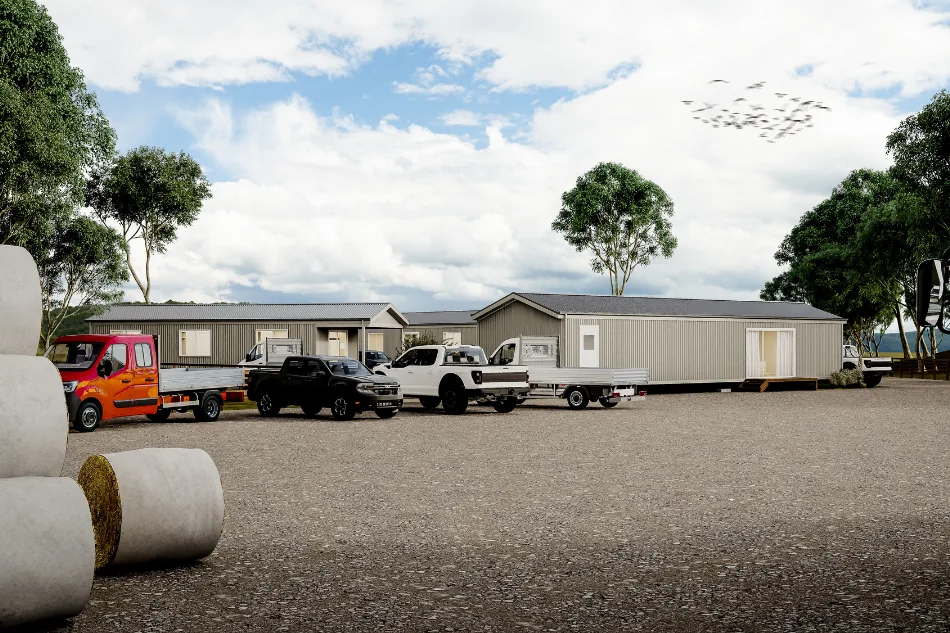
Worker housing costs go beyond the build. See how vacancies, overtime, travel and management time can raise the cost of inadequate housing.