



Build-to-Rent explained. Learn how modular building supports housing supply, regional growth, and long-term rental performance in Australia.


HUGE SALE NOW ON MODULAR HOUSING! MASSIVE SAVINGS UP TO $30,000
You’ve probably heard the term Build-to-Rent in Australia (or BTR) starting to pop up in conversations about housing, infrastructure, and investment. It’s being discussed in state and federal corridors, by developers and investors, and across community housing networks. But despite all the noise, many Australians – even in the property and asset management space – still ask: what is it exactly?
Here’s what you need to know.
Build-to-Rent refers to properties that are specifically developed and held for long-term rental—not for private sale. Think large apartment blocks, townhouse clusters, or modular developments designed from day one to be professionally managed rental communities.
This is not your typical investor buying a property to lease out. In fact, that’s a key misunderstanding we want to clear up. BTR is driven by big players: superannuation funds, hedge funds, councils, major developers, government bodies, and registered community housing providers (CHPs). These aren’t mum-and-dad investments—they’re institutional strategies.
Australia’s housing crisis is forcing every sector to think differently about supply. We’re not just talking about homeownership—we’re talking about availability across the board. Rentals are scarce. Prices are high. And homelessness is growing.
BTR is part of a broader solution. While it doesn’t mean someone experiencing homelessness will move straight into a BTR apartment, it does increase supply at scale. And more stock in the market ultimately eases pressure on lower-cost housing options and community accommodation.
Government attention is growing. So is investment momentum. Smart developers and asset managers are getting smart about their investments in their people for getting better performance from their organisation. The writing’s on the wall: BTR is here to stay.

Let’s break down the difference:
| Feature | Build-to-Rent (BTR) | Private Landlord Rental |
| Ownership | Institutional, long-term hold | Individuals or small syndicates |
| Scale | Hundreds of units | Single dwellings or small portfolios |
| Tenancy | Longer-term leases | 6–12 month leases |
| Management | On-site professional management | Real estate agent or landlord |
| Amenities | Shared spaces, gyms, co-working, etc. | Usually none |
| Intent | Consistent rental income over decades | Flexible; could sell at any time |
In short: Build-to-Rent is built for stability, not speculation.
Most of the current Build-to-Rent in Australia activity is concentrated in major capital cities—Melbourne, Sydney, Brisbane—where demand, density and yields are strongest.
But there’s a quiet revolution underway in regional centres too. Councils and developers are looking to BTR as a solution for worker accommodation, essential services, and transitional housing in areas where homeownership is out of reach and rental vacancy is close to zero.
From aged care staff in Ballarat to essential services in Toowoomba, regional BTR is an emerging frontier—and modular construction is a key part of making it viable. Increasingly, it’s being driven by managers who are smart about their investments in the people they’re housing—knowing that better facilities support stronger community outcomes and organisational stability.
Here’s where things get practical. If BTR is about delivery at scale, consistency, and reliability—then modular ticks every box:
The bottom line? Modular construction makes sense in a BTR model. When your return depends on predictable timelines, efficient delivery, and enduring performance, modular becomes essential. Strong, simple, and built to last—so your investment keeps delivering.
It’s worth repeating: BTR isn’t about solving homelessness by building mid-range to high-end rentals. But it is part of the housing ecosystem. By increasing the amount of professionally managed rental housing, BTR helps free up existing lower-income stock and creates flow-through pathways into secure housing options.
In the longer term, it supports local economies, reduces rental churn, and helps councils meet their social and workforce housing goals without relying solely on state-led development.
And for forward-thinking asset managers focused on better outcomes—not just for budgets, but for their people—BTR offers a pathway to do both.
If you’re a council, developer, investor, or asset manager trying to make sense of how BTR fits your plans—whether in cities or regional centres—it pays to understand the framework. It’s not about replacing private rentals. It’s about adding a scalable, durable option to the mix.
And if speed, quality and predictable returns matter to your bottom line—consider how modular might be your way in. Our niche is the rapid fulfilment of superior modular accommodation. It’s why we say Real Living, Delivered.

Download your copy of our Accommodation Guide.
Aruva’s experienced team will collaborate with you about our modular accommodation solutions.

Talk to us about your property, timeline and requirements.

We’ll supply a proposal based on your design preference.

Place your order! We’ll build and install your new modular accommodation.
There’s no place like home, right? Your staff can spend their evenings in comfort and style, relaxing and connecting with friends and family, and then recharge their batteries with some quality zzzzs.


Our Resources

Planning multiple modular housing units? Learn what to check for power, water and wastewater before you lock in site layouts or unit numbers.
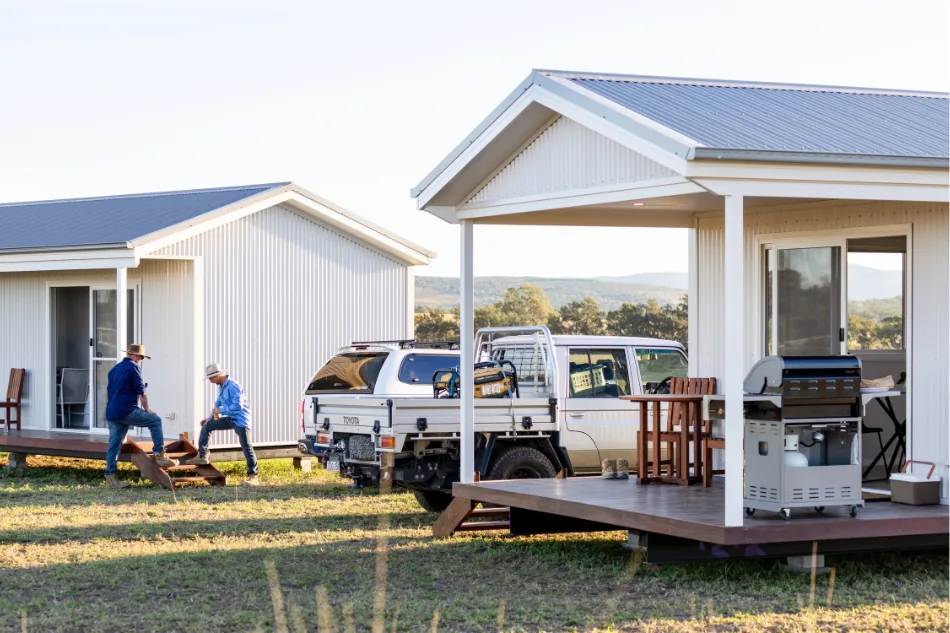
Modular housing cost Australia explained: see the seven budget areas beyond the unit price, from freight and footings to approvals and services.
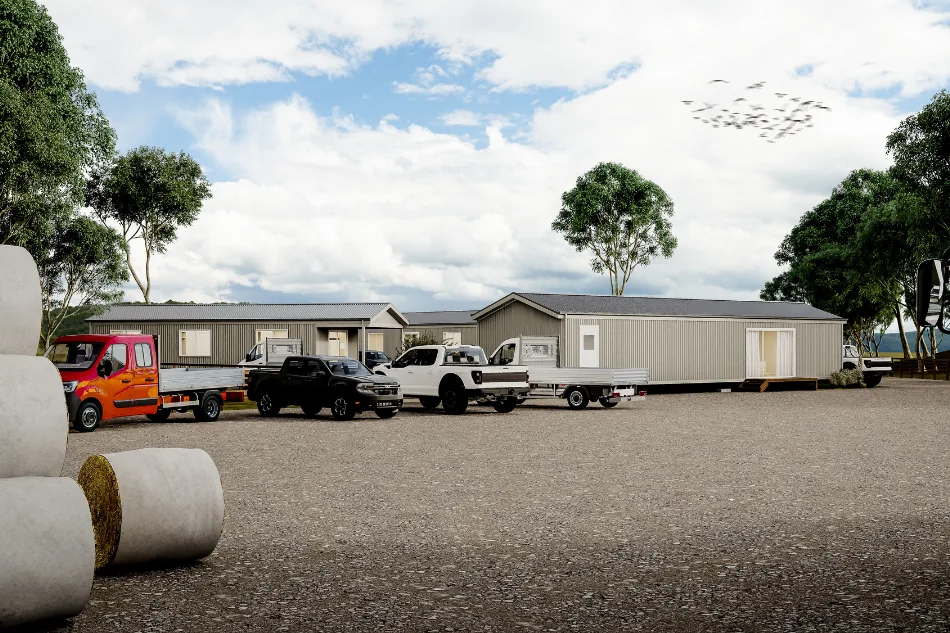
Worker housing costs go beyond the build. See how vacancies, overtime, travel and management time can raise the cost of inadequate housing.