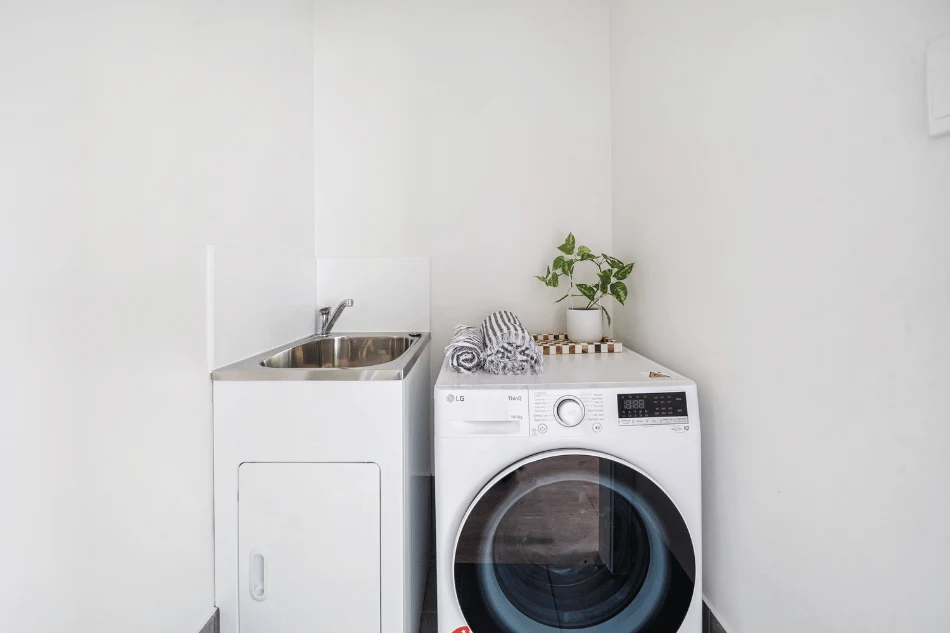
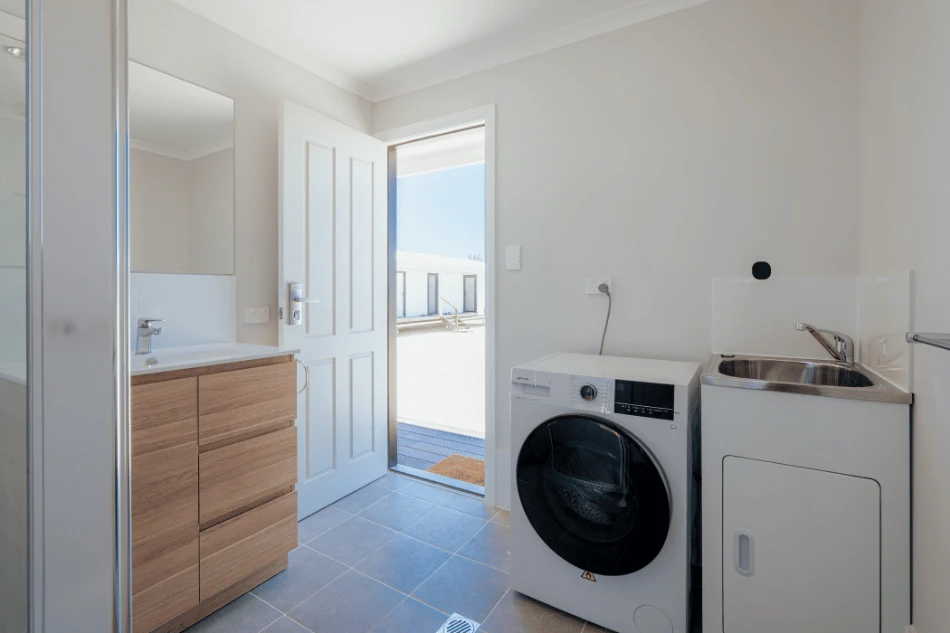
When people talk about modular units, they usually focus on the obvious things first. Bedrooms. Bathrooms. Kitchens. Living areas. Floorplans. However, easy-to-maintain laundry spaces in modular units deserve far more attention than they usually get.
That’s because the laundry isn’t just a place for a washing machine and tub. It’s a working part of the unit. When it’s designed properly, it helps protect the asset, reduce upkeep, and make everyday living easier for the people using it.
That matters in any housing. But it matters even more in regional, rural and remote settings. Workers often come home with dirty clothes, dusty gear, and wet boots. In those situations, the laundry isn’t a minor extra. It’s part of what makes the accommodation practical.
Smart farm managers who know good housing keeps good people tend to understand this pretty quickly. A laundry can’t just be there. It needs to work well. And it needs to be easy to maintain.
At Aruva, that kind of thinking sits right in the middle of what matters. Real Living. Delivered. Accommodation delivered fast and built to last.
In worker housing, the laundry does real work
When people buy housing for other people, they need to think past the glossy parts of the design.
They need to think about how the unit will perform once people move in. They need to think about how easy it is to live in, clean, and maintain. They also need to think about how the space will hold up over time.
That’s where the laundry becomes far more important than it first appears.
In agriculture, mining, construction, and similar industries, workers don’t come home spotless. They come home with mud, dust, sweat, and work clothes that need proper washing and drying. That’s real life. So the laundry needs to suit real life too.
A poorly designed laundry becomes annoying fast. It gets dirty too easily. It’s harder to wipe down. Moisture builds up. The room starts looking tired. And small problems get ignored because the space is awkward to use in the first place.
On the other hand, a practical laundry makes the whole unit work better. It gives people a proper place to deal with dirty clothes and daily routine. It also helps keep the rest of the unit cleaner and more organised.
That’s not fluff. That’s practical design.
Easy-to-maintain laundry spaces in modular units protect ROI
This is where the issue becomes commercial, not just domestic.
If you’re buying modular units for workers, tenants, or staff, you’re not only buying for day one. You’re buying for the months and years after that. You want something that performs well, stays presentable, and doesn’t create avoidable maintenance headaches.
That’s why easy maintenance matters.
A laundry that’s simple to clean and built from durable materials usually performs better over time. It’s less likely to become a problem area. It’s less likely to drag down the presentation of the unit. And it’s less likely to frustrate the people using it.
All of that helps protect ROI.
Once a laundry becomes hard to clean, hard to dry out, or hard to keep in decent condition, the owner pays for it somewhere. That may show up in extra cleaning, more maintenance, more wear on finishes, or faster deterioration.
It can also show up in a broader way. A unit that looks tired too soon can affect perception, satisfaction, and long-term value.
A lot of owners know this instinctively. The better operators don’t only look at upfront cost. They look at what the space will be like to own, manage, and maintain over the long haul.
That’s a better way to judge any utility area. It’s especially true for laundries.
Moisture control is one of the biggest issues
One of the main reasons laundry design matters is simple. Laundries deal with moisture all the time.
You’ve got washing machines, damp clothes, tubs, steam, splashing, and wet floors. Sometimes people also dry clothes inside. If the space doesn’t handle that well, problems can creep in quietly.
That’s why the room needs to be easy to clean and easy to dry out.
If moisture hangs around too long, the room becomes harder to manage. Surfaces can cop more punishment. The space can start feeling damp. And the risk of ongoing maintenance trouble goes up.
So, while some people see the laundry as a small detail, it can easily become a weak point if the design isn’t right.
Good laundry design helps avoid that. It supports airflow. It makes wiping down easier. It reduces places where grime and moisture can hang around. And it helps the room recover faster after regular use.
In other words, a well-designed laundry helps prevent trouble before it starts.
Good laundry design doesn’t need to be fancy
This is where some people get sidetracked.
A good laundry doesn’t need expensive styling features or decorative extras for the sake of it. It needs practical thinking.
That means surfaces that are easy to wipe down. It means layouts that don’t make cleaning harder than it needs to be. It means materials that can handle repeated use. It means ventilation that does its job. And it means enough usable space for people to move around without the room becoming a daily frustration.
That’s what good design looks like in a laundry.
It’s less about show and more about function.
That suits modular housing well. In modular design, every part of the floorplan needs to earn its keep. Space needs to be used wisely. Details need to be deliberate. Rooms need to do their job properly, not just look acceptable on paper.
That’s especially true in accommodation designed for workers. The people using the space don’t care whether the laundry looks trendy. They care whether it works. Owners should care about the same thing.
The laundry affects more than the laundry
There’s another point here that’s worth bringing into the open.
When practical areas of a unit are done badly, it affects how people see the whole unit. Not just that one room.
A poor laundry can make the accommodation feel less thought through. Less durable. Less practical. More frustrating. Even if the bedrooms and living areas are fine, that feeling still spreads.
The reverse is also true.
When the laundry is well planned and easy to maintain, it lifts the standard of the whole unit. It supports cleanliness. It helps people stay organised. It makes everyday living easier. And it shows that the accommodation was designed with real use in mind.
That matters more than some buyers first realise.
For people buying housing for other people, practicality is part of the product. Liveability is part of the value. Low-maintenance design is part of protecting the investment.
This is about real-life performance
At the end of the day, that’s the real point of the whole discussion.
Easy-to-maintain laundry spaces in modular units matter because they help the unit perform better in real life. They support cleanliness. They reduce unnecessary upkeep. They help manage moisture. They make the accommodation easier to live in. And they help protect the condition of the asset over time.
That’s especially important in worker housing and other accommodation where the laundry gets regular, serious use. In those settings, it’s not enough for a laundry to simply exist. It needs to be durable, practical, and easy to look after.
That’s the difference between a laundry that becomes a problem and one that quietly does its job year after year.
And that’s really the bigger story here. In modular design, the small practical details often carry more weight than people first think. The laundry is a good example of that.
It might not be the feature that gets talked about first. However, it often becomes one of the features that proves its value over time.
That’s why housing managers who are smart about getting the right balance across budgets and outcomes don’t dismiss laundries as an afterthought. They understand that practical, low-maintenance design helps protect both the people living there and the investment behind it.
Real Living. Delivered. Accommodation delivered fast and built to last.