


Discover why Aruva units are built using termite‑treated particleboard flooring as standard. Learn how this choice protects long-term investments in modular construction.


HUGE SALE NOW ON MODULAR HOUSING! MASSIVE SAVINGS UP TO $30,000
In modular construction, termite‑treated particleboard flooring—sometimes called chipboard is a common material used in subfloor systems. It’s reliable, cost‑effective, and works well for a variety of applications. But there’s one important detail that often gets overlooked: not all particleboard flooring is termite‑treated.
This matters more than many people realise, particularly in a country like Australia where termite activity is widespread across rural, regional, and coastal areas. In fact, current Standards Australia guidelines on termite management highlight the importance of selecting resistant materials in construction, especially in high-risk zones.
Termite‑treated particleboard is a type of engineered wood product that’s had a protective chemical treatment added during the manufacturing process. This treatment is designed to make the board resistant to termite activity—not just on the surface, but throughout the entire board.
Unlike post-construction sprays or barrier systems, this treatment is embedded in the material, offering long‑term protection without relying on external maintenance or additional layers of defence.
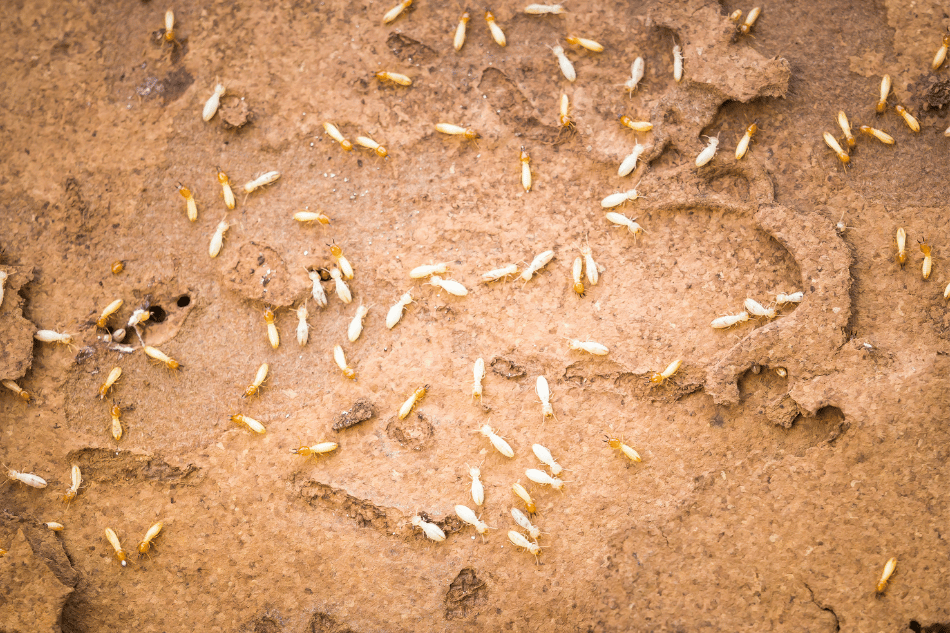
Termite damage doesn’t usually appear overnight. It often starts in hidden places—beneath the floor, behind skirting boards, or in service voids—and can go unnoticed until significant damage has occurred. The cost of repairing termite‑damaged flooring isn’t just financial—it includes lost time, disruption to operations, and, in some cases, needing to relocate staff or residents while repairs are carried out.
In modular buildings—especially those used in schools, camps, essential services or remote workforce housing—downtime of that kind is costly and sometimes hard to manage.
The main reason some modular builders don’t use termite‑treated flooring as standard comes down to cost. While the price difference between treated and untreated board isn’t large, in projects delivered at scale and on tight budgets it’s often one of the first items cut unless specifically requested.
There’s also a knowledge gap in procurement. If clients don’t ask for treated flooring—and the builder isn’t required to include it—then untreated board may simply be used by default.
For decision-makers involved in asset management or accommodation procurement, it’s worth confirming whether termite-treated materials are included—and how. It’s important to know the difference between:
Termite protection in modular flooring may not be visible—but it plays a critical role in the long‑term durability of the building. Using termite‑treated particleboard may not yet be standard among all providers, yet it is increasingly recognised as best practice for modular buildings in areas with known termite risk.
Australian managers or owners who are smart about their investment in their land or workers tend to factor this in early—not because it’s a flashy feature, but because it helps avoid costly issues down the track.

Download your copy of our Accommodation Guide.

Talk to us about your property, timeline and requirements.

We’ll supply a proposal based on your design preference.

Place your order! We’ll build and install your new modular accommodation.
There’s no place like home, right? Your staff can spend their evenings in comfort and style, relaxing and connecting with friends and family, and then recharge their batteries with some quality zzzzs.


Our Resources
Modern methods of construction can cut site hours, reduce delay risk, and improve value. Here’s how to compare build options with confidence.
How many people per bedroom in worker accommodation? Practical limits, WHS risks, and a simple checklist to set a clear, defensible standard.